There's something deeply satisfying about watching tiny flower seeds transform into thriving blooms. But if your seeds are slow to sprout, patchy, or fail altogether, the process can feel frustrating fast. The good news is that successful flower seed germination is not luck—it's about giving seeds the right conditions from the start.
Whether you're planting annuals, perennials, or wildflowers, the best results come from understanding what seeds need to wake up and grow. With the right sowing technique, moisture, temperature, and light, you can dramatically improve your germination rate and grow stronger seedlings from day one.
Choose the Right Flower Seeds for Your Space
Before you even open a seed packet, make sure the flowers you choose match your growing conditions. Some seeds germinate easily indoors, while others do better when sown directly outdoors. A few varieties need cold treatment, while others sprout quickly in warm soil.
For better germination success, check the seed packet for:
- Sun requirements such as full sun, part shade, or shade
- Germination temperature for best sprouting
- Planting depth and spacing instructions
- Whether seeds need light or darkness to germinate
- Recommended sowing time indoors or outdoors
Choosing seeds suited to your climate and timing is one of the simplest ways to improve results before planting even begins.
Use Fresh, High-Quality Seeds
Seed viability drops over time, which means old seeds may sprout slowly or not at all. If you want reliable flower seed germination, start with fresh seeds from a trusted source. Look for packets with a current date and store unused seeds in a cool, dry place.
Tip: Some seeds, like zinnias and marigolds, often stay viable for several years, while others lose germination strength much faster. If you are unsure about older seeds, a simple germination test can save time and effort.
Healthy seedlings begin with viable seeds. Freshness matters more than many gardeners realize.
Prepare the Best Seed Starting Mix
Regular garden soil is often too heavy for seed starting. It can hold too much water, limit airflow, and make it harder for tender roots to establish. Instead, use a light, fine-textured seed starting mix designed to support germination.
The ideal mix should be:
- Light and airy
- Moisture-retentive but not soggy
- Free of weeds and pathogens
- Fine enough for tiny roots to move through easily
If you are sowing seeds in containers, choose trays, pots, or biodegradable cells with drainage holes. Good drainage helps prevent damping off and reduces the risk of rot during germination.
Plant at the Correct Depth
One of the most common mistakes in sowing flower seeds is planting too deep. Seeds are small and have limited energy, so burying them too far below the surface can prevent them from emerging.
As a general rule:
- Very tiny seeds should be pressed lightly onto the surface or covered with a dusting of mix
- Medium seeds are usually planted about twice their width deep
- Larger seeds may be planted deeper, depending on the packet instructions
Always follow the packet directions, because some flower seeds need light to germinate and should never be buried deeply. Poppies, snapdragons, and some petunias are examples of seeds that may sprout better when sown on the surface.
Control Moisture Without Overwatering
Moisture is essential for germination, but too much water can be just as harmful as too little. Seeds need consistent dampness to activate, but soggy soil can suffocate them or encourage fungus.
To keep soil evenly moist:
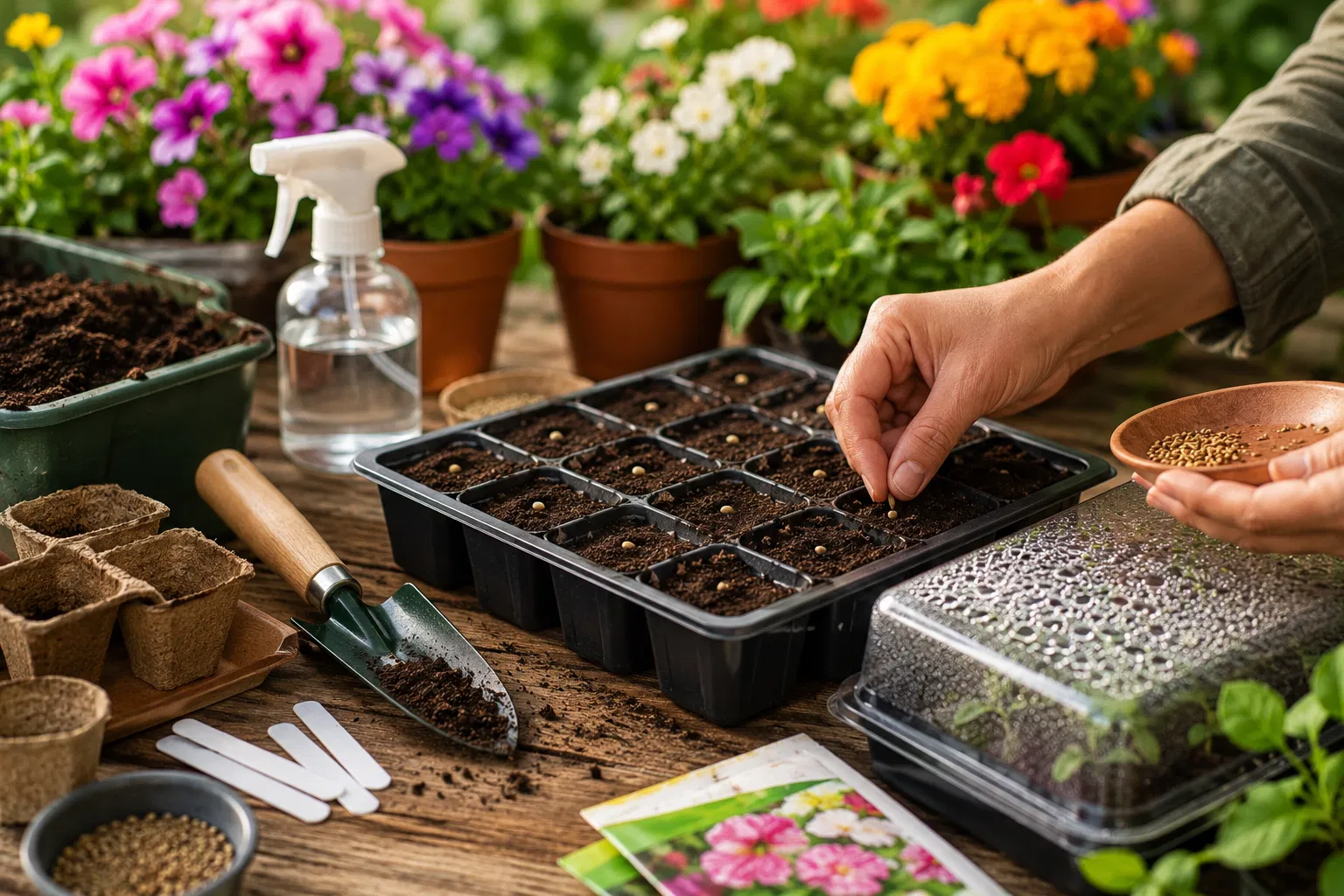
- Water gently with a spray bottle, misting can, or bottom-watering tray
- Cover containers loosely with a humidity dome or plastic wrap if needed
- Check soil daily so it never fully dries out
- Remove excess standing water from trays
The goal is to keep the seed starting mix damp like a wrung-out sponge. That balance supports healthy sprouting without inviting disease.
Give Seeds the Right Temperature
Temperature has a major impact on flower seed germination. Some seeds need warm conditions, while others germinate best in cooler soil. If the soil is too cold, sprouts may stall. If it is too hot, seeds can dry out or fail to develop properly.
For indoor seed starting, a heat mat can help maintain steady warmth for heat-loving flowers like zinnias, marigolds, and cosmos. Cooler-weather flowers may not need supplemental heat and can actually germinate better in moderate temperatures.
Best practice: Keep the seed packet handy and match your sowing setup to the seed's preferred germination range.
Provide Light When Needed
Not all flower seeds germinate the same way. Some need darkness, while others require light exposure to trigger sprouting. Tiny seeds often need light, which is why they are pressed onto the soil surface instead of covered deeply.
If your seeds need light:
- Do not bury them too deeply
- Place them in a bright location or under grow lights
- Keep the soil surface moist until sprouts appear
If your seeds need darkness, cover them lightly and avoid exposing them to too much light during the early stage. Following the light requirements on the packet can make a noticeable difference in germination speed and success.
Use Clean Tools and Containers
Cleanliness matters more than many new gardeners expect. Dirty pots, reused trays, or contaminated tools can introduce mold, bacteria, and fungal disease to tender seeds and seedlings.
Before planting, wash containers with warm soapy water and rinse well. If you reuse trays, sanitize them with a mild bleach solution or a plant-safe disinfectant. Clean tools and fresh mix reduce the risk of damping off and help seeds get a healthy start.
Label Everything Clearly
When sowing multiple flower varieties, labels are essential. Different seeds germinate at different rates, and it is easy to lose track of what was planted where.
Use plant labels or waterproof markers to note:
- Flower variety name
- Date sown
- Light or darkness requirements
- Expected germination time
Good labeling helps you monitor progress, compare varieties, and avoid accidentally tossing out trays that are still within their germination window.
Be Patient and Watch for Sprouting
Some flower seeds sprout in just a few days. Others take weeks. Patience is part of the process, and many gardeners give up too soon.
During the germination period, avoid disturbing the seeds too often. Instead, check moisture levels, temperature, and light conditions regularly. Once sprouts emerge, remove humidity covers gradually so seedlings can adjust to normal air circulation.
If germination is uneven, do not panic. Some seeds naturally sprout faster than others, even within the same packet.
Common Reasons Flower Seeds Fail to Germinate
If your flower seeds are not sprouting, one of these issues is often the cause:
- Seeds are old or not viable
- Soil is too wet or too dry
- Planting depth is incorrect
- Temperature is outside the ideal range
- Seeds need light but were covered too deeply
- Seeds need cold stratification before planting
Checking these basics usually reveals the problem quickly. In many cases, a small adjustment is all it takes to improve germination dramatically.
Final Tips for Better Flower Seed Germination
The best germination results come from consistency. Use fresh seeds, a quality seed starting mix, correct planting depth, and steady moisture. Match light and temperature to the flower type, and give seeds the time they need to wake up and grow.
If you want more blooms with less guesswork, start small and track what works. Every flower variety has its own preferences, and once you learn them, your success rate will climb fast.
Start with the right conditions, stay patient, and your flower seeds will reward you with stronger seedlings and more beautiful blooms.