Shade nets are built to protect crops, reduce heat, and improve growing conditions, but their performance depends on how well they are maintained. A quality shade net can last for years when it is cleaned, inspected, repaired, and stored correctly. Neglecting simple care steps can lead to tearing, UV damage, mold, and premature replacement costs.
If you want to get the most value from your investment, proper shade net maintenance and storage should be part of your routine. With the right handling, your agricultural shade nets, greenhouse shade cloth, or garden shade covers can stay effective season after season.
Why Shade Net Maintenance Matters
Shade nets are exposed to harsh outdoor conditions every day. Sunlight, wind, rain, dust, fertilizers, and physical stress all take a toll over time. Even durable UV-stabilized shade nets will weaken if they are not cared for properly.
Regular maintenance helps you:
- Extend the lifespan of the net
- Reduce replacement costs
- Maintain proper shading and airflow
- Prevent tears from spreading
- Protect crops, plants, and structures more effectively
Good maintenance is not complicated, but it does require consistency.
Clean Shade Nets Regularly
Dust, bird droppings, leaves, and debris can collect on shade nets and reduce their effectiveness. Over time, dirt buildup may also contribute to material wear and mildew growth, especially in humid environments.
Best Cleaning Practices
- Remove loose debris with a soft broom or by gently shaking the net.
- Use clean water to rinse the surface and remove dust.
- If needed, wash with mild soap and a soft brush.
- Avoid harsh chemicals, bleach, or abrasive scrubbers.
- Let the net dry completely before reusing or storing it.
Cleaning should be done carefully to avoid stretching or damaging the fibers. For installed shade nets, a low-pressure rinse is often enough for routine care.
Inspect for Damage Often
Small issues can become major problems if they are ignored. A tiny tear may expand quickly in strong wind or under tension. Routine inspection allows you to fix minor damage before it spreads.
What to Look For During Inspection
- Rips, holes, or frayed edges
- Loose stitching or weakened seams
- Signs of UV wear such as brittleness or fading
- Mold, mildew, or moisture damage
- Areas where the net rubs against sharp surfaces
Inspect your shade net at least once a month, and more often during extreme weather or heavy-use periods. Pay close attention to corners, attachment points, and edges, where stress is usually greatest.
Repair Small Tears Quickly
Prompt repairs can significantly increase the life of a shade net. If a tear is caught early, it may be easy to fix with repair tape, strong UV-resistant thread, or patch material designed for shade cloth.
Tip: Always use repair materials that are suitable for outdoor exposure and UV resistance. Weak adhesives or poor-quality thread will fail quickly in sunlight.
Simple Repair Approach
- Clean and dry the damaged area.
- Trim any loose or frayed threads.
- Apply a patch or stitch the tear securely.
- Reinforce the area if it is under tension.
- Check the repair after installation or use.
If the damage is extensive, replacement may be more cost-effective than repeated patching. Still, fast action on minor damage helps preserve the net's overall structure.
Protect Shade Nets from Harsh Conditions
While shade nets are designed for outdoor use, they last longer when exposure is managed wisely. Strong winds, sharp objects, and excessive tension can all reduce durability.
Ways to Reduce Wear and Tear
- Install the net with even tension to prevent sagging or overstretching
- Use smooth, rounded edges on frames and support structures
- Secure nets properly to minimize wind movement
- Avoid dragging the net across concrete, metal, or rough ground
- Keep the net away from chemicals and fertilizers when possible
For agricultural and greenhouse use, proper installation is just as important as maintenance. A well-supported net experiences less strain and stays functional much longer.
Store Shade Nets the Right Way
When shade nets are not in use, correct storage becomes essential. Poor storage can cause mold, odor, brittleness, and permanent creasing. The goal is to keep the net clean, dry, and protected until it is needed again.
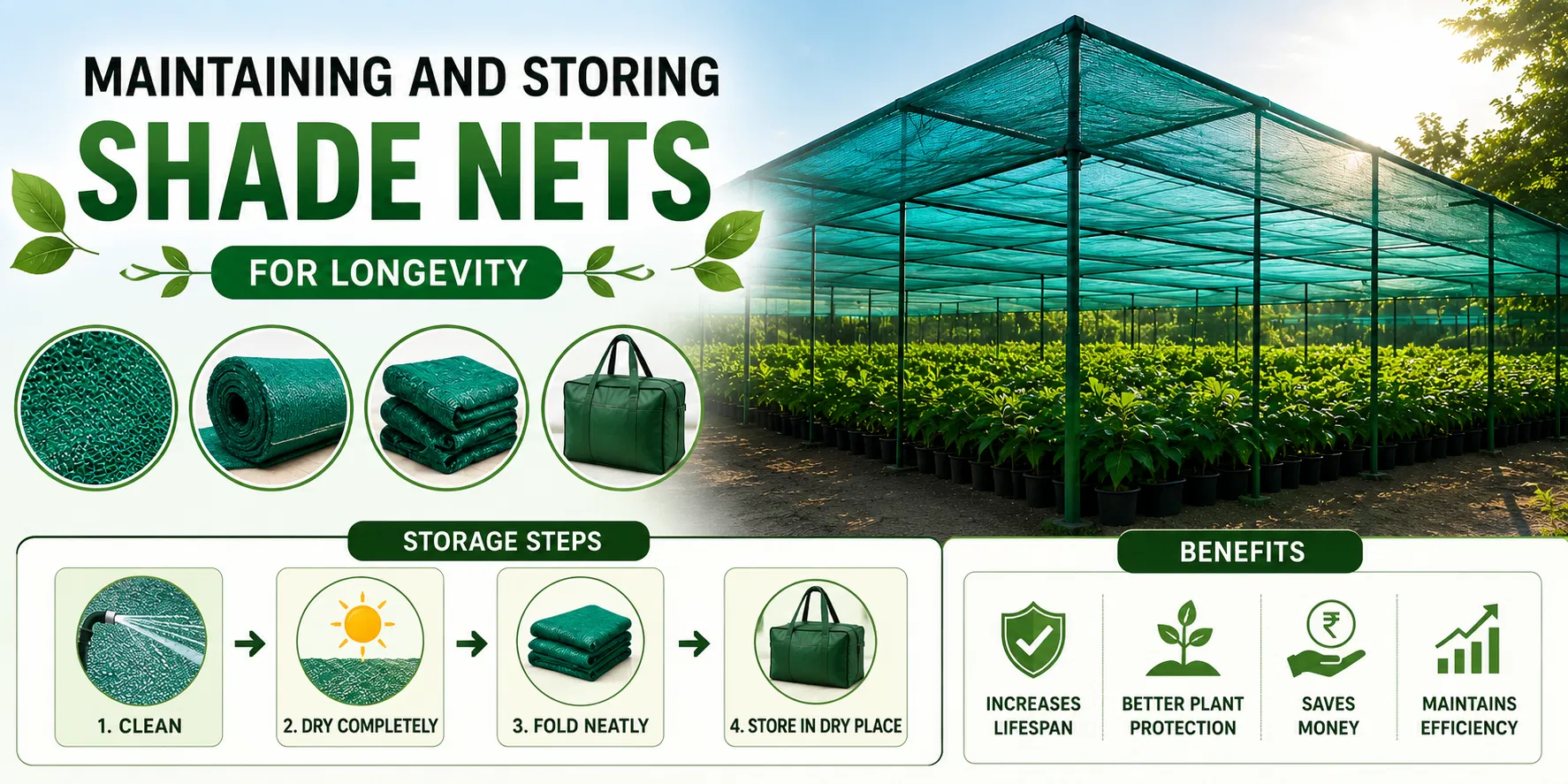
Step-by-Step Storage Guide
- Remove all dirt and debris before storing.
- Make sure the net is completely dry.
- Fold it neatly without sharp creases or tight knots.
- Store it in a cool, dry, shaded location.
- Keep it in a breathable bag, tarp, or labeled container.
Never store a damp shade net in a sealed plastic bag. Trapped moisture encourages mold and unpleasant odors, which can weaken the material over time.
Choose the Right Storage Environment
Where you store your shade net matters just as much as how you fold it. Heat, direct sunlight, pests, and moisture can all shorten its life.
The ideal storage area should be:
- Cool and dry
- Away from direct sunlight
- Free from rodents and insects
- Clean and dust-free
- Well-ventilated
If possible, store the net on shelving or in bins off the ground. This reduces the risk of water damage and keeps the material in better condition for future use.
Label and Organize Stored Nets
If you use multiple shade nets with different shade percentages or sizes, organization saves time and prevents unnecessary handling. Labeling each net makes it easier to identify the right one quickly when the season changes.
A simple label can include:
- Shade percentage
- Net dimensions
- Date of purchase or last use
- Condition notes
This small habit helps you track wear over time and plan replacements before problems affect your crops or workspace.
Handle Shade Nets with Care During Installation and Removal
Many shade nets are damaged not by weather, but by rough handling. Pulling, yanking, dragging, or folding them carelessly can weaken the fibers and edges.
To reduce damage:
- Remove the net slowly and evenly
- Have two people handle larger nets when possible
- Avoid using sharp tools near the fabric
- Do not over-tighten fasteners
- Fold instead of bunching the net into a ball
Careful handling during every move helps preserve the net's structure and appearance.
Know When to Replace a Shade Net
Even with the best care, every shade net has a limit. Over time, exposure to UV rays and constant use will reduce strength. Knowing when to replace the net is important for maintaining proper protection.
Replacement may be necessary if you notice:
- Widespread tearing
- Severe fraying along the edges
- Loss of shading effectiveness
- Material becoming brittle or thin
- Repairs no longer holding properly
When the net can no longer provide reliable coverage, replacing it is the safest and most economical choice.
Final Thoughts
Maintaining and storing shade nets for longevity is all about consistent, simple care. Clean them regularly, inspect them often, repair damage quickly, and store them in dry, protected conditions. These habits help extend the life of your shade cloth and preserve its performance year after year.
If you rely on shade nets for agriculture, gardening, or outdoor protection, start treating them like valuable equipment. A little care now can save time, money, and effort later—and keep your shade nets working at their best for the long run.