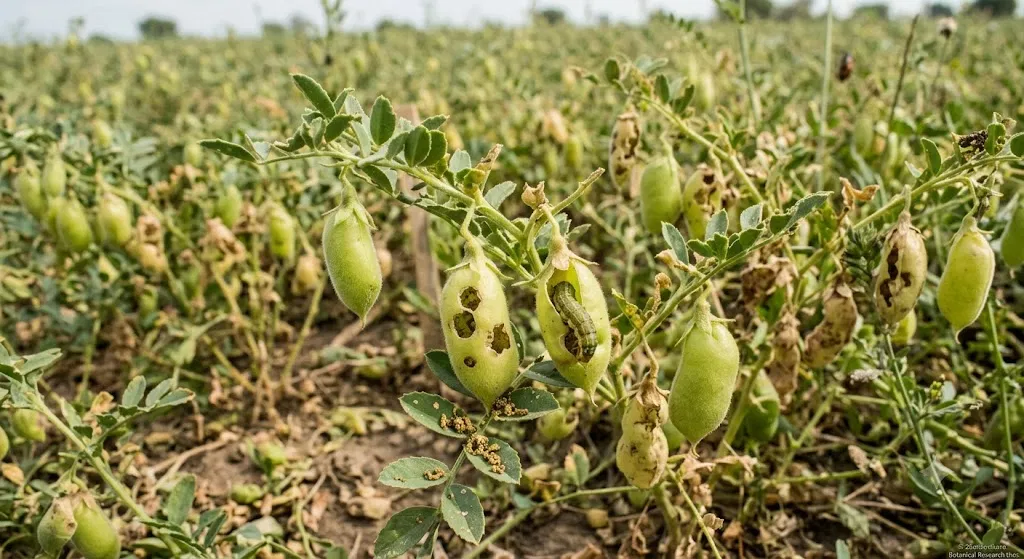
When gram pod borer attacks a chickpea crop, losses can happen fast. One day the plants look healthy, and the next you may notice holes in pods, damaged flowers, and caterpillars feeding inside the crop canopy. For farmers growing gram or chickpea, early detection and timely control are essential to protect yield and quality.
This guide explains the symptoms of gram pod borer, how to identify the pest, and the most effective management practices to reduce damage and safeguard your crop.
What Is Gram Pod Borer?
Gram pod borer, scientifically known as Helicoverpa armigera, is one of the most destructive pests of chickpea and other pulse crops. The larvae feed on leaves, flowers, buds, and pods, causing major yield losses if not controlled in time.
The pest is especially dangerous during flowering and pod formation stages, when the crop is most vulnerable. Because the larvae often hide and feed at night, farmers may not notice severe infestation until damage is already widespread.
Symptoms of Gram Pod Borer Attack
Recognizing the early signs of infestation is the key to effective control. The following symptoms usually indicate gram pod borer activity:
1. Holes in Flowers and Buds
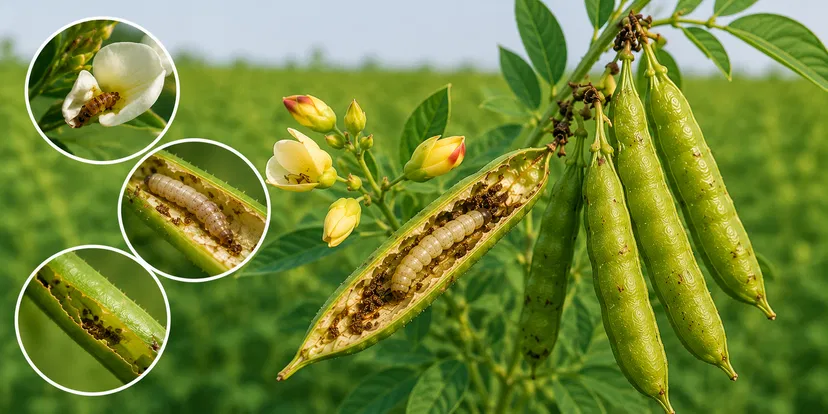
Young larvae feed on flower buds and blossoms first. You may see damaged flowers, fallen buds, or partially eaten floral parts. This reduces pod formation and lowers potential yield.
2. Circular Holes in Pods
As larvae grow, they bore into developing pods. A common sign is a neat, circular hole on the pod surface. The caterpillar usually feeds on the seeds inside, leaving behind partially damaged or empty pods.
3. Frass Around Pods
Small black droppings, known as frass, may be visible near feeding sites or on pods. This is a strong sign that larvae are actively feeding in the crop.
4. Defoliation and Leaf Damage
Although gram pod borer mainly targets flowers and pods, early-stage larvae may also feed on leaves. Look for irregular holes or chewed leaf edges, especially in the upper canopy.
5. Presence of Caterpillars
The larvae vary in color from green to brown or dark with light stripes. They often blend into the plant, so careful inspection is needed. The caterpillars may be found on flowers, pods, or hidden in plant clusters.
6. Pod Shriveling and Poor Grain Filling
Severely infested plants may produce shriveled pods and poorly developed seeds. This is often the result of direct feeding inside pods.
Tip: Inspect the crop during flowering and pod development at least once or twice a week. Early scouting can prevent major losses.
Life Cycle of Gram Pod Borer
Understanding the life cycle helps in planning control measures at the right stage. The gram pod borer passes through four stages:
- Egg stage: Eggs are laid singly on flowers, buds, leaves, or young pods.
- Larval stage: The caterpillar hatches and begins feeding on tender plant parts. This is the most destructive stage.
- Pupal stage: Mature larvae drop into the soil to pupate.
- Adult stage: Moths emerge and lay eggs, starting the cycle again.
Since the larval stage causes the most damage, management efforts should focus on preventing egg laying, killing young larvae, and reducing adult moth populations.
Integrated Management of Gram Pod Borer
The best control strategy is an integrated approach that combines cultural, mechanical, biological, and chemical methods. Relying on a single method usually gives poor results.
Cultural Control Practices
Cultural methods reduce pest buildup in the field and make the crop less attractive to the borer.
- Use early or synchronized sowing: Avoid staggered planting, which keeps crops at different growth stages and favors pest buildup.
- Choose resistant or tolerant varieties: Select locally recommended chickpea varieties with better pest tolerance.
- Maintain proper field sanitation: Remove crop residues and volunteer plants after harvest.
- Deep ploughing: Exposes pupae in the soil to predators and adverse weather.
- Intercropping: Crops like coriander or mustard may help reduce pest pressure in some systems.
Mechanical and Physical Control
Simple physical methods can reduce infestation, especially in small and medium-sized farms.
- Handpick larvae: Collect caterpillars during early infestation and destroy them.
- Use pheromone traps: These help monitor adult moth activity and can reduce male mating success.
- Light traps: Useful for attracting and killing moths during peak activity.
- Bird perches: Encourage birds to feed on larvae by installing perches in the field.
Biological Control
Biological control is an eco-friendly and effective option in integrated pest management programs.
- Conserve natural enemies: Ladybird beetles, lacewings, and parasitic wasps help suppress pest populations.
- Use biopesticides: Products based on Helicoverpa-targeting pathogens such as NPV and Bt can be effective against young larvae.
- Neem-based sprays: Neem oil or azadirachtin can reduce feeding and egg laying.
Biological options work best when applied early, before larvae become large and deeply established inside pods.
Chemical Control
When pest levels cross the economic threshold, chemical control may be necessary. However, sprays should be used carefully and only when required.
- Target young larvae for better effectiveness.
- Rotate insecticides with different modes of action to reduce resistance.
- Follow recommended dosage and spray timing.
- Ensure thorough coverage of flowers and pods.
Commonly recommended insecticides vary by region, so always follow local agricultural extension guidance and label instructions. Avoid repeated use of the same product, as gram pod borer can quickly develop resistance.
Monitoring and Economic Threshold
Regular monitoring is one of the most important steps in gram pod borer control. Use pheromone traps, field scouting, and visual inspection to detect early activity.
Action should be taken when the pest population reaches the economic threshold level, meaning the cost of damage is likely to exceed the cost of control. In chickpea fields, this often happens when larvae or fresh damage begins appearing on flowers and pods at an increasing rate.
Best Time to Take Action
The most effective control occurs at the flowering and early pod stage. This is when moths lay eggs and small larvae begin feeding. Waiting too long allows larvae to move inside pods, where control becomes much more difficult.
For best results, combine monitoring with timely intervention rather than reacting after major damage has occurred.
Prevention Tips for Farmers
A few preventive steps can significantly lower the risk of infestation:
- Plant at the recommended time for your region.
- Use clean seed and maintain weed-free fields.
- Inspect crops regularly from flowering onward.
- Install pheromone traps early in the season.
- Encourage beneficial insects and birds.
- Avoid unnecessary broad-spectrum pesticide use.
Conclusion
Gram pod borer is a serious threat to chickpea production, but timely action can make a big difference. By identifying symptoms early, understanding the pest's life cycle, and using an integrated management approach, farmers can reduce losses and protect crop yield.
Monitor your crop regularly, act at the first sign of infestation, and combine cultural, biological, and chemical methods wisely. With the right strategy, gram pod borer control becomes far more effective and sustainable.