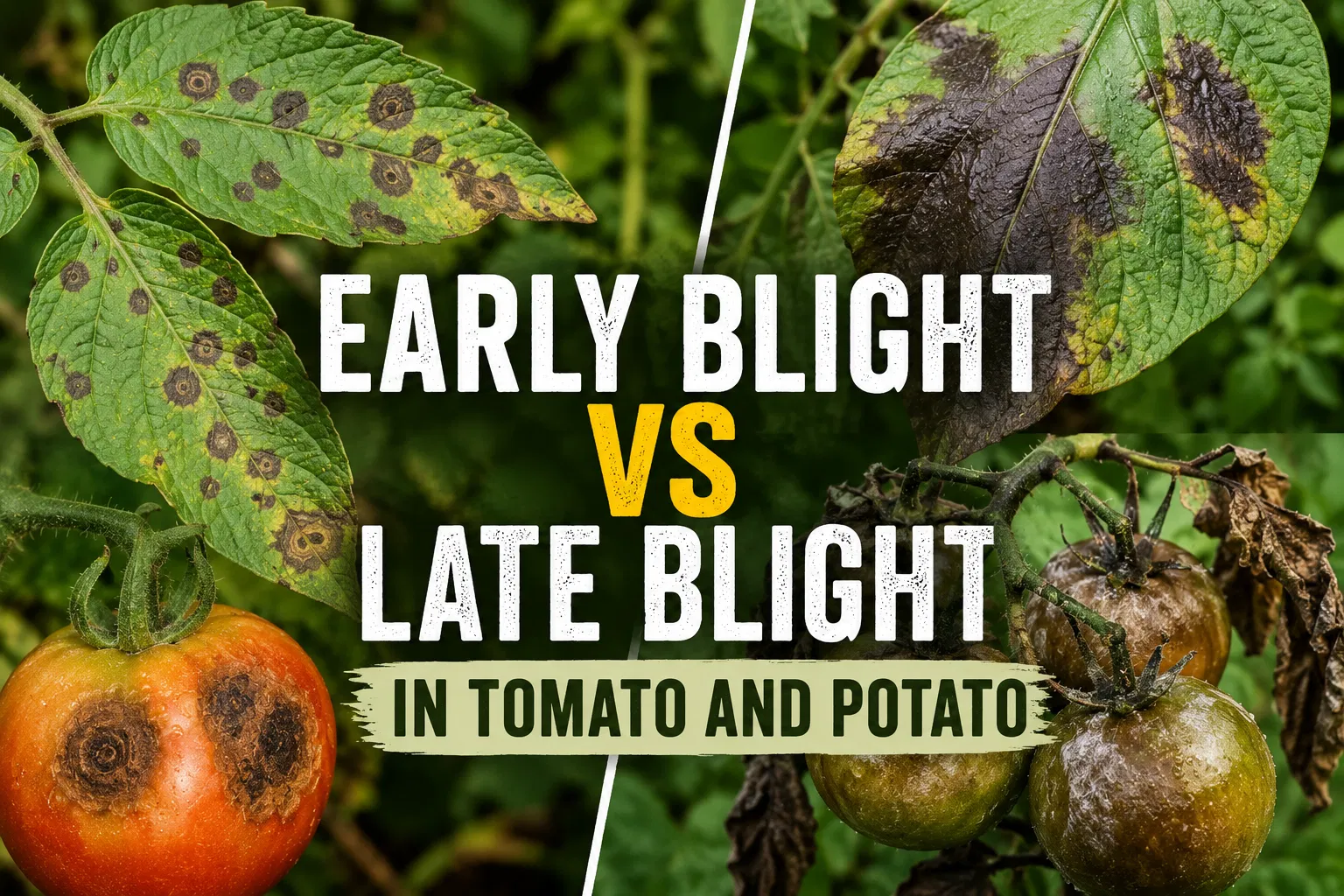
If your tomato or potato plants suddenly develop dark spots, yellowing leaves, or fast-moving leaf damage, you may be dealing with one of the two most common garden diseases: early blight or late blight. Although they sound similar, these fungal and fungal-like diseases behave very differently, spread at different speeds, and require different management strategies. Knowing the difference between early blight vs late blight in tomato and potato can save your crop, reduce losses, and help you respond before the problem gets out of control.
What Is Early Blight?
Early blight is a common disease caused by the fungus Alternaria solani. It affects tomatoes and potatoes, usually starting on older, lower leaves. Despite its name, early blight does not always appear early in the season. It often shows up after plants have grown more foliage and the weather turns warm and humid.
The disease typically begins with small dark spots on leaves. These spots often develop concentric rings, creating a "target" or bull's-eye pattern. As the infection progresses, leaves turn yellow, dry up, and drop. On tomatoes, early blight can also infect stems and fruit, causing dark lesions near the stem end.
What Is Late Blight?
Late blight is a far more aggressive disease caused by Phytophthora infestans, an organism that behaves like a fungus but is technically an oomycete. It is notorious for spreading rapidly and causing severe damage to both tomato and potato plants.
Late blight usually develops in cool, wet, and humid conditions. It can destroy entire plants in a matter of days when conditions are favorable. On leaves, it often appears as water-soaked, pale green, or brown patches that quickly expand. A white, fuzzy growth may appear on the undersides of leaves in damp weather. On potatoes, late blight can infect tubers, causing brown, rotting patches that continue into storage.
Early Blight vs Late Blight: Key Differences
Although both diseases can affect tomatoes and potatoes, there are important differences in appearance, speed, and environmental preference. Understanding these differences helps with fast diagnosis and treatment.
1. Appearance on Leaves
- Early blight: Dark brown spots with concentric rings, often starting on lower leaves.
- Late blight: Irregular water-soaked lesions that quickly turn brown or black.
2. Speed of Spread
- Early blight: Usually develops more slowly and progresses over time.
- Late blight: Can spread very rapidly, especially in wet weather.
3. Weather Conditions
- Early blight: Prefers warm temperatures and moderate humidity.
- Late blight: Thrives in cool, wet, and humid conditions.
4. Plant Parts Affected
- Early blight: Mainly affects leaves, but can also infect stems and fruit.
- Late blight: Affects leaves, stems, and potato tubers; tomato fruit can also become infected.
Quick tip: If the spots look like target rings and start low on the plant, think early blight. If the disease is spreading fast and the lesions look wet or greasy, late blight is more likely.
Symptoms in Tomato Plants
Tomatoes are highly vulnerable to both diseases, especially during periods of stress. Early blight usually starts with lower leaves showing small brown spots that expand and develop a ringed pattern. Leaves may yellow around the spots and eventually die.
Late blight in tomatoes often begins as pale green or brown water-soaked lesions that spread quickly. Stems may turn dark and collapse, and fruit can develop firm brown patches. In humid conditions, fuzzy white mold may be visible on infected tissue.
Symptoms in Potato Plants
Potatoes also suffer from both early blight and late blight, but the impact can be especially severe because tubers are at risk.
With early blight, potato leaves typically show circular lesions with dark centers and ring patterns. Defoliation may reduce tuber size and overall yield. Late blight, however, is much more destructive. It can infect foliage and travel down to the tubers, where it causes brown, rotten lesions that can worsen after harvest.
How to Prevent Early Blight and Late Blight
Prevention is the best defense against both diseases. Strong garden hygiene and careful cultural practices can significantly reduce the risk of infection.
Best Prevention Practices
- Choose resistant varieties: Select tomato and potato cultivars labeled for disease resistance when possible.
- Rotate crops: Avoid planting tomatoes or potatoes in the same spot year after year.
- Water at the base: Keep foliage dry by using drip irrigation or soaker hoses.
- Mulch well: Mulch helps prevent soil from splashing onto lower leaves.
- Space plants properly: Good airflow reduces leaf wetness and disease pressure.
- Remove infected debris: Do not compost diseased plants unless your compost reaches high temperatures.
- Support plants: Use stakes or cages to keep foliage off the ground.
How to Control Early Blight
Once early blight appears, act quickly to slow its spread. Remove the most heavily infected leaves and dispose of them safely. Avoid working with wet plants, since spores can spread more easily under damp conditions.
Fungicides may help protect healthy tissue if applied early and consistently according to label instructions. Protectant fungicides are most effective when used before the disease becomes severe. For organic gardeners, copper-based products and biofungicides may offer limited suppression when paired with good cultural practices.
Because early blight often starts on lower, older leaves, pruning away infected lower foliage can improve airflow and reduce disease pressure. However, never remove too much foliage at once, as this can stress the plant further.
How to Control Late Blight
Late blight requires immediate attention because it spreads so quickly. Remove infected plants if the disease is confirmed, and destroy them away from the garden area. Do not leave infected material on the soil surface, where spores can continue to spread.
In many cases, fungicide applications are needed to prevent further infection, especially during cool, wet weather. Early intervention is essential. If late blight is suspected, keep a close watch on nearby tomatoes and potatoes, since the disease can move rapidly through a garden or field.
For potatoes, harvest tubers carefully and avoid bruising. Store only healthy, uninfected potatoes in cool, dry conditions. Any tubers showing signs of blight should be discarded immediately.
Which Disease Is More Serious?
Both diseases are problematic, but late blight is usually considered the more serious threat because of how quickly it spreads and how much damage it can cause in a short time. Early blight is often more manageable with pruning, sanitation, and routine fungicide use, while late blight can wipe out entire plantings under the right conditions.
That said, early blight can still weaken plants and reduce harvests significantly if ignored. A strong prevention plan is important for both diseases, especially in regions with humid summers or frequent rain.
Final Thoughts on Early Blight vs Late Blight in Tomato and Potato
When it comes to early blight vs late blight in tomato and potato, accurate identification is everything. Early blight usually develops more slowly, with ringed leaf spots and lower-leaf damage, while late blight spreads fast and creates wet, destructive lesions that can devastate plants and tubers. By learning the symptoms, understanding the weather conditions that favor each disease, and using prevention strategies like crop rotation, mulching, and proper watering, you can protect your garden before major damage occurs.
If you grow tomatoes or potatoes, stay alert throughout the season. Check leaves regularly, remove problem tissue quickly, and act at the first sign of trouble. A few simple steps today can mean a healthier harvest tomorrow.