Downy mildew is one of the most common cauliflower diseases during cool, damp weather. It starts quietly on the underside of older leaves and, if the weather stays humid, can spread fast enough to cut into both leaf area and curd quality. Knowing what to look for early gives you a real chance to stop it before it spreads through the field.
Symptoms
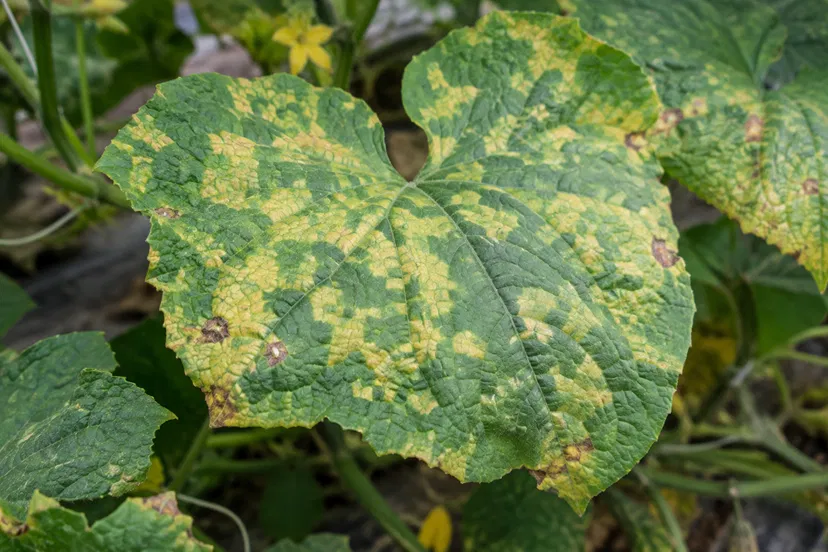
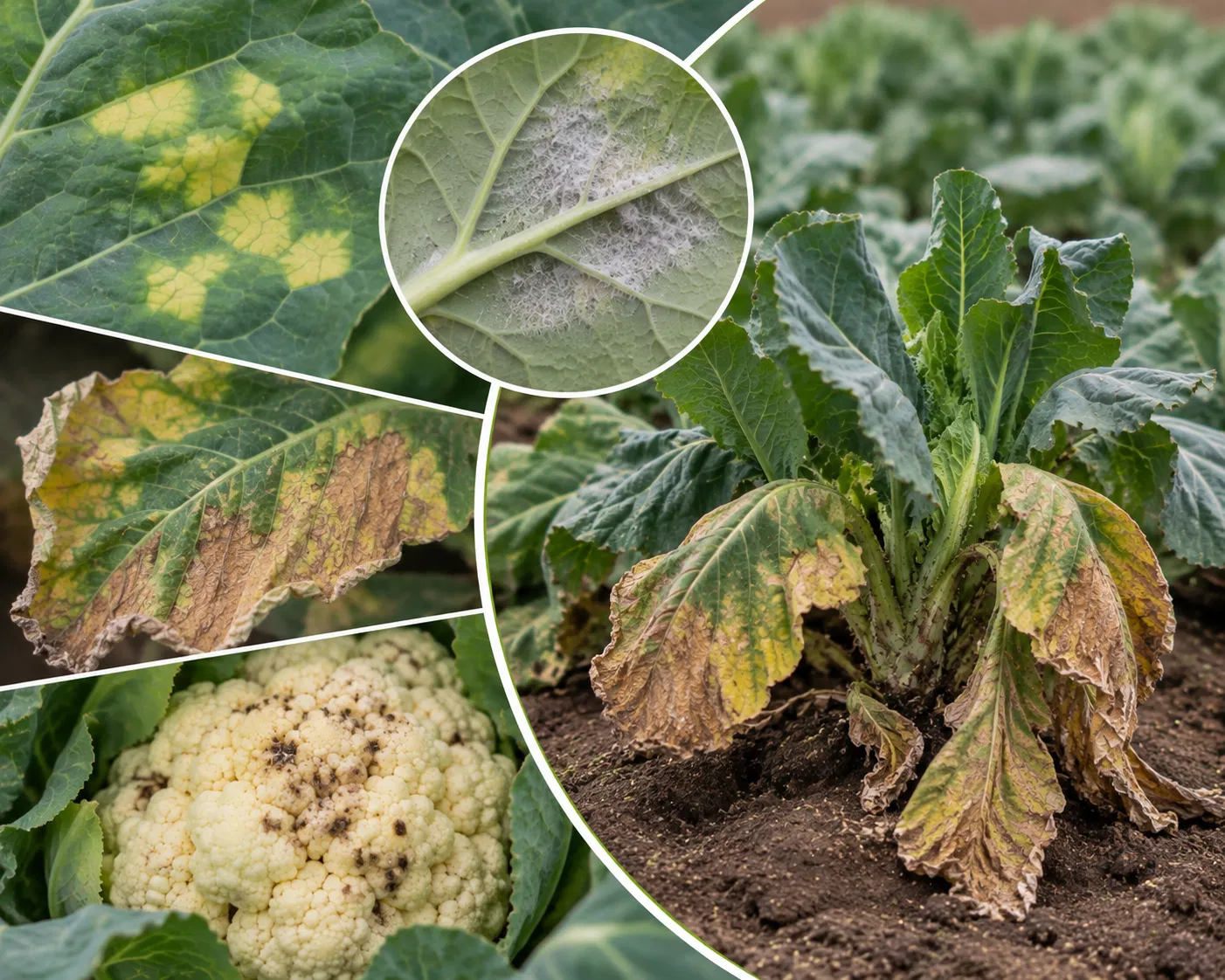
- Pale yellow, angular patches on the upper surface of the leaves
- A greyish-white, fuzzy fungal growth on the underside of the leaf, directly below the yellow patches
- Patches that turn brown and papery as the infection progresses
- Older, lower leaves affected first, with the disease moving upward over time
- Small brown or black spots on the curd in severe infections
- Stunted growth and early leaf drop in heavily affected plants
Causes
- Cool temperatures combined with high humidity or prolonged leaf wetness
- Overcast, drizzly weather or heavy morning dew
- Overhead irrigation that keeps the leaf surface wet for long periods
- Dense planting with poor airflow between plants
- Infected transplants or crop debris carrying the fungus into the field
- Continuous cropping of cauliflower or other cole crops in the same field
Management
Chemical Control
Azoxystrobin 4.8% w/w + Chlorothalonil 40% w/w SC is a confirmed option for downy mildew in cauliflower. It combines a systemic component that moves through the plant with a contact component that shields the leaf surface, giving both curative and protective action against the fungus.
Products recommendation
Cultural Practices
- Avoid overhead irrigation, especially late in the day, so leaves aren't left wet overnight
- Maintain proper plant spacing for better airflow and faster leaf drying
- Remove and destroy infected leaves and crop debris rather than leaving them in the field
- Rotate with a non-cole crop for at least a season in fields with a history of downy mildew
- Use disease-free transplants sourced from a reliable nursery
Conclusion
Downy mildew builds up quickly once the weather turns cool and humid, so checking the underside of the older leaves regularly helps catch it before it spreads. Good airflow, careful irrigation, and a timely fungicide spray together keep the disease in check and protect curd quality through to harvest.
Disclaimer: Always confirm current label registration, approved dosage, water volume, and pre-harvest interval (PHI) for your state before using any product, since labels are periodically revised by regulatory authorities.
This guide is a general advisory. Do your own research and verification before using any product. Always confirm suitability for your crop stage, region, and field conditions before making any purchase, spray, or crop-management decision.