When crops need a fast, reliable boost of phosphorus and nitrogen, DAP fertilizer often becomes the go-to choice. Diammonium phosphate is one of the world’s most widely used fertilizers because it delivers two essential nutrients in a concentrated, easy-to-handle form. Whether you grow row crops, vegetables, or pasture, understanding how DAP works can help you improve soil fertility, support strong root development, and increase yield potential.
What Is DAP Fertilizer?
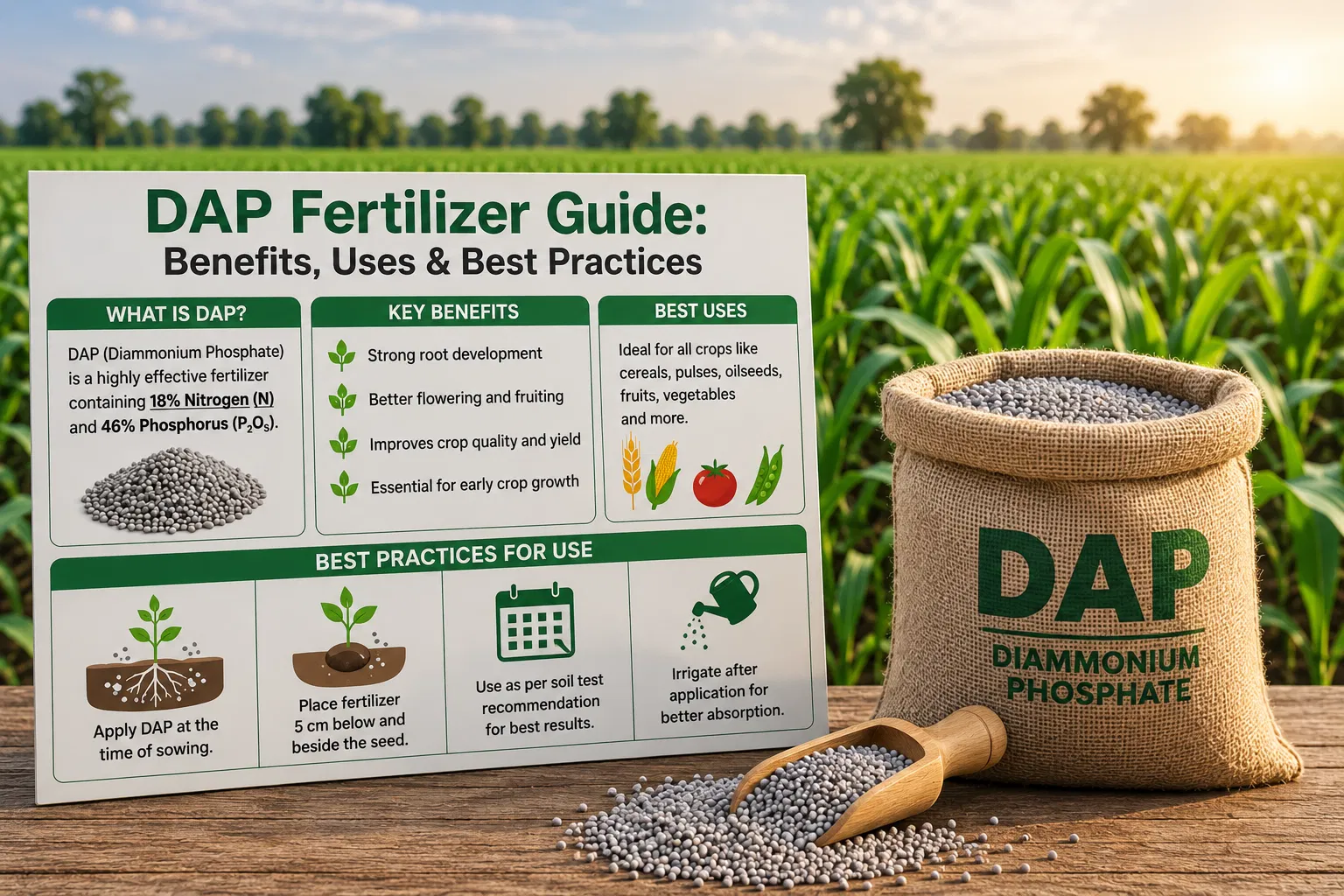
DAP stands for diammonium phosphate. It is a granular fertilizer made from two key nutrients:
- Nitrogen (N) – typically 18%
- Phosphorus (P) – typically 46% as P2O5
This makes DAP fertilizer known as an 18-46-0 fertilizer. It is highly concentrated, which means a relatively small amount can supply a significant nutrient dose. Farmers and gardeners value it because it supports early plant growth, root formation, and vigorous establishment.
How DAP Fertilizer Works
Diammonium phosphate provides phosphorus in a form plants can readily use, especially during early growth stages when roots are developing. It also supplies ammonium nitrogen, which supports leafy growth and overall plant vigor.
After application, DAP dissolves in soil moisture and becomes available to plants. In many soils, phosphorus tends to move very little, so placing DAP near the root zone is often more effective than broadcasting it across the surface.
Key idea: DAP is most effective when plants can access it early, especially during establishment and root growth.
Main Benefits of DAP Fertilizer
DAP fertilizer is popular for good reason. Its nutrient profile and performance offer several practical advantages for crop production and soil management.
1. High Phosphorus Content
Phosphorus is essential for energy transfer, root development, flowering, and seed formation. DAP provides a strong phosphorus supply that helps plants establish quickly and develop a robust root system.
2. Moderate Nitrogen Supply
The nitrogen in DAP supports early vegetative growth. This helps young plants build healthy leaves and stems while phosphorus encourages underground development.
3. Efficient Nutrient Concentration
Because DAP is highly concentrated, farmers can apply less product compared with lower-analysis fertilizers. That can reduce storage, transport, and handling costs.
4. Good Starter Fertilizer
DAP is widely used as a starter fertilizer at planting. This is especially useful in cool soils where phosphorus availability may be limited.
5. Versatile Crop Use
Diammonium phosphate is used on many crops, including:
- Corn
- Wheat
- Rice
- Soybeans
- Canola
- Vegetables
- Fruit crops
- Pasture and forage systems
Common Uses of DAP Fertilizer
DAP fertilizer is used in both large-scale agriculture and smaller growing operations. Its main uses include:
- Pre-plant application to prepare soils before seeding
- Band placement near seeds or seedlings for faster access
- Starter fertilizer for early root and shoot growth
- Blending with other fertilizers in custom nutrient programs
Because phosphorus is critical at early stages, DAP is often applied near the seed row or incorporated into the soil before planting. This positioning helps roots find nutrients quickly.
When to Use DAP Fertilizer
DAP is most useful when soil tests show a phosphorus deficiency or when crops need a nutrient boost during establishment. It is especially valuable in these situations:
- Low-phosphorus soils
- Cool spring planting conditions
- Newly established fields or pastures
- High-demand crops with strong early growth needs
- Fields with poor root development history
Soil testing is the best way to determine whether DAP fits your fertility plan. Applying it without a clear nutrient need can lead to unnecessary cost and nutrient imbalance.
How to Apply DAP Fertilizer
Application method matters just as much as the fertilizer itself. Since phosphorus is relatively immobile in soil, placement close to the root zone improves efficiency.
Broadcast Application
Broadcasting spreads fertilizer evenly over the soil surface. This works best when DAP is incorporated into the soil by tillage or rainfall. Surface-applied phosphorus may not move deeply enough to benefit young roots quickly.
Band Application
Banding places DAP in a concentrated strip near the seed row. This method is often more effective because roots can reach the nutrient zone sooner.
Starter Placement
Starter fertilizer placement is common in row crop systems. A small amount of DAP placed near but not directly with the seed can promote faster emergence and stronger early growth.
Important: Avoid placing too much fertilizer too close to seeds, as high salt concentrations can damage emerging seedlings.
Best Practices for Using DAP Fertilizer
To get the most value from diammonium phosphate, follow a few best practices:
- Test your soil first to confirm phosphorus needs.
- Use proper placement for maximum uptake and efficiency.
- Follow crop-specific recommendations for rate and timing.
- Avoid overapplication to reduce waste and environmental risk.
- Store properly in a dry area to prevent caking and moisture damage.
It is also wise to combine DAP with a balanced fertility program. Crops need more than phosphorus and nitrogen; potassium, sulfur, calcium, magnesium, and micronutrients may also be necessary depending on soil conditions and crop type.
Potential Drawbacks of DAP Fertilizer
Although DAP is highly effective, it is not perfect for every situation. A few limitations should be considered:
- Can raise soil pH locally near the granule after application
- May cause seed injury if placed too close at high rates
- Not a complete fertilizer because it contains no potassium or micronutrients
- Less effective when poorly placed in dry or compacted soils
These concerns are manageable when DAP is used correctly and as part of a larger fertility strategy.
DAP Fertilizer vs. Other Fertilizers
Compared with other common fertilizers, DAP stands out for its high phosphorus concentration. For example:
- Urea provides nitrogen only
- MAP fertilizer contains less nitrogen and more acidic reaction near the granule
- NPK blends provide a broader nutrient mix but usually at lower phosphorus concentration
Many growers choose DAP when their main goal is to supply phosphorus efficiently while still adding some nitrogen. If nitrogen is already sufficient, or if a different soil reaction is desired, another fertilizer may be a better fit.
Conclusion
DAP fertilizer remains one of the most valuable tools in modern crop nutrition because it delivers concentrated phosphorus and nitrogen in a form that supports rapid early growth. From root development to seedling establishment, diammonium phosphate can make a noticeable difference when used at the right rate, in the right place, and based on soil test results.
If you want stronger crop establishment and more efficient nutrient management, DAP deserves a place in your fertility plan. Start with a soil test, apply it strategically, and combine it with a balanced approach to plant nutrition for the best results.