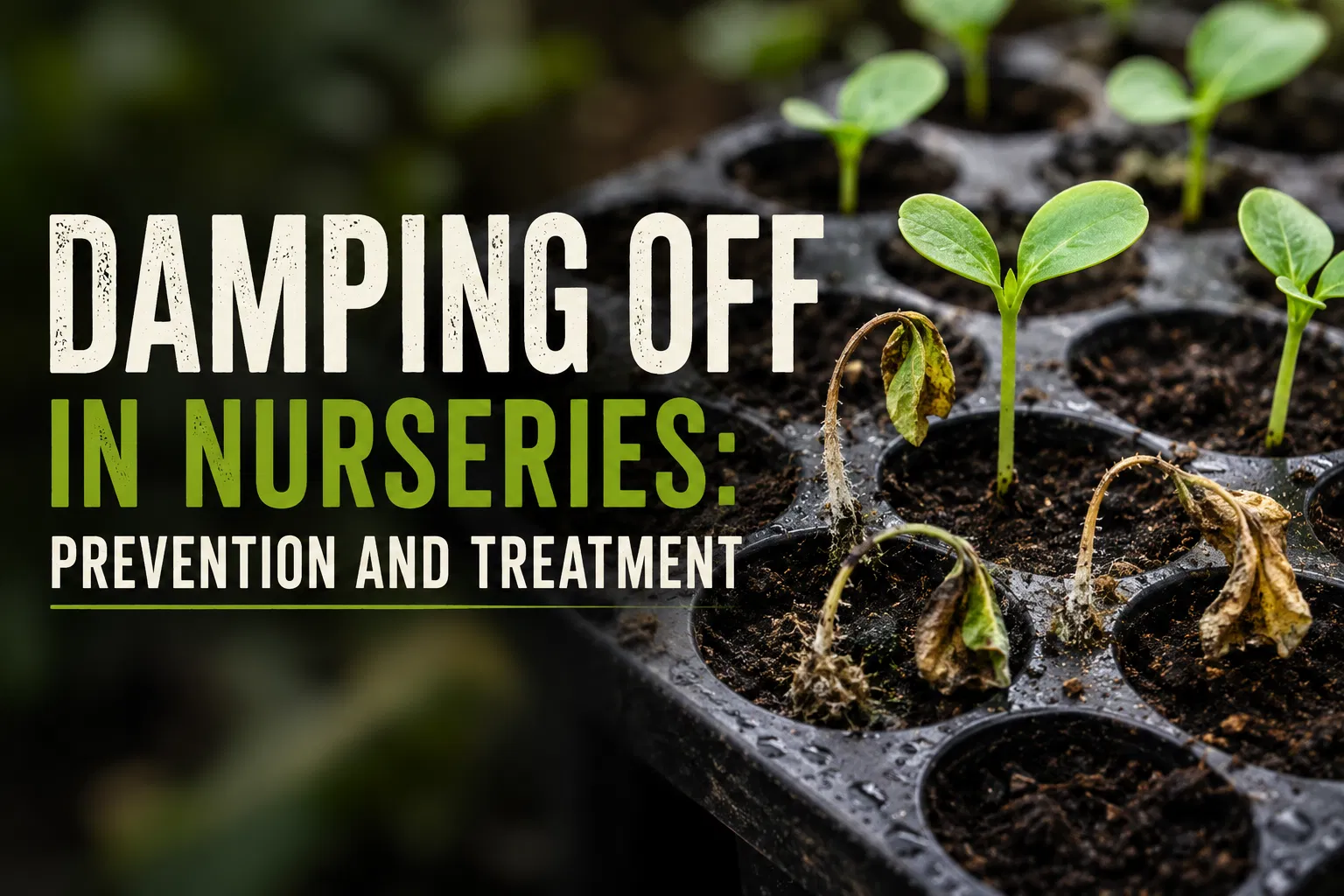
Few things are more frustrating in a nursery than watching healthy seeds sprout, only to have tender seedlings collapse overnight. This common problem is known as damping off, and it can wipe out trays of young plants before they ever get a chance to thrive. The good news is that damping off in nurseries is highly preventable when you understand the causes, recognize the warning signs early, and use the right cultural and treatment practices.
What Is Damping Off?
Damping off is a fungal or fungus-like disease that attacks seeds and young seedlings. It usually affects plants in overly wet, poorly ventilated, or crowded nursery conditions. The disease can strike before emergence, causing seeds to rot in the soil, or after emergence, when seedlings suddenly wilt, thin at the stem, and fall over.
The most common pathogens involved include Pythium, Rhizoctonia, and Fusarium. These organisms thrive in moist environments and spread quickly through contaminated soil, trays, water, tools, and plant debris.
Common Signs and Symptoms of Damping Off
Early detection is essential for managing damping off in nurseries. Watch for these symptoms:
- Seeds fail to germinate and rot in the soil
- Seedlings emerge, then suddenly collapse
- Stem bases become water-soaked, thin, or constricted
- Seedlings develop a pale, weak appearance
- Mold or fungal growth may appear on the soil surface
- Patches of seedlings die unevenly across trays
In many cases, the stem at the soil line becomes soft and brown. Once this happens, the plant usually cannot recover.
Why Damping Off Happens in Nurseries
Damping off thrives when nursery conditions favor disease development. Several common practices can increase risk:
- Overwatering: Constantly wet media creates ideal conditions for pathogens.
- Poor drainage: Waterlogged trays and compacted soil reduce oxygen around roots.
- High humidity: Moist air encourages fungal growth.
- Overcrowding: Poor air circulation allows disease to spread faster.
- Dirty tools or containers: Contaminated trays and pots can reintroduce pathogens.
- Using infected seed or soil: Disease may already be present at planting.
Because nursery seedlings are young and delicate, even small mistakes in irrigation or sanitation can lead to major losses.
Best Prevention Practices for Damping Off
Prevention is the most effective strategy for damping off control. Once seedlings collapse, recovery is difficult. A clean, well-managed nursery environment dramatically reduces the risk.
1. Start with Clean Seed and Growing Media
Use high-quality, disease-free seed from reputable suppliers. If possible, choose sterilized or pasteurized seed-starting mix rather than garden soil. Avoid reusing media from previous crops unless it has been properly treated.
Fresh, lightweight growing media with good drainage and aeration helps seedlings establish strong roots while discouraging pathogen development.
2. Sanitize Trays, Pots, and Tools
Nursery sanitation is critical. Clean and disinfect seed trays, pots, benches, tools, and propagation equipment before each use. Remove plant debris, old roots, and soil residues that can harbor disease organisms.
Good sanitation practices include:
- Washing containers thoroughly
- Using approved disinfectants according to label directions
- Keeping propagation areas free of weeds and debris
- Separating clean work zones from used equipment
3. Avoid Overwatering
Too much moisture is one of the biggest causes of damping off. Water only when needed, and allow the top layer of growing media to dry slightly between irrigations. Bottom watering, misting carefully, or using drip systems can help keep foliage and stems drier.
Always ensure trays drain properly. Standing water beneath containers should be avoided.
4. Improve Air Circulation
Good airflow helps reduce humidity around seedlings and speeds surface drying. Space trays properly and avoid stacking them too closely together. In enclosed nurseries, fans and ventilation systems can make a major difference.
Air movement should be gentle enough not to stress seedlings, but consistent enough to discourage excess moisture buildup.
5. Sow at the Correct Density
Overseeded trays create crowded conditions that favor disease. Follow recommended spacing and sowing rates for each crop. Thin seedlings if needed so they have room to grow and air can circulate around them.
6. Maintain Proper Temperature
Some damping off pathogens become more active in cool, wet conditions, while others thrive in warm, humid environments. Use crop-appropriate temperatures and avoid allowing the root zone to stay cold and wet for long periods.
7. Use Resistant or Vigorous Varieties When Available
Although resistance to damping off is not available for every crop, strong and vigorous seed varieties often establish faster and tolerate stress better. Faster germination shortens the vulnerable stage when seedlings are most at risk.
Treatment Options for Damping Off
Once damping off appears, treatment is mainly about stopping spread and protecting healthy seedlings. Severely infected plants usually cannot be saved, but immediate action can reduce losses.
Remove Infected Seedlings Immediately
Pull out diseased seedlings as soon as they are noticed. Do not leave them in the tray, because the pathogens can spread to nearby plants. Dispose of infected material away from the nursery area.
Reduce Moisture Right Away
Cut back on watering and improve drying conditions. Increase air movement, open vents, and let the growing medium dry more between irrigations. This step alone often slows the disease significantly.
Use Fungicides or Biocontrols When Appropriate
In commercial nurseries, labeled fungicides may be used as a preventive or early-response measure, depending on the crop and pathogen involved. Always follow label instructions carefully and choose products approved for the specific nursery setting.
Biological control products containing beneficial microbes may also help suppress damping off pathogens when integrated into a broader disease management program. These solutions work best as prevention rather than rescue treatment.
Reevaluate Nursery Practices
If damping off is recurring, review every part of your propagation routine. The underlying issue is often not a single pathogen, but a combination of moisture, sanitation, and environmental stress.
Healthy seedlings depend on clean conditions, balanced moisture, and good airflow. When those basics are in place, damping off becomes far less likely.
Integrated Damping Off Management for Nurseries
The most effective approach to damping off in nurseries is integrated disease management. This means combining sanitation, environmental control, monitoring, and targeted treatments rather than relying on one method alone.
A practical management plan includes:
- Using clean seed and sterile media
- Disinfecting trays and tools regularly
- Managing irrigation carefully
- Maintaining good spacing and ventilation
- Inspecting seedlings daily for early symptoms
- Applying approved fungicides or biocontrols only when needed
Consistent attention to these basics is far more effective than trying to cure an advanced outbreak.
Final Thoughts
Damping off in nurseries can be devastating, but it is not inevitable. With clean equipment, careful watering, proper spacing, and close monitoring, you can protect seedlings during their most vulnerable stage. Prevention is always easier, cheaper, and more effective than treatment after collapse begins.
If you manage a nursery, make damping off prevention part of your daily routine. A few simple practices today can save entire trays of seedlings tomorrow.