Damping-off is one of the earliest and most devastating problems a cucumber grower can face — often striking before the crop has even had a chance to establish. A healthy-looking nursery bed or field can turn patchy within days, with seedlings collapsing one after another. Because it hits at the most vulnerable stage of the plant's life, damping-off can wipe out a significant portion of the stand if not managed in time.
Here's a complete breakdown of what damping-off is, why it happens, and how to keep it under control.
What is Damping-Off in Cucumber?
Damping-off is a seedling disease caused by soil-borne fungi and fungus-like pathogens, primarily Pythium spp., Rhizoctonia solani, Fusarium spp., and sometimes Phytophthora spp. These organisms thrive in wet, poorly drained soil and attack cucumber seeds and young seedlings before or shortly after emergence, making it one of the most common causes of poor plant stand in cucurbit nurseries and direct-sown fields.
Symptoms of Damping-Off in Cucumber
Pre-Emergence Damping-Off
- Seeds rot in the soil before germination
- Poor or patchy seedling emergence in the bed or field
- Soft, mushy, discoloured seeds when dug up
Post-Emergence Damping-Off
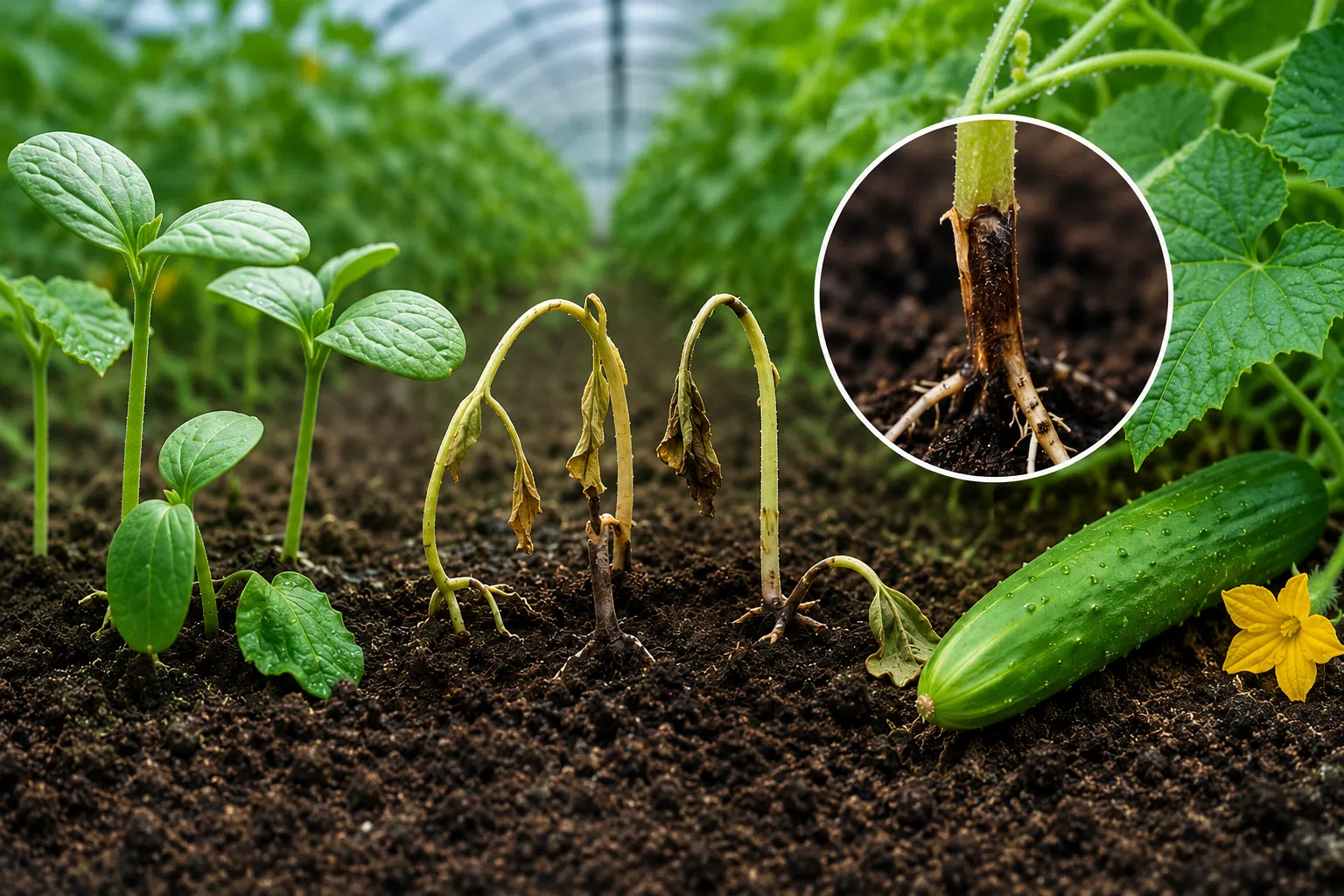
- Water-soaked lesions on the stem near the soil line
- Stem tissue at the base becomes thin, soft, and constricted (a pinched, thread-like appearance)
- Seedlings topple over and collapse, even though the leaves may still look green
- Seedlings wilt suddenly and die within a day or two of showing symptoms
- Roots appear brown, soft, and rotted when pulled out
- Disease often spreads outward from a single point, creating bare, empty patches in the nursery bed
What Causes Damping-Off in Cucumber
Damping-off pathogens are present in most soils and become active whenever conditions favour them. Key contributing factors include:
- Overwatering or poor drainage, keeping the soil consistently wet
- Heavy, compacted soils with poor aeration
- Sowing too deep or too densely, which weakens seedlings and restricts airflow
- Low soil temperature combined with high moisture, which slows germination and prolongs exposure to pathogens
- Using contaminated or unsterilized nursery soil, pots, or trays
- Poor quality or infected seed
- Continuous cropping of cucurbits in the same soil without rotation
- High humidity and poor ventilation in nursery structures or polyhouses
- Excess nitrogen application, leading to soft, succulent seedling growth that is more susceptible to infection
Prevention of Damping-Off in Cucumber
- Use certified, disease-free, treated seed from a reliable source
- Prepare raised nursery beds to ensure good drainage; avoid low-lying, waterlogged sites
- Avoid overwatering — irrigate only when the top layer of soil feels dry
- Maintain proper seed spacing and avoid deep or overcrowded sowing
- Sterilize nursery soil, trays, and containers before sowing, especially if reused from a previous crop
- Ensure good ventilation in nursery structures to reduce humidity around seedlings
- Avoid excess nitrogen at the seedling stage
- Practice crop rotation with non-cucurbit crops to break the disease cycle
- Remove and destroy infected seedlings promptly to prevent the disease from spreading to healthy ones
Integrated Management of Damping-Off in Cucumber
1. Seed Treatment
Treating seed before sowing is the single most effective step, as it protects the seed and emerging root system right from germination.
| Product name | Technical content | Dosage |
|---|---|---|
| Vitavax Power | Carboxin 37.5% + Thiram 37.5% WS | 2–3 gm/kg seed |
| Multiplex Nisarga (Trichoderma) | Trichoderma viride | 2–3 gm/kg seed |
| Syngenta Ridomil Gold | Metalaxyl 8% + Mancozeb 64% WP | 2–2.5 gm/kg seed |
2. Biological Management
Bio-agents applied to soil and roots build up beneficial microbial populations that outcompete and suppress the damping-off pathogens.
| Product name | Technical content | Dosage |
|---|---|---|
| Anand Dr Bacto's Fluro | Pseudomonas fluorescens | Soil drench: 2.5 ml/lit of water |
| Multiplex Bio-Jodi | Bacillus spp. & Pseudomonas spp | Soil drench: 5 gm/lit of water |
| Katyayani Tyson | Trichoderma viride | Soil drench : 5ml/lit of water |
3. Chemical Management (Soil Drench)
Once symptoms appear, a timely soil drench around the base of seedlings can stop the disease from spreading further in the bed.
| Product name | Technical content | Dosage |
|---|---|---|
| Ridomil Gold | Metalaxyl 8% + Mancozeb 64% WP | 2–2.5 gm/lit of water, as soil drench |
| Antracol Fungicide | Propineb 70% WP | 2–2.5 gm/lit of water |
| Blue Copper Fungicide | Copper Oxychloride | 2.5–3 gm/lit of water, as soil drench |
Always drench the soil around the root zone rather than spraying only on foliage, since the infection originates at the stem base and roots.
4. Cultural and Nursery Management Practices
- Raise seedlings in raised beds, pro-trays, or well-drained media rather than flat, low-lying beds
- Avoid excess irrigation, and allow the soil surface to dry between waterings
- Space seedlings adequately to improve airflow and reduce leaf and stem wetness
- Rotate nursery sites and avoid reusing infected soil or trays season after season
- Remove infected seedlings and surrounding soil immediately to limit spread
5. Regular Monitoring
- Inspect the nursery bed daily during the first two to three weeks after sowing, as this is the most vulnerable window
- Watch for early signs like patchy emergence or thin, water-soaked stems, and act immediately rather than waiting for visible collapse
- Early intervention with a spot drench can often save the rest of the bed even after a few seedlings are lost