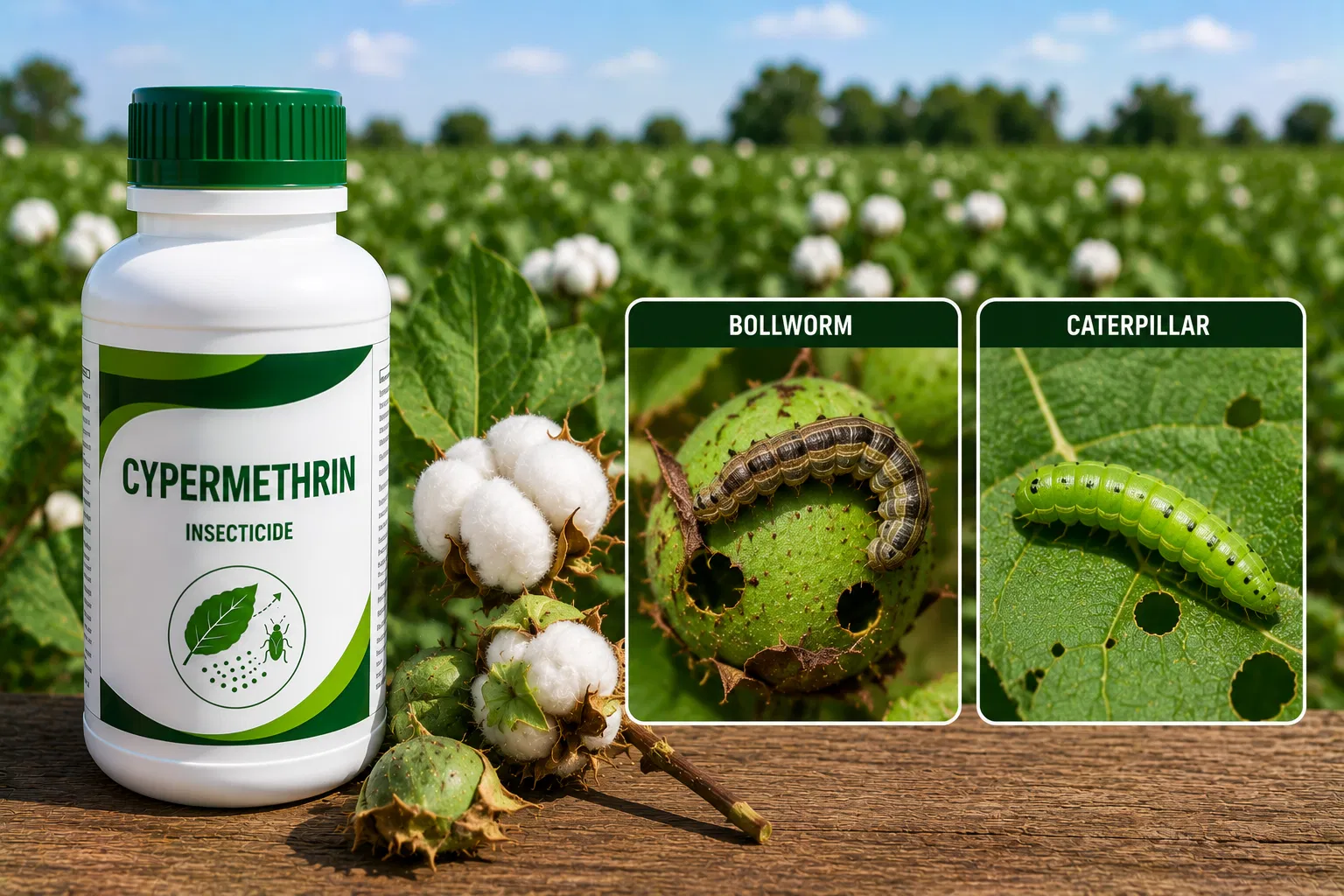
When bollworms and caterpillars start feeding on crops, damage can spread fast. Leaves get eaten, flowers are destroyed, and fruits or bolls may fail to develop properly. For growers looking for a fast-acting insecticide, cypermethrin for bollworm and caterpillar control is a widely used solution. Known for its quick knockdown action and broad-spectrum performance, cypermethrin helps protect crops from destructive chewing pests before losses become severe.
What Is Cypermethrin?
Cypermethrin is a synthetic pyrethroid insecticide used to control a wide range of insect pests. It works by affecting the nervous system of insects, causing rapid paralysis and death. Because of its fast action, it is commonly applied when pest pressure is high and immediate control is needed.
In agriculture, cypermethrin is often used against bollworms, caterpillars, and other chewing insects that can significantly reduce crop yield and quality. Farmers value it for its effectiveness, ease of application, and dependable results across many crops.
How Cypermethrin Works on Bollworms and Caterpillars
Bollworms and caterpillars are especially damaging because they feed directly on tender plant parts. They chew leaves, bore into fruit or bolls, and weaken the plant’s ability to produce healthy yield. Cypermethrin targets these pests by disrupting nerve signals, which quickly stops their feeding activity.
This is important because even short feeding periods can cause major crop injury. By stopping pests early, cypermethrin helps reduce the extent of damage and supports healthier plant development.
Key advantage: Cypermethrin offers rapid knockdown, making it a practical choice when bollworm or caterpillar populations rise suddenly.
Crops Where Cypermethrin Is Commonly Used
Cypermethrin is used in many crop protection programs where bollworms and caterpillars are major threats. Depending on local labels and recommendations, it may be used on:
- Cotton
- Vegetables
- Pulses and legumes
- Oilseeds
- Orchards and fruit crops
- Maize and other field crops
Its broad use reflects its ability to control several destructive species, including leaf-eating caterpillars and boll-feeding larvae. Always follow the registered label for the specific crop and pest target.
Benefits of Using Cypermethrin for Pest Control
There are several reasons cypermethrin remains a popular choice in crop protection programs. Its main benefits include:
- Fast action: It quickly reduces active pest populations.
- Broad-spectrum control: It works against multiple chewing pests.
- Protects yield: Reduces crop loss caused by feeding damage.
- Flexible use: Suitable for several crops and pest situations.
- Reliable performance: Often used when immediate intervention is needed.
For growers facing an outbreak, these advantages can make a real difference in protecting both crop quality and marketable yield.
Best Practices for Applying Cypermethrin
To get the best results from cypermethrin for bollworm and caterpillar control, application timing and coverage matter. Since these pests can hide inside plant canopies or feed on developing parts, thorough spray coverage is essential.
- Monitor crops regularly: Check fields for eggs, larvae, feeding holes, and damaged plant parts.
- Apply early: Treat when young larvae are present for better control.
- Use correct dosage: Follow label rates and local agricultural guidelines.
- Ensure even spray coverage: Reach both upper and lower plant surfaces where pests may hide.
- Rotate insecticides: Avoid repeated use of the same mode of action to help reduce resistance risk.
Good timing is especially important because larger larvae may cause more damage before they are controlled. Early treatment often produces better outcomes than waiting until infestations are severe.
Resistance Management Matters
Like many insecticides, cypermethrin should be used as part of a resistance management plan. Overuse or repeated reliance on one product can lead to reduced effectiveness over time. To help protect performance, growers should rotate with insecticides that have different modes of action and combine chemical control with other pest management practices.
Integrated pest management may include crop scouting, removal of damaged plant material, biological control, and the use of pest thresholds before spraying. This approach helps maintain long-term control and supports more sustainable farming practices.
Safety and Environmental Considerations
Cypermethrin is effective, but it should always be handled carefully. Personal protective equipment, such as gloves, masks, and protective clothing, should be worn during mixing and application. Spraying should be done according to label instructions to reduce risks to users, beneficial insects, and the surrounding environment.
It is also important to protect pollinators and aquatic life by avoiding drift, runoff, and unnecessary applications. Responsible use ensures that pest control remains effective while minimizing unintended impacts.
Simple safety reminders
- Read and follow the product label carefully
- Do not exceed recommended application rates
- Avoid spraying during windy conditions
- Keep the product away from children and animals
- Store insecticides in a secure, dry place
Signs Your Crop May Need Treatment
Knowing when to apply cypermethrin can help prevent unnecessary sprays and improve results. Common warning signs of bollworm or caterpillar activity include:
- Chewed leaves or ragged edges
- Holes in flowers, fruits, or bolls
- Frass or droppings on leaves and stems
- Visible larvae on the plant
- Sudden drop in plant vigor or fruit set
If these symptoms appear, immediate field inspection can help determine whether treatment is needed. Acting quickly is often the difference between minor damage and major yield loss.
Why Cypermethrin Remains a Trusted Option
In fast-moving pest outbreaks, growers need a solution that works quickly and consistently. Cypermethrin continues to be a trusted insecticide because it delivers strong control against bollworms and caterpillars when used correctly. Its fast knockdown action, broad usefulness, and role in integrated pest management make it a valuable tool in modern agriculture.
However, no single insecticide should be relied on alone. The best results come from combining timely scouting, proper spray practices, and resistance-aware pest management strategies.
Conclusion
Cypermethrin for bollworm and caterpillar control remains an effective option for protecting crops from destructive chewing pests. When applied at the right time and used responsibly, it can reduce feeding damage, preserve yield, and support healthier plants throughout the growing season.
If bollworms or caterpillars are threatening your crop, act early, follow label guidance, and use cypermethrin as part of a broader pest management plan for the best long-term results.