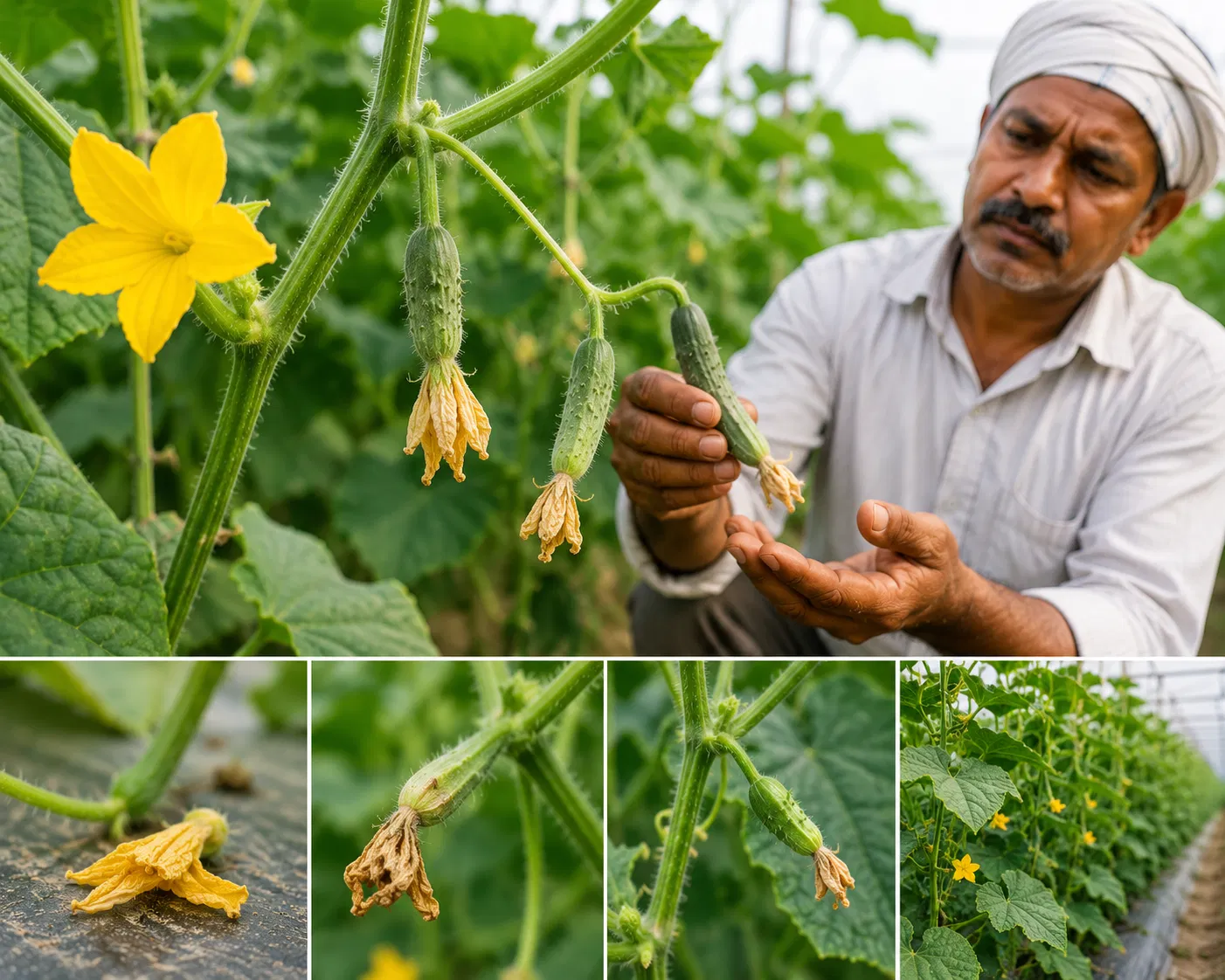
Cucumber plants can look healthy, climb vigorously, and bloom heavily—yet still fail to produce a strong harvest. If your cucumber flowers are dropping off or the plants are setting very few fruits, you are likely dealing with one or more common pollination, nutrition, or stress-related problems. The good news is that cucumber flower drop and poor fruit set are usually fixable once you identify the cause.
In this guide, we’ll cover the main reasons cucumbers drop flowers, why fruit set fails, and what farmers can do to improve yields quickly and reliably.
Why Cucumber Flowers Drop
It is normal for some cucumber flowers to fall naturally, especially male flowers. However, excessive flower drop often signals stress. Cucumber plants are sensitive to temperature swings, poor pollination, low nutrition, and water irregularities.
Here are the most common causes:
1. Poor Pollination
Cucumbers depend heavily on pollinators such as bees. Female flowers must receive pollen from male flowers to form fruit. If pollination is weak, female flowers may wither and drop before setting fruit.
Signs of pollination issues include:
- Flowers opening but no fruit developing
- Small cucumbers turning yellow and dropping
- Very low bee activity in the field
2. Excessive Heat or Cold
Temperature stress is a major reason for cucumber flower drop. Cucumbers grow best in warm conditions, but extreme heat can damage pollen viability, while cold nights can reduce flowering and fruit set.
Ideal growing conditions: daytime temperatures around 21–30°C and warm nights for consistent flowering and fruit development.
3. Water Stress
Inconsistent moisture can cause flowers to drop and fruits to abort. Cucumbers have shallow roots and need steady watering. Dry soil one day and soggy soil the next creates stress that weakens flowering and fruiting.
4. Nutrient Imbalance
Too much nitrogen can produce lush vines and lots of leaves, but fewer female flowers and poor fruit set. On the other hand, low levels of phosphorus, potassium, calcium, and micronutrients can also reduce flower retention and fruit development.
5. Pest and Disease Pressure
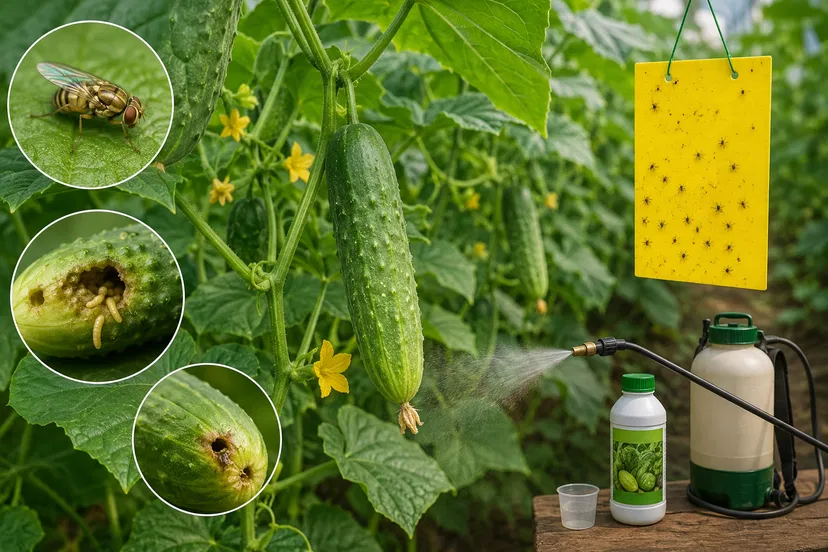
Diseases such as powdery mildew, downy mildew, and bacterial wilt weaken plants and reduce fruit set. Pests like aphids, thrips, and spider mites can also stress the crop and interfere with normal flowering.
6. Overcrowding and Poor Airflow
When cucumber plants are too crowded, they compete for light, nutrients, and moisture. Poor airflow increases humidity around flowers, which can reduce pollination efficiency and raise disease risk.
How to Improve Cucumber Fruit Set
Once you know the cause, you can take practical steps to improve fruit set and reduce flower drop. Many farmers see results quickly when they correct growing conditions and support pollination.
1. Encourage Pollinators
Healthy pollinator activity is one of the best ways to improve cucumber fruit set. Bees are especially important for transferring pollen from male to female flowers.
To support pollination:
- Avoid spraying insecticides during flowering
- Plant flowering borders to attract bees
- Keep water available near the field
- Consider placing beehives near large cucumber plantings
2. Hand-Pollinate if Needed
If bee activity is low, hand-pollination can save the crop. Early morning is the best time, when flowers are fresh and pollen is active.
Steps for hand-pollination:
- Pick a male flower with visible pollen.
- Remove the petals carefully.
- Touch the pollen-bearing part to the center of a female flower.
- Repeat across plants for better fruit set.
3. Manage Temperature Stress
For open-field production, choose planting dates that avoid extreme heat or cold periods. In protected cultivation, use shade nets, ventilation, or row covers as needed to reduce stress.
If temperatures are rising too much:
- Use mulch to keep roots cooler
- Water early in the morning
- Provide partial shade during intense heat
4. Keep Soil Moisture Consistent
Steady moisture is essential for strong cucumber fruit set. Drip irrigation works especially well because it supplies water evenly without soaking foliage.
Best practices include:
- Water deeply and regularly
- Do not allow soil to dry out completely
- Avoid waterlogging
- Use mulch to retain moisture and reduce stress
5. Balance Fertilizer Use
Healthy flowering and fruiting depend on proper nutrition. If nitrogen is too high, cucumbers may produce excessive vegetative growth instead of fruit.
Focus on balanced feeding with emphasis on:
- Phosphorus for flowering and root support
- Potassium for fruit development and quality
- Calcium for flower and fruit strength
- Boron and magnesium for reproductive success
Soil testing is the best way to determine the exact fertilizer needs of your field.
6. Control Pests and Diseases Early
Healthy plants are more likely to retain flowers and form fruits successfully. Scout regularly for insect damage and disease symptoms.
Good crop protection includes:
- Removing infected leaves promptly
- Using resistant varieties where available
- Practicing crop rotation
- Maintaining clean field conditions
- Applying recommended control measures early
7. Avoid Overcrowding
Space plants properly to improve airflow and reduce competition. Better spacing also helps pollinators move more easily through the field.
Good spacing supports:
- Stronger light penetration
- Lower humidity around flowers
- Reduced disease pressure
- Better fruit quality
Male Flowers vs Female Flowers: Know the Difference
Many farmers worry when they see lots of flowers but no fruits. In cucumbers, this is often because the plant produces more male flowers early in the season. Male flowers appear first and do not form fruit. Female flowers have a small swelling at the base that becomes the cucumber after pollination.
If you see mostly male flowers at first, do not panic. The plant may still start producing female flowers as conditions improve and the vine matures.
Common Mistakes That Reduce Fruit Set
Several common management mistakes can worsen cucumber flower drop and poor fruit setting:
- Using too much nitrogen fertilizer
- Spraying insecticides during flowering
- Allowing soil to dry out between irrigations
- Poor pollinator habitat around the farm
- Ignoring early signs of disease or nutrient deficiency
Avoiding these mistakes can make a major difference in yield.
When to Expect Better Results
Once the cause of poor fruit set is corrected, improvement may happen within days or weeks depending on the issue. Pollination-related problems can improve quickly. Nutrient or water stress may take longer, especially if the plant has already been weakened.
Keep monitoring new flowers and developing fruits. The best indicator of recovery is the appearance of healthy female flowers that grow into firm cucumbers instead of dropping off.
Final Tips for Farmers
Cucumber flower drop and poor fruit set are frustrating, but they are not mysterious. In most cases, the problem comes down to pollination failure, temperature stress, water inconsistency, or nutrient imbalance. By managing these factors carefully, farmers can improve fruit retention and get more marketable cucumbers from each plant.
Focus on healthy soil, steady irrigation, balanced feeding, good spacing, and strong pollinator activity. Small improvements in crop management often lead to big gains in yield.
If your cucumber field is shedding flowers, act early. Correct the stress, support pollination, and keep the crop growing steadily for better fruit set and higher harvests.