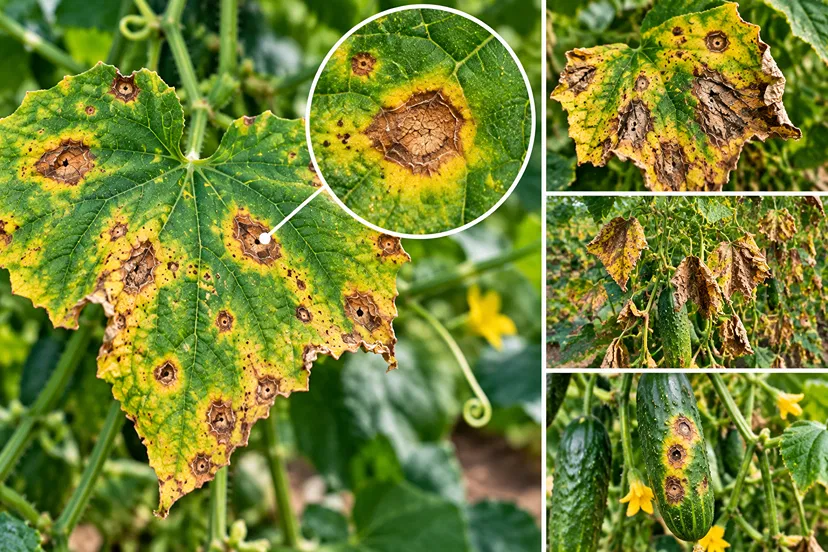
Cucumber crops are affected by a range of fungal and nematode-driven diseases that reduce photosynthetic leaf area, weaken root function, and lower both yield and fruit quality if left unmanaged. Each disease has a distinct causal organism, mode of spread, and control requirement, so correct identification is the first step to effective management. This guide covers the four diseases most commonly reported in cucumber cultivation, their diagnostic symptoms, and the fungicide or nematicide recommended for each.
1. Downy Mildew
Downy mildew shows up as pale yellow, angular patches on the upper leaf surface, with a greyish fungal growth visible underneath. It spreads fast in cool, humid weather and can defoliate a crop within days if left untreated.
For control, growers can turn to Azoxystrobin 23% SC, a systemic fungicide that moves through the plant to give both protective and curative action against the fungus.
Products recommendation
2. Powdery Mildew
Powdery mildew appears as white, powdery patches on the leaves and stems, usually starting on the older growth. Heavily infected leaves turn yellow and dry out, which weakens the plant and affects fruit development.
Fluxapyroxad 250 g/l + Pyraclostrobin 250 g/l SC works well against this disease, combining two modes of action for longer-lasting control while protecting new growth as the plant develops.
Products recommendation
3. Root Knot Nematode
Root knot nematode attacks the roots rather than the foliage, so above-ground symptoms show up as stunted growth, yellowing, and wilting in patches, especially during the heat of the day. Pulling up an affected plant usually reveals small, bead-like galls on the roots.
Applied to the root zone, Fluopyram 34.48% w/w SC disrupts the nematode's ability to feed and reproduce, cutting off the infestation at its source.
Products recommendation
4. Anthracnose
Anthracnose shows up as dark, sunken spots on leaves, stems, and fruit, often with a pinkish spore mass forming in the center under humid conditions. It spreads through splashing water and can affect the crop at any growth stage.
A spray of Copper Sulphate 47.15% + Mancozeb 30% WDG forms a protective barrier on the plant surface, stopping spores from infecting healthy tissue before they get a foothold.
Products recommendation
Conclusion
Most cucumber diseases give some warning before they take hold, whether it's a faint yellow patch, a powdery film, or a plant that wilts a little earlier than the rest. Regular scouting and matching the right product to the disease at the first sign of trouble go a long way in protecting yield through the season.
Disclaimer: Always confirm current label registration, approved dosage, water volume, and pre-harvest interval (PHI) for your state before using any product, since labels are periodically revised by regulatory authorities.
This guide is a general advisory. Do your own research and verification before using any product. Always confirm suitability for your crop stage, region, and field conditions before making any purchase, spray, or crop-management decision.