If you want a flower that delivers big beauty with very little fuss, cosmos is hard to beat. These cheerful blooms bring airy color, attract pollinators, and thrive in conditions that leave fussier plants struggling. Whether you are planting a cottage garden, a pollinator border, or a simple container display, cosmos flower cultivation is one of the easiest and most rewarding gardening projects you can take on.
Why Grow Cosmos Flowers?
Cosmos flowers are loved for their delicate, daisy-like blooms and feathery foliage, but their real appeal lies in how easy they are to grow. They are fast-growing, bloom for months, and do not demand constant attention. Once established, they can handle heat, poor soil, and dry spells better than many garden annuals.
Here are a few reasons gardeners keep coming back to cosmos:
- Long blooming season from early summer until frost
- Low-maintenance care ideal for beginners
- Pollinator-friendly flowers that attract bees and butterflies
- Versatile use in borders, beds, containers, and cutting gardens
- Excellent value because they grow quickly from seed
Best Cosmos Varieties for Home Gardens
Before planting, it helps to choose the right type of cosmos for your space. The two most popular species are Cosmos bipinnatus and Cosmos sulphureus.
Cosmos bipinnatus
This is the classic garden cosmos. It produces tall stems with fine, airy foliage and blooms in pink, white, rose, and magenta. It is especially popular in cutting gardens and cottage-style landscapes.
Cosmos sulphureus
This variety has warmer tones such as yellow, orange, and gold. It is often more heat-tolerant and compact than Cosmos bipinnatus, making it a strong choice for hotter climates.
Dwarf and Compact Types
If you are gardening in containers or smaller beds, look for dwarf cosmos varieties. These stay shorter, bloom heavily, and are less likely to flop over in windy spots.
How to Plant Cosmos Flowers
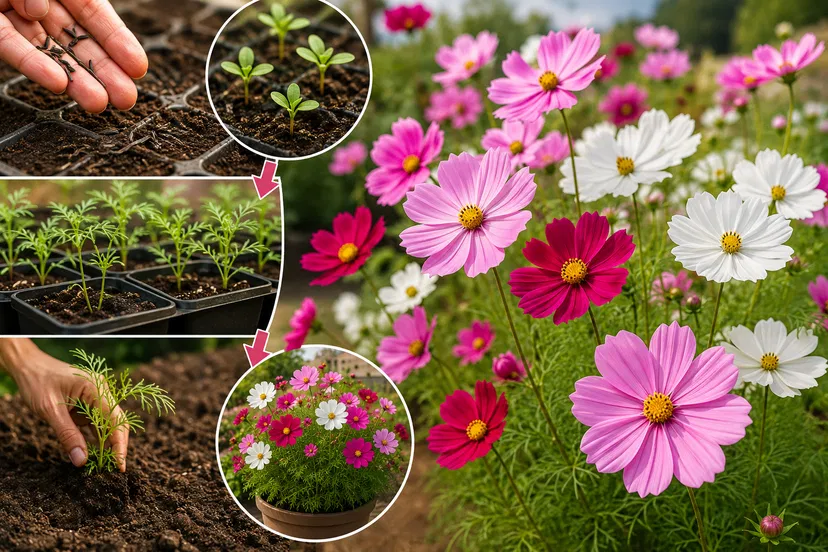
One of the best things about cosmos flower cultivation is how simple planting can be. Cosmos are usually grown from seed, and they germinate quickly when given warmth and light.
When to Plant
Start cosmos seeds outdoors after the last frost date, once the soil begins to warm. In colder regions, you can start seeds indoors 4 to 6 weeks before the final frost, but direct sowing is often easier and works very well.
Where to Plant
Choose a location with full sun. Cosmos need at least 6 to 8 hours of direct sunlight each day for strong growth and abundant flowering. They also prefer well-draining soil. In fact, overly rich soil can lead to lots of leaves and fewer blooms.
Tip: Cosmos often bloom best when they are not overfed. A little neglect can actually improve flower production.
How to Sow Seeds
- Prepare loose, weed-free soil.
- Scatter seeds lightly or plant them about 1/4 inch deep.
- Cover gently with soil and water lightly.
- Keep the area evenly moist until germination.
Seeds usually sprout within 7 to 14 days. Once seedlings appear, thin them so plants have enough room to grow.
Ideal Soil and Watering Conditions
Cosmos are not picky, which is another reason they are so popular. They do best in moderately fertile, well-draining soil. Heavy clay or soggy ground can cause weak growth or root problems, so improving drainage is important if your soil tends to hold water.
Watering Needs
Young plants need regular watering until they establish roots. After that, cosmos are fairly drought-tolerant. Water deeply only when the top inch of soil feels dry. Overwatering can lead to lush foliage, fewer flowers, and disease issues.
Feeding Cosmos
Cosmos usually do not need much fertilizer. If your soil is very poor, you can add a small amount of balanced, slow-release fertilizer at planting time. Avoid high-nitrogen fertilizers, as they encourage leaf growth instead of flowers.
How to Care for Cosmos During the Growing Season
Cosmos flower cultivation is simple, but a few small care habits can make a big difference in bloom quality and plant shape.
Pinching Young Plants
When seedlings reach about 12 inches tall, pinch the growing tips to encourage branching. This creates fuller plants with more flower stems. It is an easy step that often leads to a much better display.
Deadheading Spent Blooms
Removing faded flowers helps cosmos keep producing new buds. If you want a long season of color, deadheading is worth the effort. Simply snip or pinch off the old blooms down to the next leaf node.
Staking Tall Varieties
Tall cosmos can become top-heavy, especially in rich soil or windy areas. Use stakes, rings, or discreet supports if needed. Planting them in groups can also help them lean on one another for support.
Growing Cosmos in Containers
Cosmos can grow beautifully in pots, especially dwarf varieties. Container gardening is a great option if you have limited space, poor soil, or want a bright display on a patio or balcony.
- Choose a container with drainage holes
- Use a lightweight, well-draining potting mix
- Place the pot in full sun
- Water when the top layer of soil dries out
- Feed lightly only if growth appears weak
In containers, cosmos may need more frequent watering than in garden beds, but they still prefer a slightly dry rhythm over constant moisture.
Pests and Problems to Watch For
Cosmos are generally resilient, but a few issues can appear if growing conditions are poor. The good news is that most problems are easy to manage.
Common Issues
- Aphids: Often gather on tender growth; spray with water or use insecticidal soap if needed
- Powdery mildew: Can appear in humid conditions with poor air circulation
- Flopping stems: Usually caused by too much shade or overly rich soil
- Weak flowering: Often linked to too much fertilizer or not enough sunlight
Proper spacing, full sun, and moderate watering will prevent most of these concerns.
Harvesting Cosmos for Fresh Bouquets
Cosmos make lovely cut flowers. Their long stems and delicate petals add a light, natural feel to arrangements. For the best vase life, cut flowers early in the morning when blooms are just opening.
Cutting Tips
- Use clean, sharp scissors or garden shears.
- Choose stems with partially open flowers and buds.
- Strip leaves from the lower portion of the stem.
- Place stems in cool water right away.
Regular cutting can actually encourage more blooming, making cosmos a smart choice for home bouquet growers.
Why Cosmos Are Perfect for Beginner Gardeners
Not every flower is forgiving, but cosmos are. They germinate easily, grow quickly, and recover well from basic mistakes. If you forget to water once in a while or your soil is less than perfect, cosmos usually keep going.
That combination of beauty and resilience makes them one of the best flowers for new gardeners. They also offer fast results, which is incredibly satisfying when you are learning how to garden.
Final Thoughts
Cosmos flower cultivation is one of the easiest ways to bring color, movement, and life into your garden. With full sun, well-drained soil, and minimal care, these graceful blooms will reward you with months of vibrant flowers. Plant them from seed, give them a little space, and enjoy the show all season long.
If you are looking for a flower that is simple to grow, beautiful to look at, and generous in bloom, cosmos is an excellent choice. Start a patch this season, and you may find it becomes one of your favorite garden flowers year after year.