Drip irrigation is one of the smartest ways to water a garden, landscape, or crop area. It saves water, reduces runoff, and delivers moisture right where plants need it most. But even a well-designed drip irrigation system can underperform if it’s installed or maintained incorrectly. Small mistakes can lead to dry roots, wasted water, clogged emitters, and stressed plants.
If you want stronger growth, better water efficiency, and fewer repairs, it helps to know the most common drip irrigation mistakes and how to avoid them. Whether you’re setting up a new system or troubleshooting an existing one, the tips below can help you get more reliable results from your drip irrigation setup.
1. Using the Wrong Pressure for the System
One of the most common drip irrigation mistakes is running the system at the wrong water pressure. Drip emitters are designed to work within a specific pressure range. If pressure is too high, emitters may spray unevenly, pop off, or wear out faster. If pressure is too low, water may not reach the end of the line effectively.
How to avoid it: Install a pressure regulator matched to your system. Most drip irrigation systems operate best at low pressure, so check the manufacturer’s recommendations before turning on the water. A pressure gauge can also help you confirm that the system is functioning properly.
2. Skipping a Filter
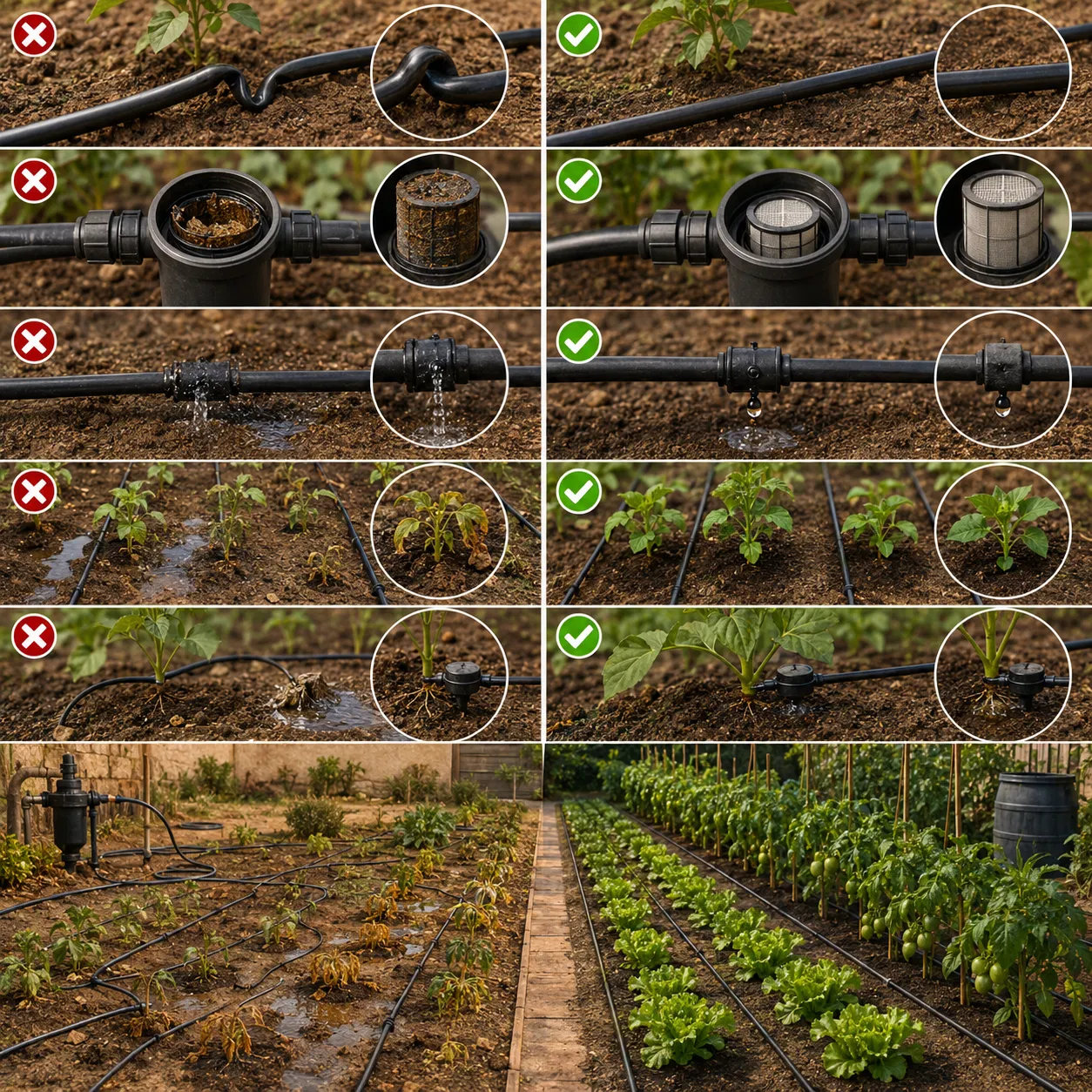
Drip irrigation emitters have very small openings, which makes them highly vulnerable to clogs. Dirt, sand, rust, and organic debris can quickly block water flow if the system is not properly filtered. Once that happens, plants may receive uneven watering or no water at all.
How to avoid it: Always use a filter, especially if your water comes from a well, pond, or any source that may contain sediment. Make filter cleaning part of your regular maintenance routine. A simple rinse or replacement can prevent major performance problems later.
3. Overwatering Plants
Drip irrigation is efficient, but that does not mean more water is always better. A common mistake is assuming that because the system delivers water slowly, it should run for long periods every day. Overwatering can suffocate roots, encourage fungal disease, and waste water.
How to avoid it: Water according to plant needs, soil type, and weather conditions. Sandy soil drains quickly and may need shorter, more frequent watering sessions, while clay soil holds moisture longer. Use a moisture meter or simply check the soil before adjusting your schedule.
4. Underwatering Because of Short Run Times
On the other hand, some gardeners run drip irrigation for too little time, assuming that any amount of water is enough. If the runtime is too short, water may not penetrate deeply enough to reach the root zone. Plants may appear healthy on the surface while struggling below ground.
How to avoid it: Test your system and observe how far moisture spreads into the soil. Adjust runtime so water reaches the active root zone without creating runoff or pooling. A consistent schedule based on plant size and weather is usually more effective than guessing.
5. Placing Emitters in the Wrong Spot
Emitter placement matters more than many people realize. If emitters are too far from the plant, roots may not get enough water. If they are too close to the stem or trunk, excess moisture can cause rot or disease.
How to avoid it: Place emitters near the outer edge of the root zone rather than directly against the stem. As plants grow, adjust placement to keep up with root expansion. For larger plants or trees, use multiple emitters to distribute water evenly around the root area.
6. Ignoring Soil Type
Not all soil absorbs water at the same rate. A drip irrigation schedule that works well in one garden bed may fail completely in another if soil composition differs. Water can move too quickly through sandy soil or sit too long in heavy clay soil.
How to avoid it: Tailor your drip irrigation design and watering schedule to your soil. For sandy soil, use shorter watering cycles with more frequent applications. For clay soil, water slowly and allow time for absorption between cycles. Knowing your soil type is essential for efficient irrigation.
7. Mixing Too Many Plant Types on One Zone
Vegetables, shrubs, flowers, and trees all have different water requirements. If you place them all on one drip irrigation zone, some plants will likely receive too much water while others get too little.
How to avoid it: Group plants with similar watering needs together. Separate zones allow you to customize runtime and emitter output for each plant type. This is one of the best ways to improve both plant health and water efficiency.
8. Failing to Flush the Lines
Even with good filtration, debris can build up inside drip lines over time. Without periodic flushing, sediment may collect and reduce water flow, leading to inconsistent irrigation.
How to avoid it: Flush drip lines regularly, especially at the beginning and end of the season. Open the line ends and allow water to run long enough to clear out accumulated particles. This simple maintenance step can extend the life of your system and help prevent clogs.
9. Not Checking for Leaks or Damage
Drip irrigation systems may look low-maintenance, but they still need regular inspection. Tubing can crack, fittings can loosen, and emitters can become detached or damaged by sun exposure, foot traffic, or garden tools.
How to avoid it: Inspect the system frequently for wet spots, dry patches, leaks, and broken components. Catching small issues early can prevent water waste and protect plant health. A quick walk-through once a week can make a big difference.
10. Using the Wrong Emitter Flow Rate
Different plants and landscapes need different amounts of water. If the emitter flow rate is too low, plants may dry out. If it’s too high, you may overwater or create runoff, especially in dense soil or sloped areas.
How to avoid it: Choose emitters based on plant size, soil type, and water demand. For example, a small herb garden may need lower-output emitters, while a mature shrub may benefit from multiple higher-flow emitters. Matching output to plant needs improves efficiency and consistency.
11. Running the System at the Wrong Time of Day
Timing can affect how well drip irrigation works. While drip systems are efficient, watering during the hottest part of the day can still increase evaporation loss. In some climates, watering too late in the evening may leave foliage and soil damp for too long.
How to avoid it: Water early in the morning whenever possible. This helps plants absorb moisture before heat rises and reduces unnecessary evaporation. Morning watering also gives the system time to work before daily temperature spikes.
12. Neglecting Seasonal Adjustments
A drip irrigation schedule that works in spring may not be appropriate in summer or fall. Plants grow, weather changes, and rainfall patterns shift throughout the year. If you keep the same schedule all season, you may waste water or stress plants.
How to avoid it: Adjust your drip irrigation system as seasons change. Reduce runtime during cool, wet periods and increase it during hot, dry stretches. Seasonal tuning keeps your watering efficient and aligned with real plant needs.
Best Practices for a Reliable Drip Irrigation System
A successful drip irrigation setup depends on more than just installing tubing and turning on the water. It requires planning, testing, and ongoing maintenance. The best systems are built around plant needs, soil conditions, and water pressure control.
To get the most from your system, keep these best practices in mind:
- Use filters and pressure regulators to protect emitters.
- Group plants by water need to improve zone efficiency.
- Inspect and flush lines regularly to prevent clogs.
- Adjust watering schedules seasonally for better results.
- Monitor soil moisture instead of watering by habit alone.
Tip: The most efficient drip irrigation system is not the one that runs the longest. It is the one that delivers the right amount of water to the right place at the right time.
Conclusion
Drip irrigation can transform the way you water your plants, but only if it’s set up and maintained correctly. By avoiding common mistakes like poor pressure control, clogged emitters, incorrect placement, and inflexible schedules, you can save water and support healthier plant growth.
Take time to inspect your system, fine-tune your watering schedule, and match your drip irrigation design to your landscape’s needs. A few small adjustments today can lead to stronger plants, lower water bills, and a more reliable irrigation system all season long.