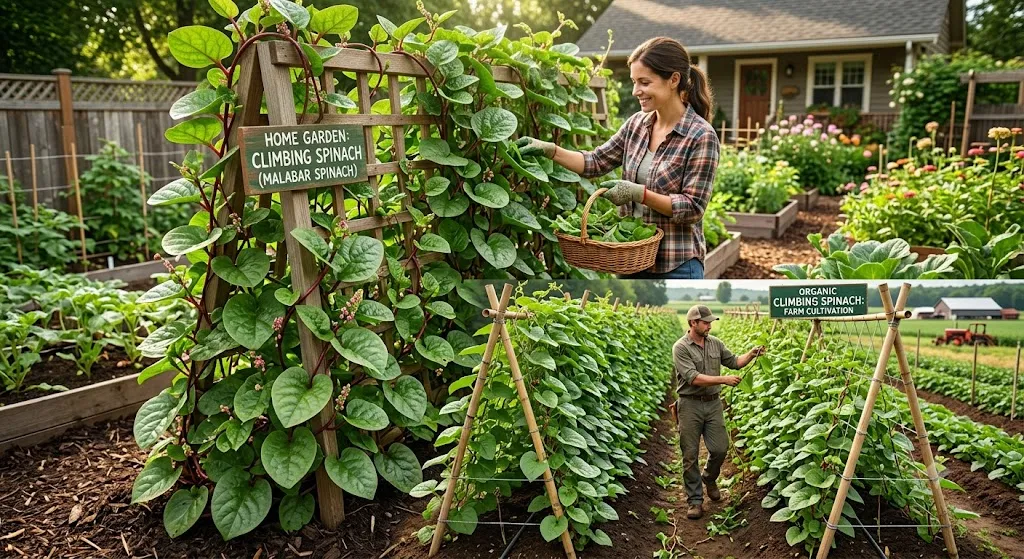
If you're looking for a fast-growing, productive leafy green that can thrive in warm weather and climb vertically to save space, climbing spinach is worth a closer look. Also known as Malabar spinach, this vigorous vine is not a true spinach, but it delivers tender, nutrient-rich leaves that are perfect for fresh harvests all season long.
Whether you're growing climbing spinach in a backyard garden, a raised bed, or a larger farm setting, this guide will walk you through everything you need to know for strong growth, healthy vines, and plentiful harvests.
What Is Climbing Spinach?
Climbing spinach refers most commonly to Basella alba and Basella rubra, tropical vines grown for their edible leaves and tender stems. Unlike conventional spinach, which prefers cool weather, climbing spinach thrives in heat, humidity, and long growing seasons.
This plant grows quickly once established and can climb trellises, fences, poles, and other supports, making it an excellent choice for small gardens and intensive production systems.
Key benefit: Climbing spinach gives you a long harvest window with minimal space requirements, especially when trained vertically.
Why Grow Climbing Spinach?
Climbing spinach is popular among home gardeners and farmers for several practical reasons:
- Heat tolerant: It keeps producing when many leafy greens struggle.
- Space saving: Vertical growth makes it ideal for small plots.
- Continuous harvest: You can pick leaves over many weeks or months.
- Low maintenance: Once established, it grows vigorously with basic care.
- Versatile in the kitchen: Leaves can be eaten raw, steamed, sautéed, or added to soups.
Best Growing Conditions for Climbing Spinach
To get the best results, give climbing spinach the warm, rich conditions it prefers. It grows best in full sun, though it can tolerate light shade in very hot climates.
Climate and Temperature
Climbing spinach performs best in warm to tropical environments. Ideal temperatures range from 70°F to 95°F. It is sensitive to frost and will slow down or die back in cold weather.
Soil Requirements
Use fertile, well-draining soil that holds moisture without becoming waterlogged. A soil pH between 6.0 and 7.0 is ideal. For stronger growth, mix in compost or aged manure before planting.
Light Needs
Provide at least 6 hours of direct sunlight daily. In very hot regions, afternoon shade can help prevent stress and keep leaves tender.
How to Plant Climbing Spinach
Climbing spinach can be grown from seeds, and direct sowing is often the easiest method. Because the seeds have a hard coat, soaking them in water for 12 to 24 hours before planting can improve germination.
Step-by-Step Planting Guide
- Prepare the bed: Loosen the soil and add compost for extra nutrients.
- Soak the seeds: Soak overnight to speed germination.
- Sow seeds: Plant seeds about 1/2 inch deep.
- Space properly: Leave 12 to 18 inches between plants.
- Water gently: Keep the soil consistently moist until sprouts appear.
Seeds usually germinate in 7 to 21 days, depending on temperature and seed quality.
Support and Trellising
Because climbing spinach is a vine, it needs support to grow properly. Without a trellis, it may sprawl across the ground and become harder to manage or harvest.
Good support options include:
- Bamboo stakes
- String trellises
- Wire fencing
- Arches and cages
- Farm rows with vertical netting
Train young vines early by gently guiding them onto the support. Once they start twining, they usually climb on their own.
Watering and Fertilizing
Climbing spinach grows best with steady moisture. Dry soil can reduce leaf production and cause plants to become tough or stressed.
Watering Tips
- Water deeply 2 to 3 times per week, depending on weather and soil type.
- Mulch around the base to conserve moisture and suppress weeds.
- Avoid overwatering, especially in heavy clay soil.
Feeding the Plants
This leafy vine benefits from regular feeding. A balanced organic fertilizer or side-dressing with compost every few weeks can support strong foliage growth. For farm production, nitrogen-rich inputs can encourage lush leaf development, but avoid excessive fertilizer that may reduce plant quality.
Pruning and Maintenance
Climbing spinach is naturally vigorous, so occasional pruning helps keep it productive and manageable. Pinching the tips can encourage branching and a fuller plant.
Maintenance tasks to stay on top of include:
- Removing weak or damaged stems
- Training vines on supports
- Harvesting regularly to encourage new growth
- Checking for pests and disease
Pests and Problems
Climbing spinach is generally hardy, but a few pests may cause trouble. Common issues include aphids, caterpillars, spider mites, and leaf-chewing insects. Slugs can also damage young plants in moist areas.
How to Manage Common Issues
- Aphids: Wash them off with water or use insecticidal soap.
- Caterpillars: Pick them off by hand or use organic controls.
- Spider mites: Improve airflow and keep plants evenly watered.
- Fungal problems: Avoid overcrowding and water at the base of the plant.
Healthy, well-spaced plants are less likely to suffer from serious infestations or disease.
Harvesting Climbing Spinach
You can start harvesting climbing spinach once the vines are well established and the leaves are large enough to pick. For the best flavor and texture, harvest young, tender leaves and shoot tips regularly.
Harvesting often encourages the plant to produce even more side shoots and leaves, extending your yield over time.
Harvesting Tips
- Pick the top 4 to 6 inches of new growth for tender greens.
- Remove older leaves as needed, but leave enough foliage for continued growth.
- Harvest in the morning for the best texture and moisture content.
Growing Climbing Spinach at Home
Home gardeners love climbing spinach because it fits well into small spaces and produces generously through hot weather. A single vine on a trellis can supply a family with regular greens for months.
For backyard success, try growing it near a fence, porch, or patio where the vine can climb freely. Container growing is also possible if the pot is large enough and the plant receives consistent water and nutrients.
Growing Climbing Spinach on the Farm
On farms, climbing spinach can be an excellent specialty crop for local markets, restaurants, and CSA boxes. Its fast growth and strong visual appeal make it attractive to buyers looking for unique leafy greens.
For larger-scale production, focus on:
- Efficient trellis systems
- Consistent irrigation
- Staggered planting for extended harvest
- Regular picking schedules
- Clean post-harvest handling
Because it grows vertically, climbing spinach can help farmers maximize productivity in limited acreage.
Best Uses in the Kitchen
Climbing spinach is mild, slightly earthy, and versatile. The leaves are excellent in dishes where you want a fresh green with a soft texture.
Popular uses include:
- Stir-fries
- Soups and stews
- Sauteed greens with garlic
- Salads using young leaves
- Egg dishes and omelets
The leaves may also release a slightly thick texture when cooked, which can work well in soups and sauces.
Conclusion
Climbing spinach is a practical, productive, and rewarding crop for both home gardens and farm operations. With warm weather, rich soil, a sturdy trellis, and regular harvesting, this fast-growing vine can provide a steady supply of nutritious greens for a long season.
If you want a leafy vegetable that saves space, handles heat, and keeps giving back, climbing spinach is an excellent choice. Start with healthy seeds, give the vines support, and enjoy a harvest that climbs right along with your garden goals.