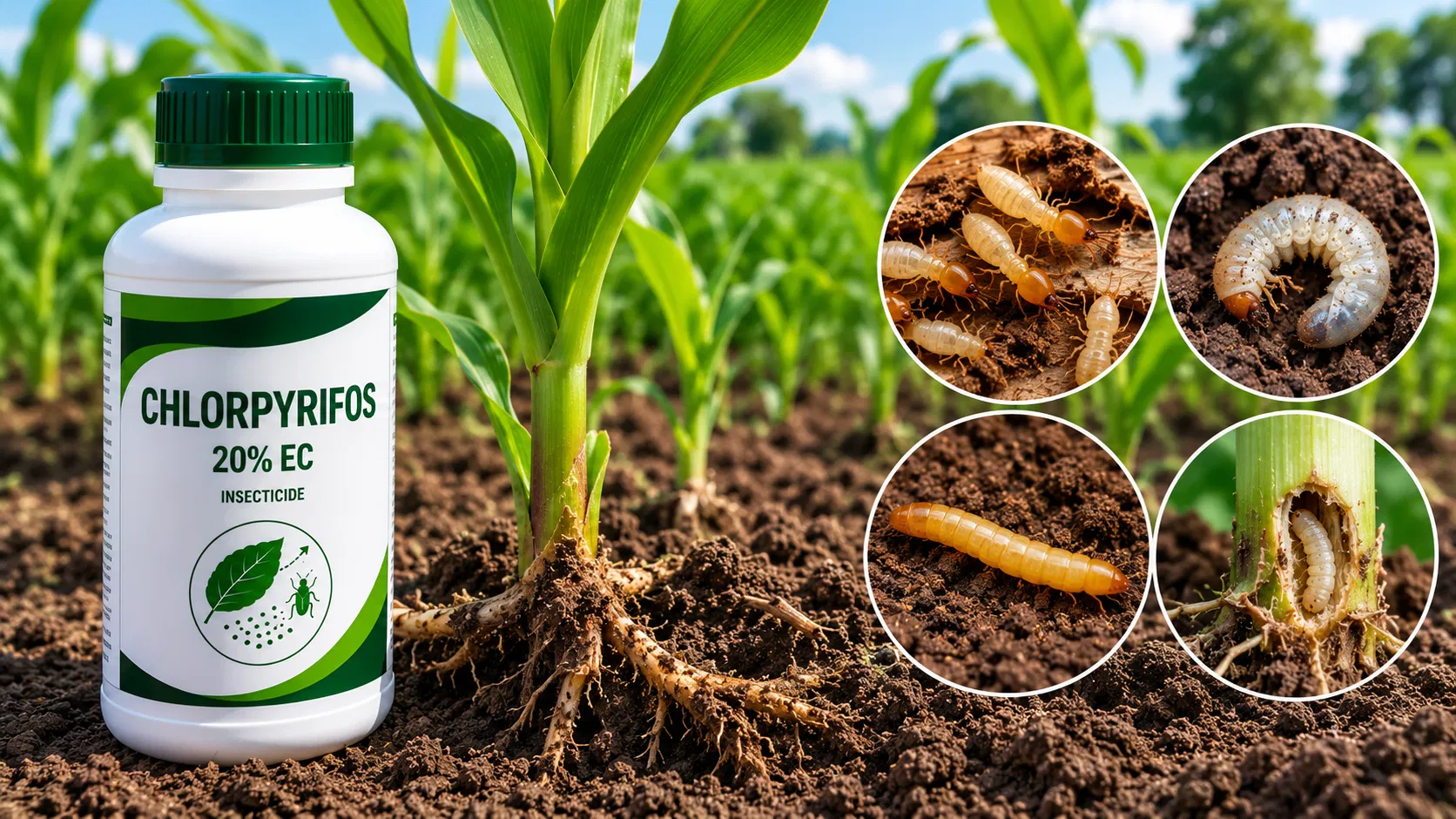
Termites and soil insects can cause serious damage before you ever notice them. From weakening wooden structures to destroying roots and seedlings underground, these pests often work silently and aggressively. That is why many homeowners, pest control professionals, and agricultural managers have relied on chlorpyrifos as a targeted solution for controlling termites and soil insects.
When used correctly and according to label directions, chlorpyrifos has been valued for its ability to penetrate soil and create a protective barrier against destructive pests. Understanding how it works, where it is used, and what precautions matter most can help you make informed pest management decisions.
What Is Chlorpyrifos?
Chlorpyrifos is an organophosphate insecticide designed to control a broad range of insect pests. It has been used in agriculture, residential pest control, and structural protection against termites. Its effectiveness comes from its ability to target insects in the soil, where many pests live and feed out of sight.
For termite control and soil insect management, chlorpyrifos has traditionally been applied as a soil treatment. This means it can help form a treated zone that pests must pass through, reducing infestation pressure around foundations, landscaping, and crop roots.
How Chlorpyrifos Works Against Termites and Soil Insects
Chlorpyrifos affects the nervous system of insects. When pests come into contact with or ingest treated material, the insecticide disrupts normal nerve function, eventually leading to control of the infestation.
This mode of action makes chlorpyrifos especially useful for:
- Subterranean termites that travel through soil to reach wood structures
- White grubs and other root-feeding larvae
- Soil-dwelling insects that damage turf, lawns, and ornamental plants
- Foundation pests that invade from surrounding soil
Because termites live underground and often remain hidden, a soil-applied insecticide can be an important part of a broader integrated pest management strategy.
Common Uses for Chlorpyrifos in Pest Control
Chlorpyrifos has been used in several settings where soil insects create major problems. Its primary applications include:
Termite Protection
One of the best-known uses of chlorpyrifos is for termite control around buildings and structures. It is applied to soil near foundations, crawl spaces, and other areas where termites may enter. The goal is to create a continuous barrier that deters or eliminates termite activity.
Agricultural Soil Insect Control
In farming, chlorpyrifos has been used to protect crops from soil insects that attack roots, stems, and developing plants. These pests can reduce plant vigor, stunt growth, and lower yields if not managed early.
Turf and Ornamental Pest Management
Lawns, golf courses, and ornamental landscapes may also suffer from soil insects. Chlorpyrifos has been used where infestations threaten the health and appearance of turf or decorative plantings.
Why Chlorpyrifos Has Been Considered Effective
Many pest control professionals have trusted chlorpyrifos because it offers several practical benefits when properly applied:
- Broad-spectrum activity against many soil insects
- Soil penetration that helps target hidden pests
- Long-standing use history in structural and agricultural pest management
- Barrier protection for foundations and root zones
Its effectiveness depends heavily on correct application, soil conditions, pest pressure, and compliance with product labeling. Like any insecticide, it works best as part of a comprehensive pest management approach rather than as a stand-alone fix.
Best Practices for Controlling Termites and Soil Insects
Successful pest control requires more than just choosing the right product. Preparation, timing, and application quality all play a major role in results.
1. Inspect Before Treating
Before using chlorpyrifos or any insecticide, identify the pest correctly. Termites, ants, beetle larvae, and other soil insects may require different control methods. A proper inspection helps ensure treatment is targeted and effective.
2. Focus on Problem Areas
Pay close attention to areas where insects are most likely to enter or thrive:
- Foundation edges
- Expansion joints
- Crawl spaces
- Mulched beds near structures
- Root zones of affected plants
- Moist soil near leaking pipes or drainage issues
3. Apply Evenly and Thoroughly
For soil insect control, consistent application matters. Gaps in treatment can allow termites or other pests to bypass the protected zone. Professionals often use specialized equipment to ensure even soil coverage.
4. Reduce Conditions That Attract Pests
Chemical control works better when combined with prevention. Moisture control, wood-to-soil separation, proper drainage, and regular inspections can all help reduce future infestations.
5. Follow All Label Instructions
The product label is the legal and technical guide for safe use. It provides directions on application rates, protective equipment, timing, and site restrictions. Following the label is essential for both effectiveness and safety.
Strong pest control starts with proper identification, precise application, and prevention. Insecticides are most effective when used as part of a larger plan, not as the only line of defense.
Important Safety Considerations
Because chlorpyrifos is a potent insecticide, safety is a major part of responsible use. It should always be handled carefully and only by trained users or according to local regulations and label directions.
- Wearing appropriate protective equipment
- Avoiding drift and runoff into water sources
- Keeping people and pets away from treated areas as directed
- Storing the product securely and away from children
- Using only approved application methods
When to Consider Professional Pest Control
Termite infestations and serious soil insect problems often need expert attention. A licensed pest control professional can inspect the property, identify the pest species, and recommend the most effective treatment plan.
Conclusion
Controlling termites and soil insects requires a smart, targeted approach. Chlorpyrifos has long been known for its ability to treat soil and protect structures, crops, and landscapes from hidden pest damage. When used responsibly and according to current regulations, it can be an effective part of a broader pest management plan.
Take action early to protect your property, plants, and investment before soil pests cause costly damage.