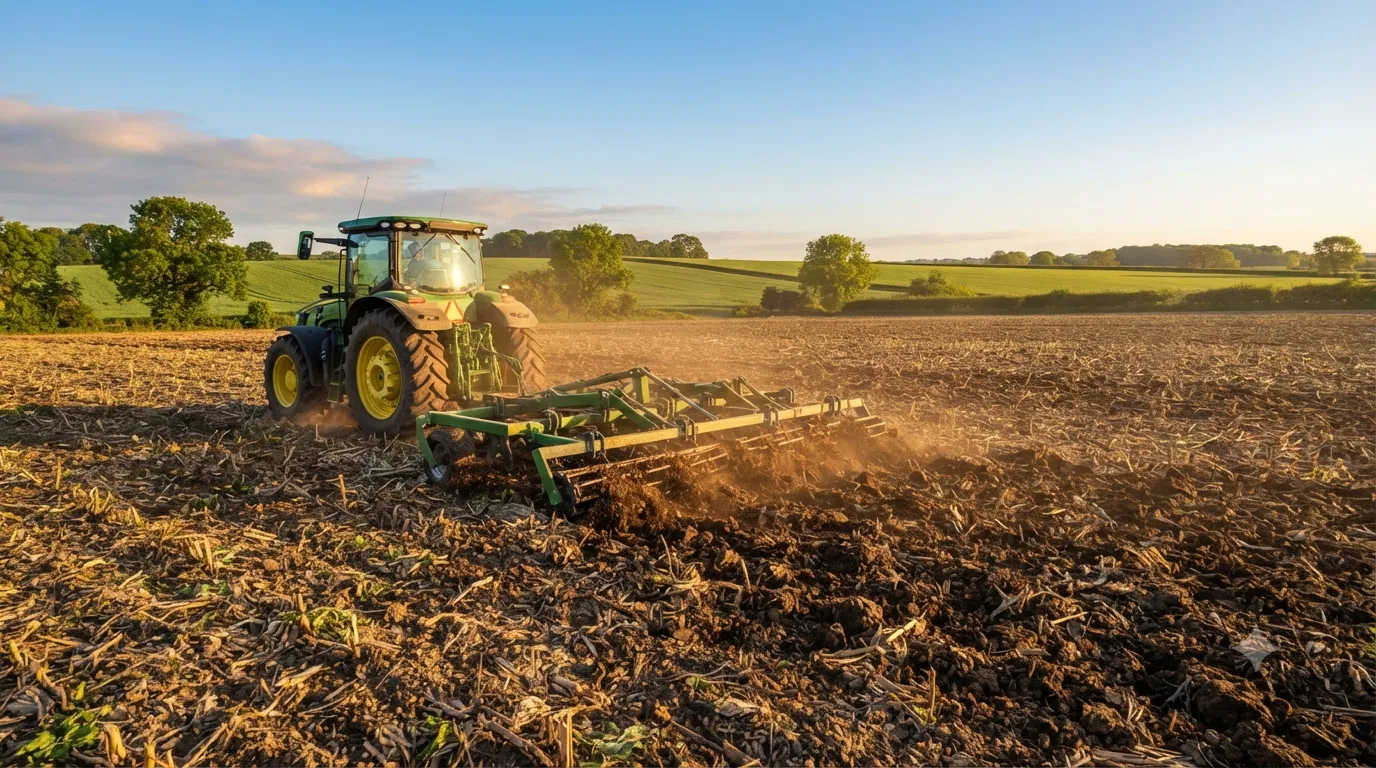
Healthy soil is the foundation of productive farming, and the tools used to manage it can make a major difference. One implement that continues to earn its place in modern agriculture is the chisel plough. Designed to loosen compacted soil without turning it over completely, the chisel plough offers a practical balance between cultivation and soil preservation. For farmers focused on improving soil health, reducing erosion, and supporting long-term productivity, it is a valuable tool worth understanding.
What Is a Chisel Plough?
A chisel plough is a tillage implement fitted with long, narrow shanks that penetrate deep into the soil. Unlike a moldboard plough, it does not invert the soil layer. Instead, it breaks up hardpan and compaction while leaving much of the surface residue in place.
This makes it especially useful in systems where soil structure, moisture retention, and residue management matter. Farmers often use a chisel plough as part of conservation tillage or as a way to restore fields that have become compacted over time.
Primary Uses of a Chisel Plough
The chisel plough has several important uses on the farm, especially where soil condition is a concern. Its design allows it to work below the surface without excessive disturbance, making it suitable for a range of cropping systems.
1. Breaking Up Soil Compaction
Repeated traffic from tractors, harvesters, and other machinery can compress the soil, creating a hard layer that restricts root growth and water movement. A chisel plough helps break through this compacted layer, improving soil aeration and root penetration.
2. Improving Water Infiltration
Compacted soils tend to shed water instead of absorbing it. By loosening the soil profile, a chisel plough allows rainfall and irrigation water to enter more effectively. This reduces runoff and helps crops access moisture deeper in the root zone.
3. Managing Crop Residue
After harvest, a chisel plough can incorporate some residue while still leaving enough cover on the surface to protect against erosion. This is especially helpful in no-till or reduced-till systems where residue retention supports soil conservation.
4. Preparing Seedbeds
In fields that need loosening before planting, a chisel plough can create a more favorable seedbed without completely overturning the soil. This improves tilth and can support more uniform seed placement and emergence.
5. Restoring Tired or Overworked Fields
Fields that have been worked heavily over many seasons may become dense, poorly drained, and less productive. A chisel plough can help restore structure and improve field conditions without the intense disturbance caused by conventional ploughing.
Benefits of Using a Chisel Plough for Soil Health
The biggest advantage of a chisel plough is its ability to improve soil condition while protecting the natural structure of the land. That balance is why it is widely valued in sustainable and conservation-minded farming.
Improves Soil Structure
Healthy soil depends on a stable structure with spaces for air, water, and roots. A chisel plough loosens dense layers and helps create a better environment for biological activity and crop development.
Supports Stronger Root Growth
When roots encounter resistance, plant growth can slow and yields can suffer. By reducing compaction, a chisel plough gives roots more room to explore deeper layers of soil, which can improve nutrient uptake and drought resilience.
Reduces Erosion Risk
Because it leaves more crop residue on the surface than conventional ploughing, a chisel plough helps shield the soil from wind and water erosion. This protective cover is especially important on sloped land or in areas with heavy rainfall.
Helps Retain Soil Moisture
Surface residue acts like a natural mulch, reducing evaporation and helping the soil stay moist longer. At the same time, the loosened soil profile improves water storage and availability for crops during dry periods.
Encourages Better Soil Biology
Soil organisms such as earthworms, fungi, and beneficial bacteria thrive in environments with good aeration and residue cover. A chisel plough can support this biological activity by creating favorable conditions without excessive disturbance.
Improves Long-Term Productivity
By protecting structure, reducing erosion, and improving infiltration, the chisel plough contributes to healthier soils over time. That often translates into more resilient fields and more consistent crop performance season after season.
Healthy soil is not just loose soil. It is balanced soil with structure, moisture, residue, and life working together.
Chisel Plough vs. Conventional Ploughing
Many farmers compare the chisel plough with a moldboard plough or other full-inversion tillage tools. The main difference is how much the soil is disturbed.
- Conventional ploughing turns the soil over completely, burying residue and exposing fresh soil.
- Chisel ploughing loosens soil deeply while leaving much of the residue on the surface.
This difference matters because heavy inversion tillage can increase erosion, speed up moisture loss, and disrupt soil organisms. A chisel plough offers a less aggressive option that still addresses compaction and seedbed preparation.
When Is a Chisel Plough Most Useful?
A chisel plough is not the right choice for every field or every season, but it is especially effective in certain conditions. Farmers often turn to it when:
- Soil compaction is limiting root growth
- Water infiltration has declined
- Crop residue needs partial incorporation
- Fields need loosening before planting
- Conservation tillage practices are being used
It is also useful after wet harvest conditions, when machinery traffic may have caused deeper compaction. In such cases, a chisel plough can help restore field function without completely resetting the soil profile.
Best Practices for Using a Chisel Plough
To get the most benefit from a chisel plough, it should be used thoughtfully and at the right time. Good management helps protect soil health while improving field performance.
Choose the Right Depth
The shanks should be set deep enough to break compaction layers, but not so deep that unnecessary energy is wasted. Working below the hardpan is often the goal, but overworking the soil can reduce the advantages.
Avoid Working Wet Soil
Tillage when soil is too wet can smear and compact the profile instead of improving it. For best results, use the chisel plough when soil moisture is suitable for shattering rather than smearing.
Match Speed and Spacing to Field Conditions
Proper operating speed and shank spacing help ensure even soil loosening. Field type, residue levels, and compaction depth should all guide setup decisions.
Combine with Conservation Practices
The chisel plough works best as part of a broader soil management strategy. Cover crops, controlled traffic, residue retention, and reduced tillage all complement its benefits.
Why the Chisel Plough Matters for Sustainable Farming
As more growers focus on soil regeneration and conservation, the chisel plough remains highly relevant. It offers a practical way to manage compaction and prepare fields while preserving residue and reducing erosion. That makes it an important tool for farmers who want both productivity and stewardship.
Rather than relying on aggressive soil inversion, the chisel plough supports a more balanced approach. It helps farmers protect what matters most: structure, moisture, biology, and long-term soil performance.
Conclusion
The chisel plough is more than just a tillage tool. It is a soil management solution that can improve compaction, support root growth, protect against erosion, and help maintain healthier fields over time. For growers who want better crop performance without sacrificing soil quality, it offers a smart and effective option.
If your fields are showing signs of compaction or declining infiltration, a chisel plough may be exactly what your soil needs. Used wisely, it can be a powerful step toward stronger soil health and more sustainable yields.