Cauliflower is a staple cole crop across India, prized for its short growing cycle and consistent market demand. But its tender leaves and dense curd make it a favourite target for a range of insect pests, some of which can move through a field fast enough to undo weeks of careful crop management in just a few days.
Left unmanaged, these pests skeletonise leaves, sap plant vigour, and tunnel into stems and curds, cutting straight into yield and market grade. This guide covers the four insect pests every cauliflower grower should know how to identify, how to spot each one early, and which insecticides are suited to managing them.
1. Diamondback Moth (Plutella xylostella)
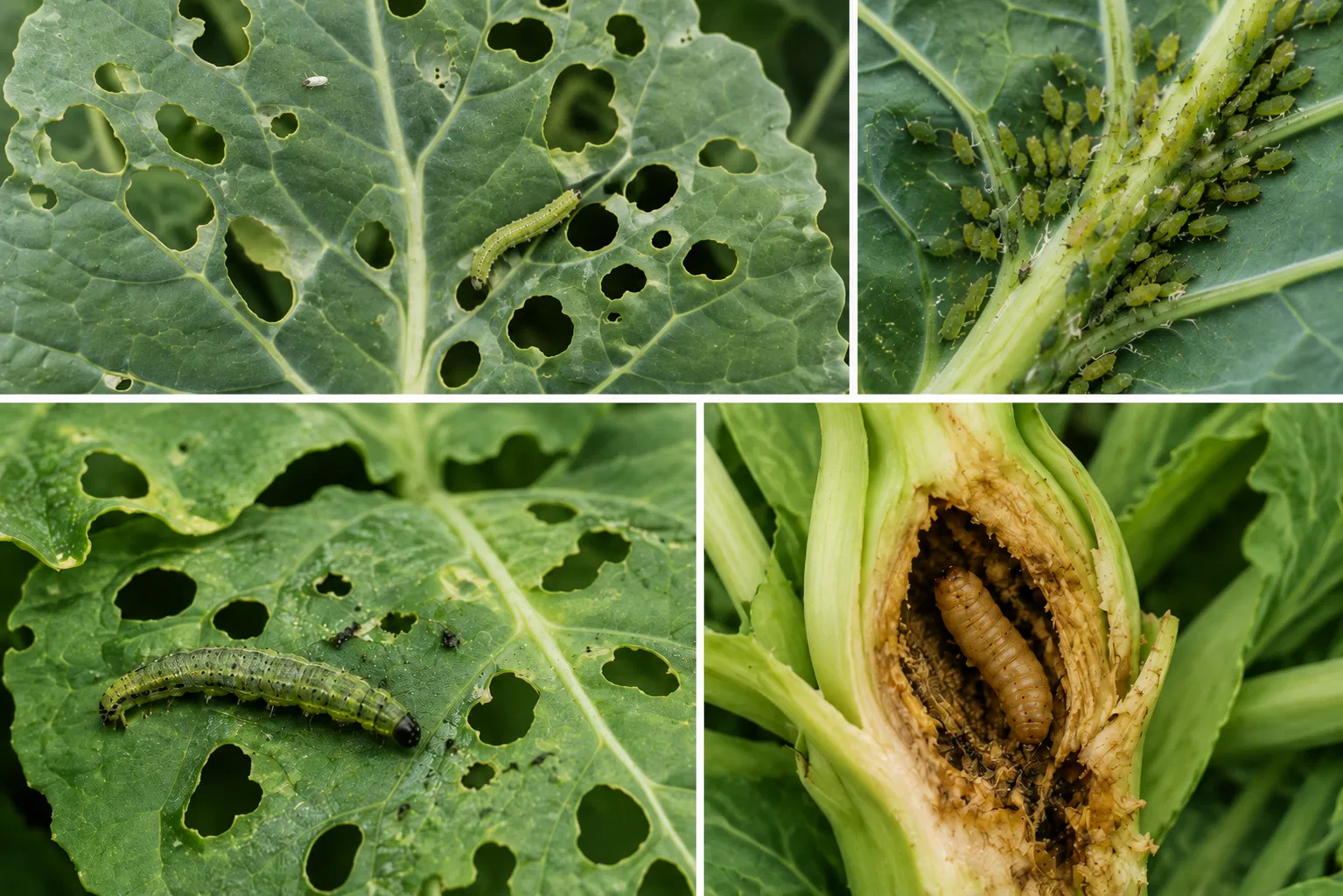
Diamondback moth larvae feed voraciously on cauliflower foliage and can build up resistance to insecticides quickly, making it one of the most persistent pests of cole crops. Heavy infestations skeletonise leaves and can attack the developing curd directly.
How to Spot It
Look for small, greenish larvae that wriggle vigorously and drop on a silk thread when disturbed. Early feeding shows up as thin, translucent ""windowpane"" patches on the underside of leaves, which later turn into ragged holes as larvae mature.
Solutions to Manage/Control It
| Product | Active Ingredient |
|---|---|
| Agriventure Feen Insecticide | Fenvalerate 20% EC |
| Syngenta Cigna Insecticide | Lufenuron 5.4% EC |
| Katyayani Spino 25 Insecticide | Spinosad 2.5% SC |
2. Mustard Aphids / Aphids (Lipaphis erysimi)
Aphids colonise the underside of leaves and around the growing point, draining plant sap and weakening the crop's vigour. Heavy colonies also excrete honeydew that encourages sooty mould, further reducing the leaf's ability to photosynthesise.
How to Spot It
Watch for clusters of small, soft-bodied greenish-grey insects on the undersides of leaves and along tender shoots. Affected leaves often curl, appear sticky from honeydew, and may develop a dark sooty coating over time.
Solutions to Manage/Control It
| Product | Active Ingredient |
|---|---|
| Agriventure Feen Insecticide | Fenvalerate 20% EC |
3. Tobacco Caterpillar (Spodoptera litura)
Tobacco caterpillar larvae feed in groups when young, then disperse across the plant as they grow, capable of stripping leaves down to the veins in a short span and moving on to bore into the curd itself.
How to Spot It
Look for clusters of pale, gregarious young larvae on the underside of leaves near hatching sites, and later, larger dark-green to brown caterpillars with faint stripes feeding alone, leaving ragged, irregular holes across the leaf surface.
Solutions to Manage/Control It
| Product | Active Ingredient |
|---|---|
| Nichino Marito Insecticide | Tolfenpyrad 18.75% + Emamectin Benzoate 0.94% SC |
4. Stem Borer (Hellula undalis)
Stem borer larvae tunnel into the growing point and stem of young cauliflower plants, which can kill the terminal bud outright and force the plant to throw out weak side shoots instead of forming a proper curd.
How to Spot It
Look for wilting or dead central shoots on young plants, often with a small boring hole near the growing point and frass (larval droppings) webbed into the leaf axils or stem surface around the entry site.
Solutions to Manage/Control It
| Product | Active Ingredient |
|---|---|
| Syngenta Ekalux Insecticide | Quinalphos 25% EC |
Frequently Asked Questions
Why is diamondback moth so hard to control in cauliflower?
Diamondback moth develops resistance to insecticides quickly because of its short life cycle and high reproductive rate, so growers typically need to rotate between different modes of action rather than relying on a single product.
What weather conditions favour aphid buildup on cauliflower?
Aphid populations tend to explode during cool, dry weather with moderate temperatures, which is why outbreaks are most common during the winter cauliflower-growing season in North India.
Can stem borer damage be reversed once the growing point is affected?
Once the terminal growing point has been killed, the plant cannot recover its original growth pattern and will instead produce multiple weak side shoots, so management is most effective when applied before symptoms appear.
Is tobacco caterpillar damage limited to the leaves?
No — while young larvae feed on foliage, older larvae can bore directly into the developing curd, which causes direct, visible damage to the marketable part of the crop.
- Insecticide labels, registered dosages, and pre-harvest intervals can change — always confirm the current registration, dosage, and PHI on the product label before use.
- This guide is a general advisory only. Please do your own research and verify with a local agronomist or dealer before making any purchase, spray, or crop-management decision.