When it comes to layer poultry feed, two nutrients matter more than almost anything else: calcium and protein. Get them right, and hens stay productive, eggshells stay strong, and flock performance improves. Get them wrong, and you may see thin shells, reduced egg numbers, poor feathering, and lower overall health.
For commercial layers and backyard flocks alike, understanding the calcium and protein needs in layer poultry feed is essential for consistent egg production. The goal is not simply to feed more, but to feed smarter—matching nutrient levels to the bird’s stage of lay, production demands, and overall management.
Why Calcium Matters in Layer Poultry Feed
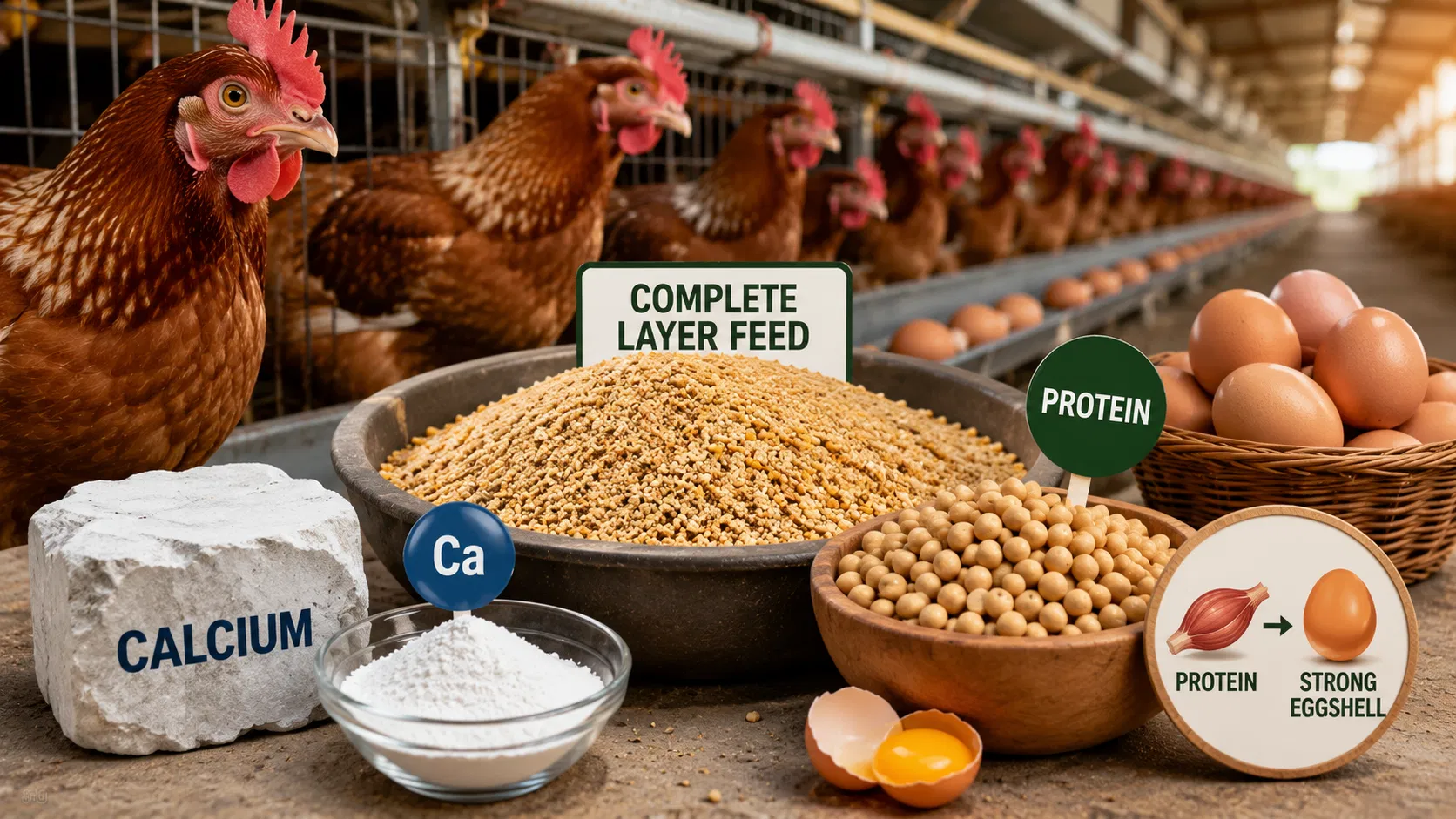
Calcium is the foundation of eggshell formation. A hen uses a large amount of calcium every time she lays an egg, especially during the hours when the shell is being formed. Without enough dietary calcium, the bird pulls calcium from her bones, which can weaken skeletal health over time.
In layer feed, calcium does more than support shell quality. It also helps maintain muscle function, nerve activity, and long-term hen productivity. If calcium levels are too low, eggs may become soft-shelled, cracked, or misshapen. If levels are too high or poorly balanced, feed intake and nutrient absorption can also be affected.
Recommended Calcium Levels for Layers
Most laying hens need significantly more calcium than broilers or growing pullets. A typical layer feed contains around 3.5% to 4.5% calcium, depending on breed, age, production stage, and management system.
- Young layers at the start of lay: usually need calcium at the lower end of the range as their intake is still adjusting.
- Peak-producing hens: benefit from full calcium support to maintain shell thickness and production efficiency.
- Older hens: often need more attention to calcium intake because shell quality tends to decline with age.
The particle size of calcium also matters. Fine limestone is absorbed quickly, while coarse limestone can remain in the digestive tract longer and provide calcium later in the shell-forming cycle. Many quality layer feeds use a blend of both.
The Role of Protein in Layer Poultry Feed
Protein is another essential nutrient in layer poultry feed because it supports egg formation, feather growth, tissue repair, and overall metabolic activity. Protein provides amino acids, which are the building blocks for egg albumen, body maintenance, and reproductive function.
Unlike calcium, which is most visibly linked to shell quality, protein affects multiple aspects of layer performance. A lack of protein can reduce egg size, slow production, weaken feathers, and compromise body condition. Excess protein, however, can increase feed costs and may create unnecessary nitrogen waste.
Typical Protein Requirements for Layers
Most layer diets contain 16% to 18% crude protein, though exact needs vary based on breed, age, and feed formulation.
- Early laying hens: often benefit from slightly higher protein to support the start of egg production.
- Peak layers: require balanced protein with essential amino acids such as lysine and methionine.
- Older hens: may maintain production on moderate protein levels if amino acid balance remains strong.
Protein quality matters just as much as protein percentage. A feed with a high crude protein number but poor amino acid balance may not perform as well as a properly formulated ration with targeted amino acid support.
How Calcium and Protein Work Together
Calcium and protein in layer poultry feed do not function in isolation. They must be balanced with each other and with energy, phosphorus, vitamin D3, and other essential nutrients. When the balance is right, hens can efficiently convert feed into eggs with strong shells and good internal quality.
Strong eggshells depend on calcium, but healthy egg production depends on the full nutrient package.
Protein supports the formation of the egg contents, while calcium builds the shell. If protein is inadequate, egg output may drop even if calcium is sufficient. If calcium is low, hens may still lay eggs, but shell quality will suffer. This is why feeding layers requires a complete nutritional strategy rather than focusing on a single nutrient.
Factors That Influence Nutrient Needs
Not every flock needs the exact same feed formula. Several factors influence calcium and protein needs in layer poultry feed:
1. Age of the Hen
Young pullets entering lay have different nutrient demands than older hens. As birds mature, shell quality can decline, and the feed may need adjustment to preserve productivity.
2. Breed and Genetics
High-producing commercial breeds often require more precise nutrient support than lower-output backyard breeds. Genetic potential directly affects how much calcium and protein the bird can use efficiently.
3. Egg Production Level
Hens laying nearly every day have greater nutrient demands than birds laying intermittently. Peak production periods require a more robust nutritional profile.
4. Environment and Stress
Heat stress, cold weather, disease pressure, and poor housing conditions can reduce feed intake. When hens eat less, nutrient density becomes even more important because they must get enough calcium and protein from a smaller amount of feed.
5. Feed Form and Ingredient Quality
Pellets, crumbles, and mash all influence intake and nutrient consistency. Ingredient quality, digestibility, and feed freshness also affect how well hens use calcium and protein.
Signs of Calcium or Protein Deficiency
Recognizing nutrient problems early can prevent production losses. Common signs of imbalance include:
- Thin, soft, or broken eggshells
- Reduced egg size or egg numbers
- Poor feather condition
- Lethargy or weaker body condition
- Bone weakness or increased risk of fractures
- More eggs laid with shell defects
These symptoms do not always mean a single nutrient is missing, but they often point to issues in feed formulation or intake. A flock showing these signs should have its ration reviewed quickly.
Best Practices for Feeding Layers
To support healthy egg production, feed a properly formulated layer ration designed for the bird’s stage of production. Avoid relying on scratch grains, kitchen scraps, or unbalanced mixes as the main diet, because these often dilute calcium and protein intake.
Practical feeding tips include:
- Use a complete layer feed with appropriate calcium and protein levels.
- Provide fresh water at all times to support feed digestion and nutrient use.
- Offer oyster shell or coarse calcium sources only when needed and in a controlled way.
- Monitor egg shell quality regularly as an early indicator of dietary balance.
- Adjust feed based on flock age and production stage rather than using one formula forever.
It is also wise to keep feed in a cool, dry place so nutrient quality does not decline. Moldy or stale feed can reduce consumption and interfere with nutrient absorption.
Balancing Cost and Performance
Feed cost is always a concern, but underfeeding calcium or protein can become more expensive in the long run. Poor shell quality means more cracked eggs and more waste. Low protein can reduce production and harm flock condition. The best layer feed is one that delivers strong performance without unnecessary oversupply.
For many producers, the smartest approach is to work with a reliable poultry nutrition formula and adjust only when flock age, environmental stress, or production goals change. This keeps the ration efficient while protecting health and egg quality.
Conclusion
Calcium and protein needs in layer poultry feed are central to every successful egg-laying program. Calcium builds strong shells and protects bone health, while protein supports egg formation, feathering, and overall hen performance. When these nutrients are balanced correctly, hens remain productive, eggs stay marketable, and flock management becomes more predictable.
If you want better egg quality and healthier layers, start by reviewing the feed. A well-formulated ration with the right calcium and protein levels is one of the most effective investments you can make in poultry production.