When flowering crops produce plenty of blooms but fail to develop fruits, the problem may be hidden in the plant's nutrition. One frequently overlooked cause is boron deficiency in flowering crops.
Boron is an essential micronutrient involved in flower development, pollen germination, fertilization, cell division, and early fruit formation. Even a small shortage during the reproductive stage can cause weak flowers, blossom drop, poor fruit set, misshapen produce, and significant yield losses.
Understanding the symptoms, causes, and correct management of boron deficiency can help farmers protect flowering, improve fertilization, and achieve more uniform fruit development.
What Is Boron Deficiency?
Boron is a micronutrient that plants require in very small quantities. Despite this low requirement, it performs several essential functions in crop growth and reproduction.
Boron supports:
- Cell-wall formation and stability
- Growth of shoots and root tips
- Sugar and carbohydrate movement
- Flower and pollen development
- Pollen-tube growth
- Fertilization and seed formation
- Early fruit development
Boron deficiency occurs when plants cannot absorb enough available boron to support these processes. Because boron has limited mobility in many crop species, symptoms often appear first in actively growing tissues, flowers, young leaves, and developing fruits.
Why Boron Is Important During Flowering
The flowering stage is one of the most boron-sensitive periods in crop production. Successful fruit set requires viable pollen, pollen germination, pollen-tube growth, fertilization, and continued development of the young fruit.
Boron contributes to every stage of this reproductive process. When the supply is inadequate, flowers may form but fail to complete fertilization.
Affected crops may show:
- Weak or malformed flower buds
- Reduced pollen viability
- Slow pollen-tube growth
- Incomplete fertilization
- Premature flower drop
- Abortion of young fruits
- Low and uneven fruit set
Key insight: Boron deficiency can reduce yield before obvious leaf symptoms appear. A crop may look reasonably healthy while flowering and fruit set are already being affected.
Common Symptoms of Boron Deficiency in Flowering Crops
Boron deficiency symptoms vary by crop, growth stage, and severity. They usually affect young tissues and reproductive structures first.
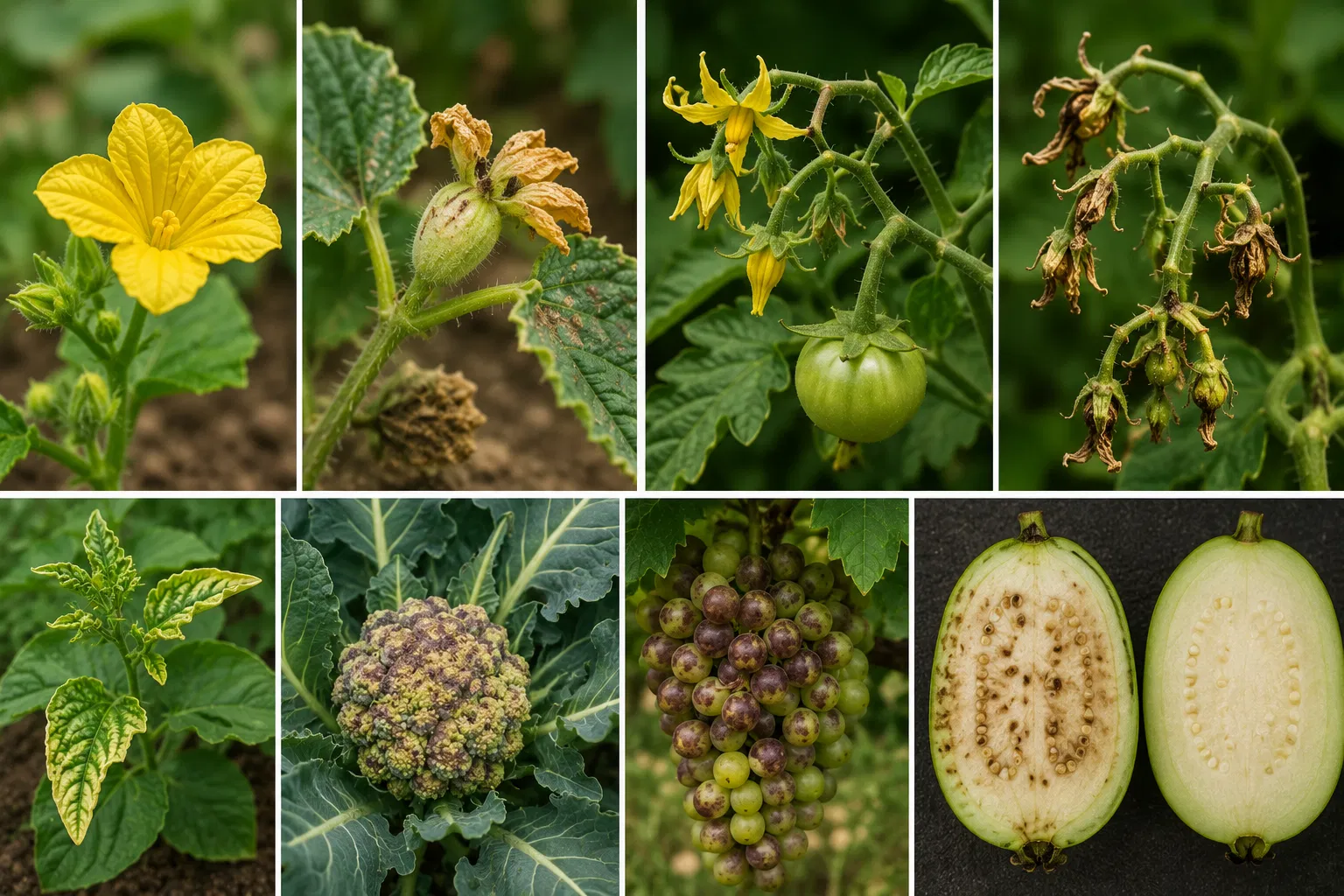
1. Poor Flower Development
Flowers may appear small, weak, distorted, or underdeveloped. Buds may fail to open normally, while severely affected flowers may dry and fall before pollination.
2. Blossom Drop
Premature flower drop is one of the most important symptoms in fruiting and vegetable crops. Insufficient boron can disrupt pollen germination and fertilization, causing flowers to fall without producing fruits.
3. Poor Fruit Set
Plants may flower heavily but develop only a small number of fruits. This problem is particularly noticeable where environmental conditions appear favourable but pollination still fails.
4. Misshapen or Deformed Fruits
Fruits that develop under boron-deficient conditions may be irregular, cracked, corky, hollow, undersized, or poorly filled. Internal tissue damage may also occur.
5. Death of Growing Points
Boron supports rapidly dividing cells. When the supply is inadequate, shoot tips, root tips, and other growing points may stop developing or die back.
6. Brittle or Distorted Young Leaves
New leaves may become thick, curled, twisted, brittle, or unusually small. In some crops, young leaves develop cracks or fail to expand normally.
7. Weak Root Development
Root systems may become short, thick, darkened, or poorly branched. Root-tip death reduces the plant's ability to absorb water and nutrients, increasing the severity of crop stress.
8. Reduced Pollen Viability
Flowers may open normally, but their pollen may be weak or unable to germinate effectively. This can result in partial fertilization, reduced seed formation, and poor fruit development.
How Boron Deficiency Reduces Fruit Set
Fruit set begins only after successful pollination and fertilization. Boron deficiency can interrupt this sequence at several points.
Pollen Germination Declines
Pollen grains must germinate after landing on the stigma. Boron supports this process, and inadequate levels can prevent pollen from becoming active.
Pollen-Tube Growth Is Restricted
After germination, the pollen tube must grow through the flower tissue to reach the ovule. Boron helps maintain pollen-tube structure and development. A shortage may slow or stop this growth before fertilization occurs.
Fertilization Becomes Incomplete
When pollen tubes fail to reach the ovule, fertilization does not occur. Partial fertilization may also produce fruits that are undersized, misshapen, poorly seeded, or prone to early drop.
Young Fruits Stop Developing
Boron continues to support cell division and carbohydrate movement after fertilization. A shortage during early fruit growth may cause fruit abortion, uneven development, cracking, or internal defects.
What Causes Boron Deficiency?
Boron deficiency does not always mean that the soil contains no boron. In many cases, the nutrient is present but unavailable to plant roots.
High Soil pH
Alkaline soil conditions can reduce boron availability. Excessive liming may also restrict uptake and increase deficiency risk.
Dry Soil Conditions
Boron moves toward roots mainly through soil water. When the soil becomes dry, boron movement and uptake decline, even when soil-test levels appear adequate.
Sandy or Light-Textured Soil
Sandy soils have a low nutrient-holding capacity. Boron can move below the active root zone after heavy rainfall or excessive irrigation.
Low Organic Matter
Organic matter supports nutrient retention and gradual boron availability. Soils with very low organic matter are more vulnerable to nutrient loss and fluctuating availability.
Excessive Rainfall or Irrigation
Too much water can leach boron from light soils. Waterlogging can also damage roots and reduce nutrient absorption.
Damaged or Restricted Roots
Root diseases, nematodes, compaction, waterlogging, and transplant damage may reduce boron uptake even when the nutrient is present in the soil.
Unbalanced Fertilization
Applying nutrients without considering soil conditions and crop requirements may create imbalances that affect micronutrient availability.
Crops Sensitive to Boron Deficiency
Many flowering crops can be affected, but some are particularly sensitive during flowering and early fruit development.
- Tomato
- Chilli and pepper
- Cucumber and other cucurbits
- Beans and pulses
- Strawberry
- Apple and pear
- Citrus
- Grapes
- Sunflower
- Broccoli, cauliflower, and other brassicas
- Groundnut
- Cotton
The expression of deficiency differs between crops. In fruit crops, it may appear as poor fruit set or corky tissues, while vegetables may show brittle growing points, hollow stems, malformed fruits, or weak root development.
How to Confirm Boron Deficiency
Visual symptoms alone should not be used to confirm boron deficiency. Similar symptoms may result from calcium deficiency, drought, heat stress, pollination failure, herbicide injury, root damage, or other nutrient imbalances.
Use the following diagnostic steps:
- Test the soil: Measure available boron, soil pH, organic matter, and electrical conductivity.
- Conduct tissue analysis: Sample the recommended plant part at the correct growth stage.
- Inspect young tissues: Examine growing points, flowers, roots, and recently formed fruits.
- Review irrigation: Check for dry periods, uneven watering, or excessive leaching.
- Review fertilizer history: Confirm whether micronutrients have been applied previously.
- Compare field patterns: Determine whether symptoms correspond with sandy areas, compacted zones, or irrigation irregularities.
Combining laboratory analysis with field observations provides a more reliable diagnosis than symptoms alone.
How to Correct Boron Deficiency
Boron must be corrected carefully because the difference between deficiency and toxicity is relatively narrow. Excessive application can damage leaf margins, roots, and growing tissues.
Apply Boron Only After Diagnosis
Confirm the deficiency through soil testing, tissue analysis, field history, or qualified agronomic advice before treatment.
Use Small, Controlled Applications
Follow crop-specific recommendations and the product label. Do not increase the application rate in an attempt to obtain a faster response.
Choose the Correct Application Method
Depending on the crop, growth stage, and product label, boron may be applied through:
- Basal soil application
- Fertigation
- Foliar spraying
- Micronutrient mixtures
Select suitable fertilizers according to soil-test results, crop sensitivity, growth stage, and locally recommended application rates.
Use Foliar Application Carefully
Foliar boron can provide a relatively quick response where deficiency occurs near flowering. However, concentration, spray timing, water quality, crop sensitivity, and coverage must be carefully managed.
Avoid spraying during extreme heat, strong sunlight, high wind, or other conditions that increase the risk of leaf injury.
Maintain Consistent Soil Moisture
Regular irrigation supports boron movement toward roots. Avoid alternating between severe drought and heavy irrigation, particularly during flowering and fruit set.
How to Prevent Boron Deficiency
Test Before the Flowering Stage
Soil and tissue testing before peak flowering gives farmers time to correct low boron levels before pollination and fruit set are affected.
Increase Soil Organic Matter
Well-decomposed compost, crop residues, and other suitable organic amendments can improve nutrient retention and soil structure.
Avoid Excessive Liming
Apply lime only according to soil-test recommendations. Raising soil pH unnecessarily can reduce the availability of boron and other micronutrients.
Improve Irrigation Uniformity
Uneven irrigation can produce areas of temporary boron deficiency within the same field. Ensure that emitters, channels, or sprinkler systems distribute water consistently.
Protect Root Health
Good drainage, reduced compaction, disease management, and healthy soil biology help roots absorb boron and other nutrients efficiently.
Use Split Applications Where Recommended
In sandy or high-rainfall areas, carefully planned split applications may reduce leaching risk and improve nutrient availability. Follow local crop recommendations.
Boron Deficiency vs. Boron Toxicity
Boron has a narrower safety range than many other nutrients. Both deficiency and excess can reduce crop growth and yield.
Deficiency commonly causes:
- Death of growing points
- Poor flowering and fruit set
- Brittle young leaves
- Weak root development
- Cracked or deformed fruits
Toxicity commonly causes:
- Yellowing or burning of leaf margins
- Necrotic leaf tips
- Premature leaf drop
- Reduced root and shoot growth
- Lower crop vigour
Never apply boron based only on the assumption that more micronutrients will improve flowering. Accurate diagnosis and precise dosage are essential.
Common Mistakes to Avoid
- Applying boron without soil or tissue testing
- Using the same application rate for every crop
- Applying excessive foliar concentration
- Waiting until severe fruit-set losses have occurred
- Ignoring irrigation and root-health problems
- Applying boron repeatedly without monitoring crop response
- Mixing boron with other inputs without compatibility testing
- Assuming all flower drop is caused by boron deficiency
Quick Field Checklist
If a flowering crop has poor fruit set, check the following before applying boron:
- Are young leaves distorted, brittle, or unusually thick?
- Are growing tips damaged or dying?
- Are flowers weak, malformed, or dropping early?
- Are developing fruits cracked, hollow, or misshapen?
- Has the soil recently experienced drought or excessive rainfall?
- Is the soil sandy, alkaline, or low in organic matter?
- Are roots damaged, compacted, diseased, or waterlogged?
- Do soil or tissue tests confirm low boron?
Conclusion
Boron deficiency in flowering crops can disrupt pollen germination, pollen-tube growth, fertilization, and early fruit development. The result may be abundant flowering but poor fruit set, blossom drop, deformed fruits, weak growing points, and reduced marketable yield.
Successful management begins with accurate diagnosis. Use soil testing, tissue analysis, irrigation assessment, and field observations before applying boron. Where correction is required, apply small, crop-specific quantities and monitor the response carefully.
Maintaining balanced nutrition, consistent soil moisture, healthy roots, suitable soil pH, and adequate organic matter can help prevent boron-related losses and support stronger flowering, fertilization, and fruit development.