Bordeaux mixture has been trusted by gardeners and growers for more than a century because it works. When used correctly, this classic fungicide can help protect grapes, tomatoes, potatoes, roses, fruit trees, and many other plants from damaging fungal and bacterial diseases. The key is knowing how to prepare Bordeaux mixture properly and how to apply it safely and effectively.
In this guide, you'll learn exactly what Bordeaux mixture is, how to mix it the right way, when to use it, and the most important safety and application tips to get the best results.
What Is Bordeaux Mixture?
Bordeaux mixture is a fungicide made from copper sulfate, hydrated lime, and water. It was first developed in France to protect grapevines from downy mildew, and it remains a reliable preventative treatment for many plant diseases today.
Unlike many modern fungicides, Bordeaux mixture works by forming a protective coating on plant surfaces. It helps prevent spores from germinating and spreading, especially in wet conditions where fungal problems are more likely.
Important: Bordeaux mixture is a preventive treatment, not a cure. It works best before disease appears or at the earliest signs of infection.
Why Gardeners Still Use Bordeaux Mixture
Even with many newer fungicides available, Bordeaux mixture remains popular because it is effective, inexpensive, and useful in organic-style disease management in some regions, depending on local regulations and product labeling.
Common benefits include:
- Broad protection against fungal and bacterial diseases
- Useful for fruit trees, grapes, vegetables, and ornamentals
- Can help prevent blights, leaf spots, downy mildew, and cankers
- Long history of successful use in home gardens and orchards
When to Use Bordeaux Mixture
The best time to apply Bordeaux mixture is before disease pressure becomes severe. It is especially useful in cool, wet weather when fungal diseases spread quickly.
Apply it:
- In early spring before buds break, for dormant sprays
- After pruning, to protect wounds from infection
- Before rainy periods if your plants are prone to fungal disease
- At the first sign of disease, if the label allows curative timing
Do not rely on Bordeaux mixture to revive heavily infected plants. Once disease is well established, pruning, sanitation, and other treatments may be needed.
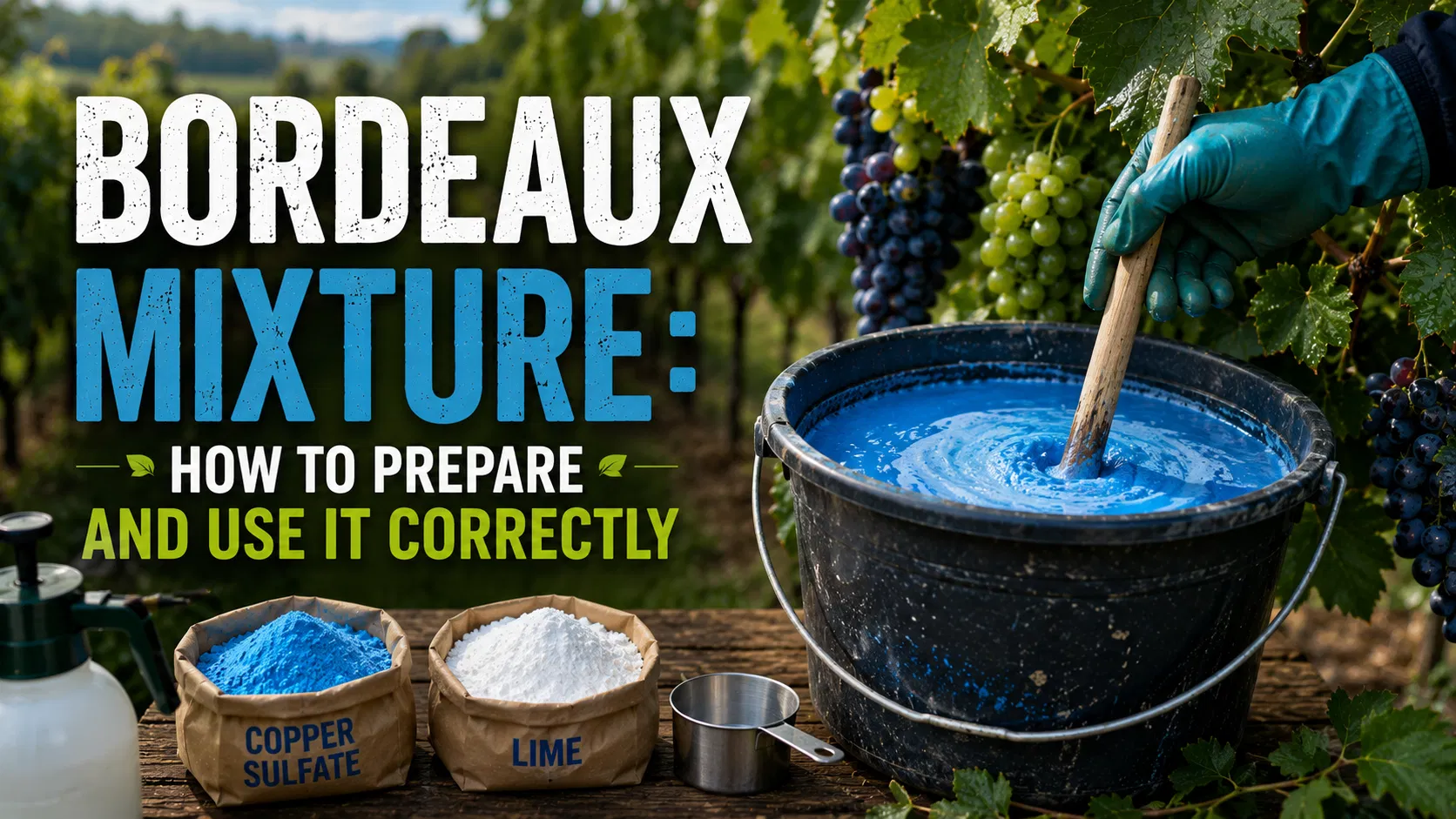
What You Need to Prepare Bordeaux Mixture
Before mixing, gather the correct materials and tools. Accuracy matters, because using the wrong proportions can reduce effectiveness or damage plants.
Ingredients
- Copper sulfate
- Hydrated lime or spray lime
- Clean water
Equipment
- Two non-metal containers
- A wooden, plastic, or glass stirring tool
- A measuring scale or cups
- A sprayer
- Protective gloves, goggles, and long sleeves
Do not use metal containers for mixing or storing Bordeaux mixture, because copper sulfate can react with metal.
How to Prepare Bordeaux Mixture Correctly
The classic formula often used for a standard-strength Bordeaux mixture is:
- 100 grams copper sulfate
- 100 grams hydrated lime
- 10 liters water
For smaller batches, keep the ratio the same. You can reduce or increase the quantity as needed, but always maintain equal parts copper sulfate and hydrated lime unless a specific label or crop recommendation says otherwise.
Step-by-Step Mixing Instructions
- Dissolve the copper sulfate in one container of water. Stir until fully dissolved.
- In a separate container, mix the hydrated lime with water to make a smooth milk-like suspension.
- Slowly pour the copper sulfate solution into the lime suspension, stirring constantly.
- Never pour lime into copper sulfate if the instructions for your intended formula specify the opposite. In many traditional preparations, copper solution is added to lime to reduce the risk of acidity.
- Add the remaining water to reach the final volume.
- Use the mixture immediately after preparation for best results.
The final mixture should have a pale blue color and a slightly alkaline reaction. If it is too acidic, it may burn plant tissue.
How to Test Bordeaux Mixture Before Spraying
A simple test can help you check whether the mixture is safe. Dip a clean iron knife or nail into the mixture for a minute. If it becomes reddish or coppery, the mixture may be too acidic and needs more lime.
Some growers also use pH test strips. The mixture should generally be slightly alkaline, not acidic.
How to Apply Bordeaux Mixture
Proper application is just as important as proper mixing. Spray all plant surfaces thoroughly, including the tops and undersides of leaves, stems, and branches where disease may start.
Application Tips
- Apply on a dry day with little or no wind
- Spray early in the morning or late afternoon
- Cover plants evenly, but avoid runoff
- Reapply after heavy rain if recommended by the product or crop guidance
- Follow crop-specific intervals and local labeling instructions
For dormant fruit trees and vines, Bordeaux mixture can be applied when plants are leafless. For vegetables and ornamentals, timing depends on the crop and disease risk.
Plants Commonly Treated with Bordeaux Mixture
Bordeaux mixture is often used on plants that are highly vulnerable to fungal diseases.
- Grapes
- Tomatoes
- Potatoes
- Fruit trees such as peaches, apples, and pears
- Roses
- Citrus in some disease-management programs
Always check whether the plant species you want to treat tolerates copper-based sprays. Some plants are sensitive and can be damaged.
Safety Precautions You Should Never Skip
Bordeaux mixture contains copper, so safety matters. Wear gloves, protective eyewear, long sleeves, and a mask if there is a risk of spray drift or dust exposure during preparation.
Follow these precautions:
- Keep children and pets away during mixing and spraying
- Do not inhale copper sulfate powder
- Avoid spraying in hot weather to reduce leaf burn
- Do not mix with other pesticides unless the label says it is safe
- Wash hands and clothing after use
Warning: Excessive copper use can build up in soil over time. Use Bordeaux mixture only when needed and only at recommended rates.
Common Mistakes to Avoid
Many problems with Bordeaux mixture come from poor mixing or improper timing. Avoid these frequent mistakes:
- Using the wrong ratio of copper sulfate to lime
- Applying it during extreme heat
- Spraying rain-soaked plants
- Storing the mixture instead of using it right away
- Spraying too often and causing copper buildup
- Ignoring crop-specific instructions
If leaves show scorch or spotting after application, the mix may have been too strong or too acidic, or the plant may be sensitive to copper.
How to Store Ingredients and Dispose of Leftovers
Store copper sulfate and hydrated lime in tightly closed containers in a cool, dry place, away from moisture and children. Do not store mixed Bordeaux mixture for later use, because it loses effectiveness and can settle or separate.
Dispose of leftovers responsibly according to local rules. Do not pour large amounts into drains, waterways, or compost piles.
Final Thoughts on Bordeaux Mixture
Bordeaux mixture remains one of the most dependable old-school fungicides when used with care. The secret to success is simple: mix it accurately, spray it at the right time, and avoid overuse. When applied properly, it can be a powerful tool in your plant disease management routine.
If you want healthier plants and fewer disease problems, start with correct preparation, follow safety steps, and always use Bordeaux mixture as part of a broader prevention strategy that includes sanitation, pruning, and good watering habits.