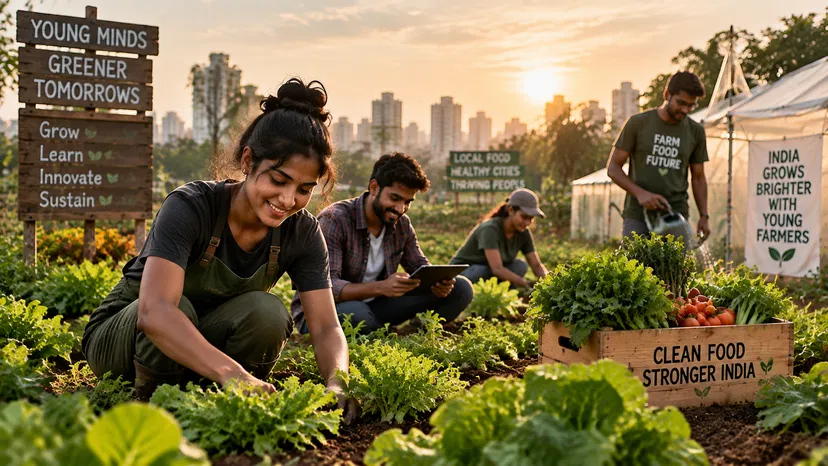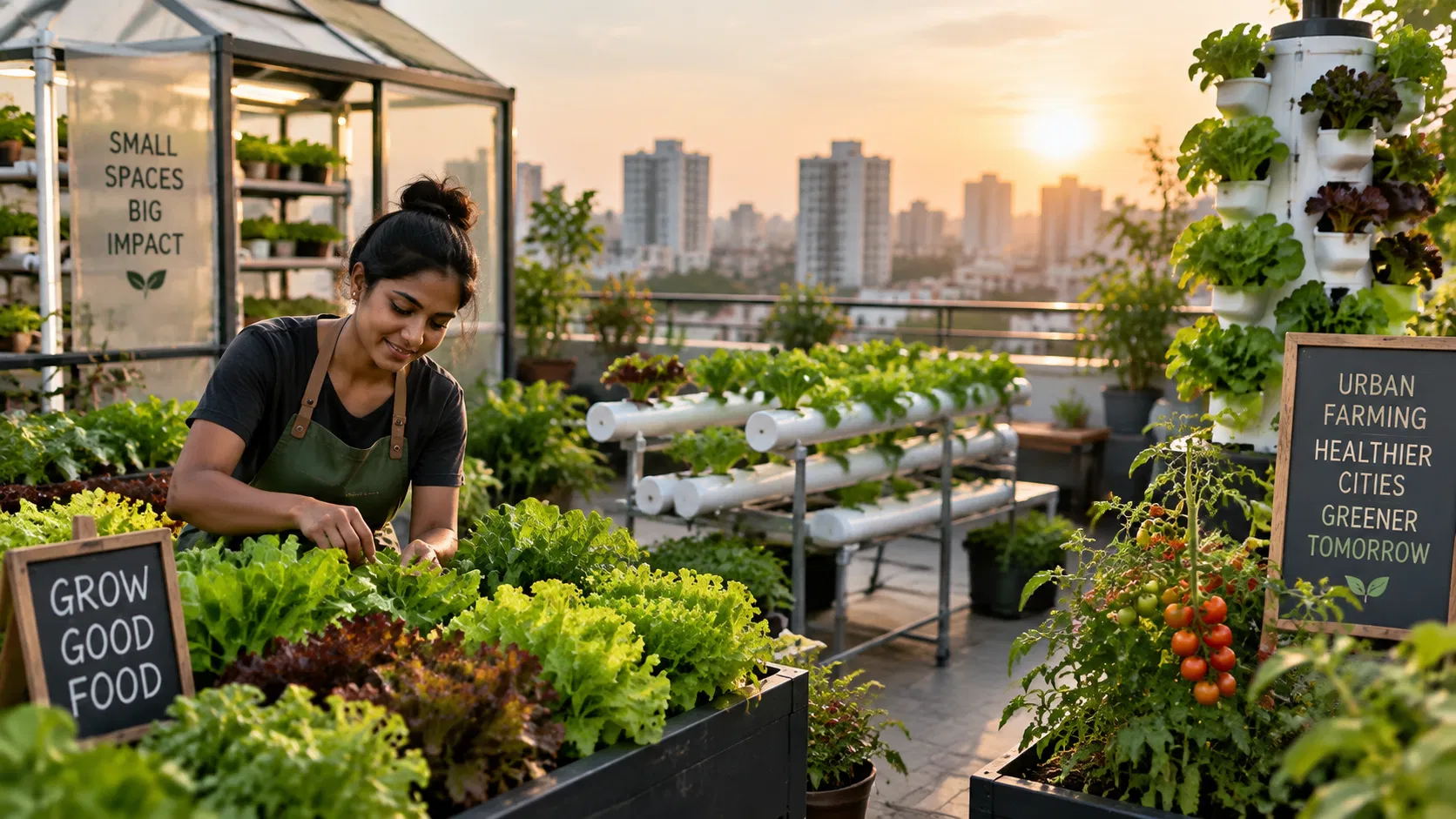
Terrace pots and balcony herbs were just the entry point. A growing number of Indian urban growers are now taking things further — into methods that produce more food, in less space, with an eye on quality and even income. Here's what's happening beyond the basic home garden.
1. Microgreens: The Fastest Crop in Urban Farming
Microgreens — seedlings harvested just 7–14 days after sowing, at the first true-leaf stage — pack more concentrated flavor and nutrients per gram than mature vegetables, and need almost no space to grow. A simple tray, a light growing medium, and a sunny windowsill are enough, making microgreens seeds one of the easiest ways for an urban household to move from hobby gardening into regular, harvestable food production. Restaurants and health-food stores have also driven demand, giving serious home growers a realistic side-income option.
2. Mushroom Cultivation in Repurposed Indoor Spaces
Unlike most crops, mushrooms don't need sunlight or soil — they grow on substrates like straw or sawdust in a closed, humid space, which makes a spare room, balcony corner, or even an unused cupboard viable. Oyster mushrooms (Pleurotus species) are the most common starting point for beginners because they tolerate a wider temperature range and fruit in as little as 45–60 days, compared to button mushroom (Agaricus bisporus), which needs cooler, more controlled conditions.
3. Aquaponics: Fish and Vegetables in One System
Aquaponics combines fish rearing with soil-free plant growing: fish waste supplies nitrogen-rich nutrients to the plants, and the plant roots help filter and clean the water returning to the fish tank. It's more involved to set up than a simple container garden, but it produces two food sources from one system and is gaining traction among urban growers with a bit more space and patience, particularly for leafy greens grown alongside hardy fish species.
4. Container and Modular Vertical Farms
Climate-controlled setups inside repurposed shipping containers or modular indoor units are appearing in Indian metros as a way to grow leafy greens and herbs at consistent quality year-round, independent of outdoor weather. This is largely still a small-business model rather than a home-gardening one, but it reflects the same underlying shift — using square footage more intensively rather than relying on open land.
5. Composting and Vermicomposting Loops
More urban growers are closing the loop on their own waste — turning kitchen scraps into usable growing input through vermicomposting rather than buying all their soil amendments. This pairs naturally with container growing: a rotating batch of grow bags refreshed with home-made compost and cocopeat keeps the whole cycle largely self-sufficient.
6. Subscription and Community-Supported Models
Some urban growers with surplus terrace or rooftop production are now supplying a small, regular subscriber base directly — a scaled-down version of community-supported agriculture. It's still niche, but it signals urban farming moving from a purely personal hobby toward something with a small commercial edge for those who want it.
Where to Start If You Want to Go Further
Microgreens are the lowest-effort entry point into "beyond terrace gardening" — no new equipment, a short growing cycle, and a genuine harvest within two weeks. From there, mushroom cultivation and composting loops are the next reasonable step before committing to anything as involved as aquaponics or a container farm.
Frequently Asked Questions
Can microgreens really be grown without natural sunlight?
Bright indirect light or a basic grow light is usually enough for the short 7–14 day cycle, though direct sun speeds growth further.
Is mushroom cultivation messy or smelly for an indoor space?
Not if humidity and airflow are managed properly — a well-ventilated, contained setup avoids the odor issues beginners often worry about.
Do I need special equipment to start aquaponics at home?
Yes — at minimum a fish tank, a grow bed, and a pump to circulate water, which makes it a bigger commitment than container or microgreen growing.
Disclaimer: General overview of emerging urban farming practices in India; results and feasibility vary by space, climate, and the grower's experience level.