Mango trees can reward you with sweet, juicy fruit for decades, but only if they get the right nutrition at the right time. The best fertilizer for mango trees depends on the tree’s growth stage, because a young sapling has very different needs from a mature fruiting tree. Feeding your mango tree correctly supports strong roots, healthy leaves, abundant flowering, and better fruit production.
If you want bigger harvests and healthier trees, understanding how to fertilize mango trees by growth stage is one of the smartest things you can do.
Why Mango Trees Need Stage-Specific Fertilizer
Mango trees go through several distinct stages of development, and each stage requires a different nutrient balance. Overfeeding can cause excessive leafy growth and fewer flowers, while underfeeding can lead to weak growth, poor fruit set, and nutrient deficiencies.
The best fertilizer for mango trees is not a one-size-fits-all product. Instead, it should match the tree’s current needs:
- Young trees need nutrients that encourage root establishment and canopy development.
- Fruiting trees need balanced nutrition to support flowering and fruit growth.
- Post-harvest trees need recovery nutrients to rebuild energy reserves.
Using the right fertilizer at the right time helps mango trees stay productive year after year.
Best Fertilizer for Young Mango Trees
Young mango trees, typically in the first 1 to 3 years, need fertilizer that promotes steady vegetative growth without overwhelming the roots. At this stage, the goal is to build a strong framework of branches and leaves.
What to look for
A fertilizer with a higher nitrogen content and moderate phosphorus and potassium is often ideal. A balanced slow-release fertilizer such as 10-10-10 or 14-14-14 can work well, especially when applied carefully.
- Nitrogen supports leaf and stem growth
- Phosphorus encourages root development
- Potassium improves overall plant health
Application tips
- Apply small amounts every 6 to 8 weeks during the growing season.
- Keep fertilizer away from the trunk to prevent burn.
- Water thoroughly after feeding.
Best option: a slow-release balanced fertilizer or a lightly nitrogen-rich organic fertilizer for consistent early growth.
Best Fertilizer for Mature Non-Fruiting Mango Trees
As mango trees mature, their fertilizer needs shift. If the tree is still growing but not yet fruiting heavily, the aim is to maintain healthy structure and prepare it for future production.
At this stage, a balanced fertilizer still works well, but the focus should be on supporting strong roots and healthy canopy growth without pushing too much foliage.
Recommended nutrient profile
- Moderate nitrogen for steady growth
- Phosphorus for root and flower bud support
- Potassium for disease resistance and vigor
Organic choices such as compost, aged manure, fish emulsion, or seaweed extract can also help improve soil health while feeding the tree gradually.
Healthy mango trees start with healthy soil. A nutrient-rich, well-draining root zone often matters just as much as the fertilizer itself.
Best Fertilizer for Mango Trees Before Flowering
When a mango tree is preparing to flower, fertilizer strategy becomes especially important. Too much nitrogen at this stage can reduce flowering and encourage excessive vegetative growth. Instead, the tree benefits from lower nitrogen and higher potassium.
Ideal fertilizer ratio
Look for a fertilizer with less nitrogen and more potassium, such as 6-2-12, 8-3-9, or another bloom-supporting formulation designed for fruit trees. Potassium helps support flower development, fruit set, and overall plant resilience.
What to avoid
- High-nitrogen fertilizers right before blooming
- Heavy feeding that triggers new leaf flushes
- Overwatering, which can interfere with flower formation
If your tree is healthy and established, a potassium-forward fertilizer applied before the flowering season can help encourage better bloom performance.
Best Fertilizer for Fruiting Mango Trees
Once mango trees begin producing fruit, their nutritional demands increase. Fruit development uses a lot of energy, and the tree needs the right nutrient balance to avoid fruit drop and improve quality.
Key nutrients for fruiting
- Potassium for fruit size, sweetness, and quality
- Calcium for fruit firmness and cell strength
- Magnesium for chlorophyll production and photosynthesis
- Micronutrients like zinc, boron, and iron for healthy fruit set
A fruit tree fertilizer with a lower nitrogen level and stronger potassium content is usually the best fertilizer for mango trees during fruiting. Organic growers can supplement with compost, wood ash in moderation, kelp, or banana peel-based soil amendments, depending on soil conditions.
Feeding schedule during fruiting
- Feed lightly after fruit set
- Repeat as needed during early fruit development
- Avoid excessive fertilizer close to harvest
Balanced feeding during this stage helps improve both yield and fruit quality.
Best Fertilizer for Mango Trees After Harvest
After harvesting, mango trees need time to recover. This is the perfect stage to rebuild nutrient reserves and prepare for the next cycle of growth and flowering.
The best fertilizer after harvest usually includes a balanced dose of nitrogen, phosphorus, and potassium, along with organic matter that improves soil structure.
Why post-harvest feeding matters
Fruit production can drain the tree’s energy. A post-harvest feeding helps the tree restore vigor, produce healthy new growth, and store nutrients for the next season.
- Use compost or well-rotted manure for long-term soil improvement
- Apply a balanced fertilizer if the tree appears depleted
- Add micronutrients if leaf color or growth suggests a deficiency
Organic Fertilizer Options for Mango Trees
Organic fertilizers are excellent for mango trees because they improve soil health and feed the tree gradually over time. They are especially helpful if your soil is sandy, poor in organic matter, or prone to nutrient leaching.
Popular organic choices
- Compost for general soil enrichment
- Well-rotted manure for slow nutrient release
- Fish emulsion for quick nitrogen availability
- Bone meal for phosphorus and root support
- Seaweed extract for trace minerals and stress tolerance
Organic fertilizers are often safer for young trees and can be combined with mulch to conserve moisture and protect roots.
How to Fertilize Mango Trees Correctly
Even the best fertilizer for mango trees will not perform well if applied incorrectly. Proper timing and technique make a big difference in tree health and fruit production.
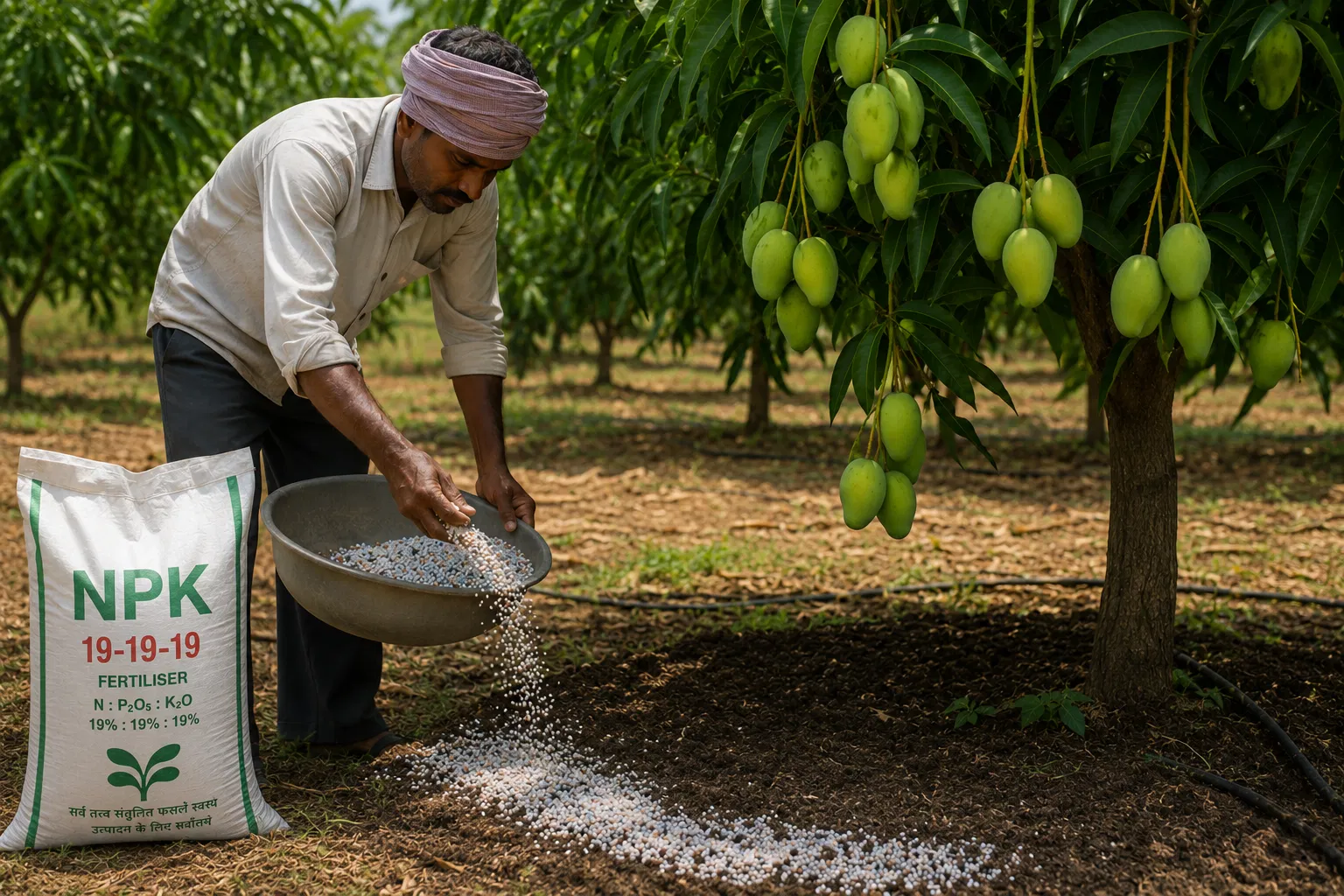
- Spread fertilizer evenly around the drip line, not against the trunk.
- Water the tree after application to help nutrients move into the soil.
- Adjust feeding based on tree age, soil quality, and season.
- Mulch around the tree to retain moisture and reduce nutrient loss.
- Test the soil periodically to avoid deficiencies or imbalances.
In general, mango trees prefer deep, infrequent watering and moderate fertilization rather than frequent heavy feeding.
Signs Your Mango Tree Needs Fertilizer
If your mango tree is not getting the nutrients it needs, it may show visible signs. Catching these early can help you correct the problem before growth or fruiting suffers.
- Pale or yellowing leaves
- Stunted growth
- Poor flowering
- Small or dropping fruit
- Weak branches
- Leaf tip burn or unusual spotting
These symptoms may also point to watering problems, soil pH issues, or pests, so it is important to assess the whole tree care routine.
Conclusion
The best fertilizer for mango trees depends on the growth stage: a young tree needs balanced support for roots and canopy growth, a flowering tree needs less nitrogen and more potassium, and a fruiting tree needs nutrients that support fruit development and quality. After harvest, the tree benefits from recovery feeding to prepare for the next season.
If you want healthier mango trees and better harvests, feed by growth stage, apply fertilizer carefully, and keep building strong soil. With the right nutrition at the right time, your mango tree can thrive and produce delicious fruit for years to come.