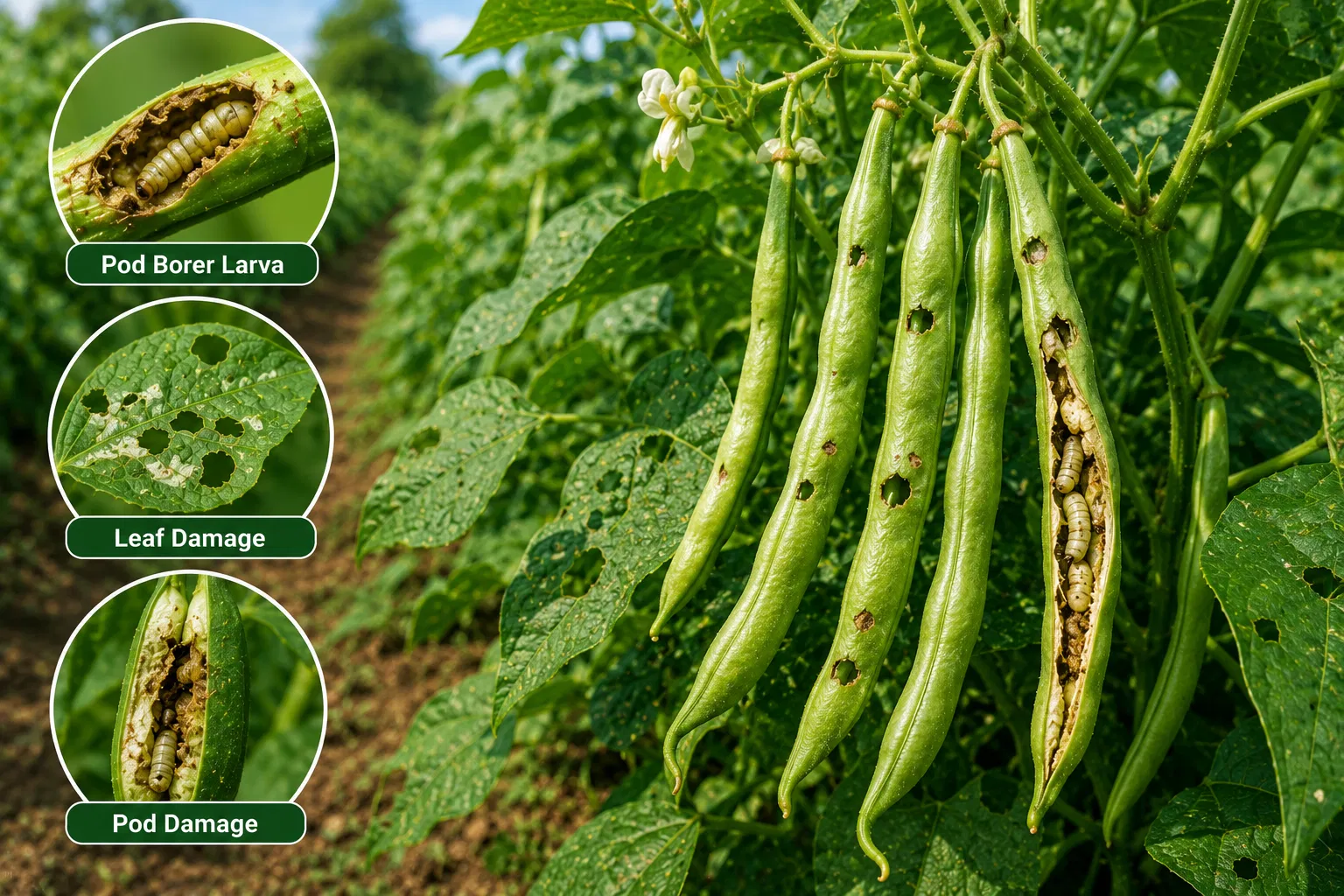
Few pests can damage beans as quickly and quietly as the pod borer. By the time you notice curled leaves, small holes, or damaged pods, the larvae may already be feeding inside the crop. If you grow beans for home use or commercial harvest, knowing how to spot bean pod borer symptoms early and apply the right spray at the right time can save your yield.
This guide explains the most common bean pod borer symptoms, how to identify the damage, and the best spray guide for beans pod borer control so you can protect your crop before losses become severe.
What Is Bean Pod Borer?
The bean pod borer is a destructive insect pest that attacks beans by feeding on flowers, leaves, pods, and seeds. In many regions, it is one of the most serious pests of green beans, snap beans, and other legume crops. The pest usually lays eggs on the plant, and once the larvae hatch, they bore into tender tissues and pods.
The major concern is that the larvae often hide inside the plant parts, making them harder to control once feeding starts. That is why early detection and timely spraying are critical.
Common Bean Pod Borer Symptoms
Bean pod borer damage can show up in several ways depending on the growth stage of the crop. Watch closely for these signs:
- Small holes in flowers or buds caused by early feeding.
- Webbed or folded leaves where larvae hide and feed.
- Skeletonized leaves from chewing on leaf tissue.
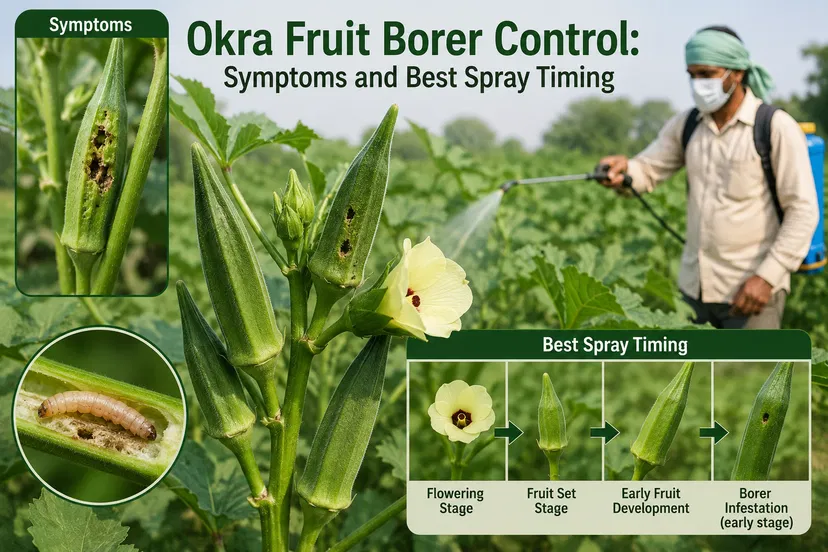
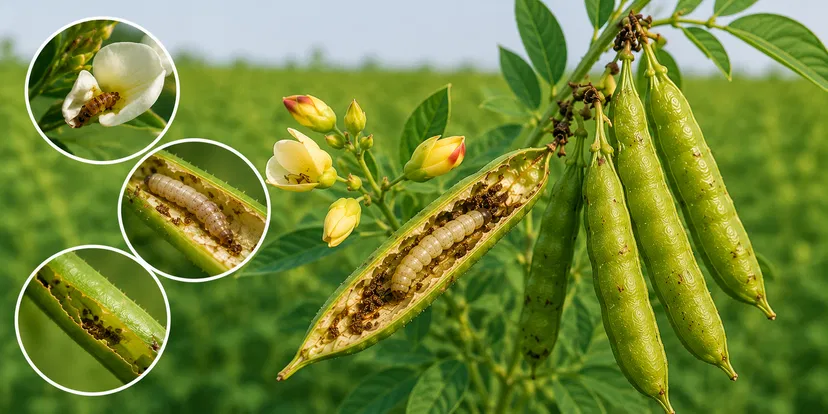
- Entry holes on pods that indicate larvae have bored inside.
- Frass or droppings near holes on pods or leaves.
- Damaged seeds inside pods that look eaten, shriveled, or contaminated.
- Premature pod drop in severe infestations.
- Stunted plant growth when young plants are heavily attacked.
In many cases, the damage starts on the leaves or flowers before moving to the pods. Once the larvae enter the pods, control becomes more difficult and yield loss increases quickly.
How to Identify Bean Pod Borer Damage Early
Early identification is the key to effective bean pod borer control. Check your crop at least twice a week, especially during flowering and pod formation. Pay close attention to the undersides of leaves, flower clusters, and developing pods.
- Inspect the crop in the early morning or late afternoon.
- Look for eggs, larvae, webbing, and fresh feeding damage.
- Shake a few plants gently to check for active caterpillars.
- Examine pods for pinholes, scars, or soft entry points.
- Split damaged pods open to confirm larvae feeding inside.
If you see damage on more than a few plants, action should be taken immediately. Waiting too long allows the pest to spread and makes spraying less effective.
Best Beans Pod Borer Control Methods
Effective control works best when you combine field monitoring, sanitation, and targeted spraying. A strong management plan reduces pest pressure and protects the crop throughout the season.
1. Start with Field Sanitation
Remove infested plant parts, old crop residue, and weeds around the bean field. These can harbor eggs, larvae, or pupae. Clean fields reduce the chances of repeated infestations.
2. Use Crop Rotation
Avoid planting beans in the same area season after season. Rotate with non-host crops to interrupt the pest lifecycle. This is a simple but powerful step in long-term bean pod borer management.
3. Encourage Natural Enemies
Beneficial insects such as parasitic wasps and predators can help reduce pest numbers naturally. Avoid unnecessary broad-spectrum spraying that kills these helpful organisms.
4. Monitor at Flowering and Pod Set
The most important growth stages for bean pod borer control are flowering and pod development. This is when the pest causes the most economic damage and when sprays are most useful.
Spray Guide for Beans Pod Borer Control
Spraying works best when applied early, before larvae bore deep into pods. Always follow local agricultural recommendations, label instructions, and safety guidelines. Choose a spray based on pest severity, crop stage, and local approval.
Important: Spray products should be selected and used according to local extension advice and the product label. Always wear protective gear and observe the pre-harvest interval.
When to Spray
The best time to spray is when you first notice:
- Eggs or tiny larvae on leaves and buds
- Fresh feeding damage on flowers or young pods
- More than a few damaged plants during field scouting
Do not wait until most larvae are inside mature pods. At that stage, spray effectiveness drops sharply.
What to Spray
Depending on local availability and label approval, growers often use insecticides from groups such as:
- Pyrethroids for quick knockdown of active larvae
- Spinosyns for effective caterpillar control
- Bt-based products for young larvae in organic or low-residue programs
- Insect growth regulators where appropriate for lifecycle disruption
For better results, rotate products with different modes of action to reduce resistance. Repeated use of the same spray can make the pest harder to control over time.
How to Spray Effectively
- Spray early in the morning or late afternoon.
- Ensure full coverage on leaves, flower clusters, and pods.
- Target the undersides of leaves where eggs and larvae may hide.
- Repeat applications only as directed by the label or local guidance.
- Use the correct dosage to avoid under-application or crop injury.
Good coverage is just as important as product choice. A poorly applied spray may miss hidden larvae and fail to protect the pods.
Organic and Low-Impact Options
For growers looking for safer alternatives, several low-impact options can help reduce pressure from bean pod borer:
- Bt sprays for young caterpillars
- Neem-based products as part of an integrated program
- Hand removal of heavily infested plant parts in small gardens
- Sticky monitoring traps where appropriate for early detection
These options work best when pest levels are still low and scouting is done regularly.
Prevention Tips for Healthy Bean Crops
Preventing an infestation is always easier than treating one. To reduce the chance of bean pod borer outbreaks:
- Plant at the recommended season to avoid peak pest pressure.
- Keep the field free of weeds and volunteer host plants.
- Inspect seedlings and young plants from the beginning.
- Use resistant or tolerant varieties if available.
- Harvest pods promptly to reduce damage spread.
Regular observation and quick action can make a major difference in crop quality and final yield.
Conclusion
Bean pod borer can cause serious losses, but it is manageable with early scouting, field sanitation, and timely spray applications. The key is to catch the pest before it bores into the pods and spreads through the crop.
If you notice bean pod borer symptoms such as holes, webbing, frass, or damaged pods, act fast. Combine careful monitoring with the right spray guide for beans pod borer control, and your crop will have a much better chance of staying healthy and productive.
Stay alert, inspect often, and spray early for the best results.