Healthy banana production starts long before the first bunch appears. The decisions you make when selecting suckers, spacing plants, feeding the crop, and timing harvest all shape yield, fruit quality, and plantation longevity. If you want a strong banana crop guide that covers the full cycle from sucker selection to harvest management, this is where to begin.
Why Sucker Selection Matters in Banana Farming
Bananas are propagated through suckers, not seeds, which means the quality of your planting material directly affects the performance of the entire crop. Choosing the right sucker helps establish vigorous plants, reduces disease risk, and supports uniform bunch development.
Many poor harvests begin with weak or infected suckers. A productive banana farm depends on clean, healthy planting material from the start.
Types of Banana Suckers
Before planting, it helps to understand the main sucker types commonly used in banana cultivation:
- Water suckers: These are thin, weak shoots with broad leaves and a shallow root system. They are generally not recommended because they produce smaller plants and lower yields.
- Sword suckers: These are the best choice for planting. They have narrow leaves resembling a sword, a strong corm, and a healthy root system.
- Peepers: These are very young suckers just emerging from the soil. They are often too small for planting unless carefully managed in nurseries.
How to Select the Best Banana Suckers
When choosing suckers for banana planting, focus on vigor, cleanliness, and uniformity. The best planting material usually comes from healthy mother plants that are high-yielding and free from pests and diseases.
Key selection criteria
- Choose sword suckers: Select suckers with narrow leaves and a sturdy base.
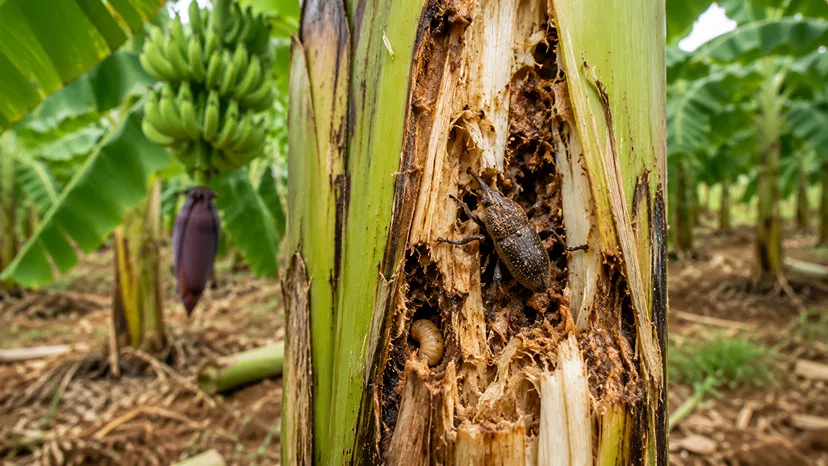
- Check plant health: Avoid suckers from plants showing signs of banana weevil damage, viral symptoms, or fungal infection.
- Look for size uniformity: Medium-sized suckers with a well-developed corm establish more reliably than very large or very small ones.
- Inspect the roots and corm: Healthy suckers should have firm tissue, no rot, and minimal physical damage.
- Use disease-free source plants: Select suckers only from reliable fields with a history of good management.
Preparing Suckers for Planting
After selection, proper preparation improves survival and reduces pest pressure. Clean planting material is one of the simplest ways to protect banana productivity.
Follow these steps before planting:
- Trim off excess roots and dead tissue.
- Remove damaged outer layers of the corm.
- Wash away soil to expose hidden pests or rot.
- Treat suckers with approved hot water, ash, or other locally recommended disinfecting methods where appropriate.
- Plant immediately after preparation to prevent drying out.
Land Preparation and Spacing
Banana crops perform best in well-prepared soil that drains properly and contains enough organic matter. Good land preparation creates the foundation for root development, nutrient uptake, and stable plant growth.
Spacing is equally important. Crowded banana plants compete for light, water, and nutrients, while overly wide spacing reduces land efficiency. The ideal spacing depends on variety, soil fertility, and rainfall conditions.
General spacing considerations
- Use wider spacing in fertile soils or vigorous varieties.
- Use moderate spacing in medium fertility conditions.
- Ensure enough room for daughter suckers to develop without overcrowding.
Planting and Early Crop Establishment
Plant suckers in holes that are deep enough to anchor the corm and support strong root growth. Mix topsoil with compost or well-rotted manure to improve early nutrition. After planting, firm the soil gently around the base and water if conditions are dry.
Early establishment is a critical stage. A banana plant that grows well in the first few months is more likely to produce a healthy bunch later.
Tip: Strong early growth often depends on moisture, weed control, and protection from pests. A clean, well-managed field gives banana plants the best start.
Banana Crop Management Practices
Once established, banana plants need consistent care. Effective banana crop management includes weed control, soil fertility management, pest monitoring, and sucker regulation.
Weed control
Weeds compete with banana plants for nutrients and moisture, especially during the early growth stage. Keep the plantation clean using hand weeding, mulching, or other appropriate field practices.
Mulching
Mulch helps conserve soil moisture, suppress weeds, and improve soil structure. Use dry leaves, grass, or crop residues, but keep mulch away from the stem base to reduce the risk of rot.
Fertilization
Bananas are heavy feeders and require regular nutrient supply. Apply organic manure and balanced fertilizers based on soil needs and local recommendations. Nitrogen supports leafy growth, potassium helps fruit development, and phosphorus supports root establishment.
Pest and disease control
Common banana threats include banana weevil, nematodes, and diseases such as Panama disease and Sigatoka. Monitor plants regularly and remove infected material quickly. Use clean suckers, field sanitation, and integrated pest management practices to reduce losses.
Sucker Management During Growth
Banana plants naturally produce new suckers from the mother plant. However, not every sucker should be allowed to grow. Proper sucker management ensures that only the strongest shoots remain and that the plant matures into a productive mat.
Keep one mother plant, one follower, and one peeper when managing a banana mat, depending on local recommendations and production goals. This helps reduce competition and supports continuous production.
Benefits of sucker regulation
- Improves bunch size and fruit quality
- Reduces overcrowding
- Makes field management easier
- Promotes uniform crop cycles
Flowering and Bunch Development
As the banana plant matures, the flower bud emerges and the bunch begins to develop. This stage requires steady nutrition and moisture because fruit formation is highly sensitive to stress.
Any shortage of water or nutrients can reduce finger size, delay maturity, and affect market value. Continue weed control, mulching, and pest monitoring during this stage.
Harvest Management for Better Banana Quality
Harvest timing plays a major role in fruit quality, shelf life, and marketability. Harvest too early, and the fruit may fail to ripen properly. Harvest too late, and the fruit may become overmature or suffer damage during transport.
How to know when bananas are ready for harvest
- Fingers become full and rounded rather than angular.
- The floral tip at the end of the fruit begins to dry.
- The bunch color shifts from deep green to a lighter green.
- Harvest maturity matches the intended market, whether local sale or long-distance transport.
Best harvest practices
- Use clean, sharp tools to cut the bunch.
- Support the bunch to avoid bruising as it is removed.
- Handle fruit gently to prevent latex stains and skin damage.
- Transport harvested bunches carefully and avoid stacking too heavily.
Post-Harvest Handling
Good harvest management does not end when the bunch is cut. Post-harvest handling determines how much value you recover from the crop. Sort bunches by size and quality, keep them shaded, and move them quickly to market or ripening facilities.
Clean handling reduces losses and improves customer satisfaction, especially for commercial banana growers.
Conclusion
Successful banana farming depends on disciplined crop management from start to finish. When you choose healthy sword suckers, prepare the land well, maintain nutrition, control pests, regulate suckers, and harvest at the right stage, you create the conditions for higher yields and better fruit quality.
Banana production is not just about growing plants; it is about managing every stage with care. If you want consistent harvests and profitable results, begin with strong planting material and follow through with careful harvest management.
Start with the right sucker, manage the crop with precision, and harvest with care for the best banana yields.