Few diseases can damage banana plants as quickly and quietly as Banana Bunchy Top Virus. What may begin as a few unusual leaf markings can soon turn into stunted growth, poor fruit production, and serious yield losses across the plantation or backyard garden. If you grow bananas, understanding the symptoms of Banana Bunchy Top Virus and how to prevent it is essential for protecting your plants and preserving harvest quality.
This guide explains what Banana Bunchy Top Virus is, how to identify it early, how it spreads, and the most effective prevention methods every grower should know.
What Is Banana Bunchy Top Virus?
Banana Bunchy Top Virus, often abbreviated as BBTV, is one of the most destructive viral diseases affecting banana plants worldwide. It attacks the plant’s growth system, causing leaves to become small, upright, and crowded near the top of the plant. As the disease progresses, the banana plant becomes severely stunted and typically stops producing healthy fruit.
BBTV is especially dangerous because there is no cure once a plant is infected. The best strategy is early detection and strict prevention.
Key Symptoms of Banana Bunchy Top Virus
Recognizing BBTV symptoms early can help prevent the disease from spreading to healthy plants. The signs may vary depending on the banana variety and stage of infection, but several common symptoms are easy to spot.
1. Dark green streaks or “dots and dashes” on leaves
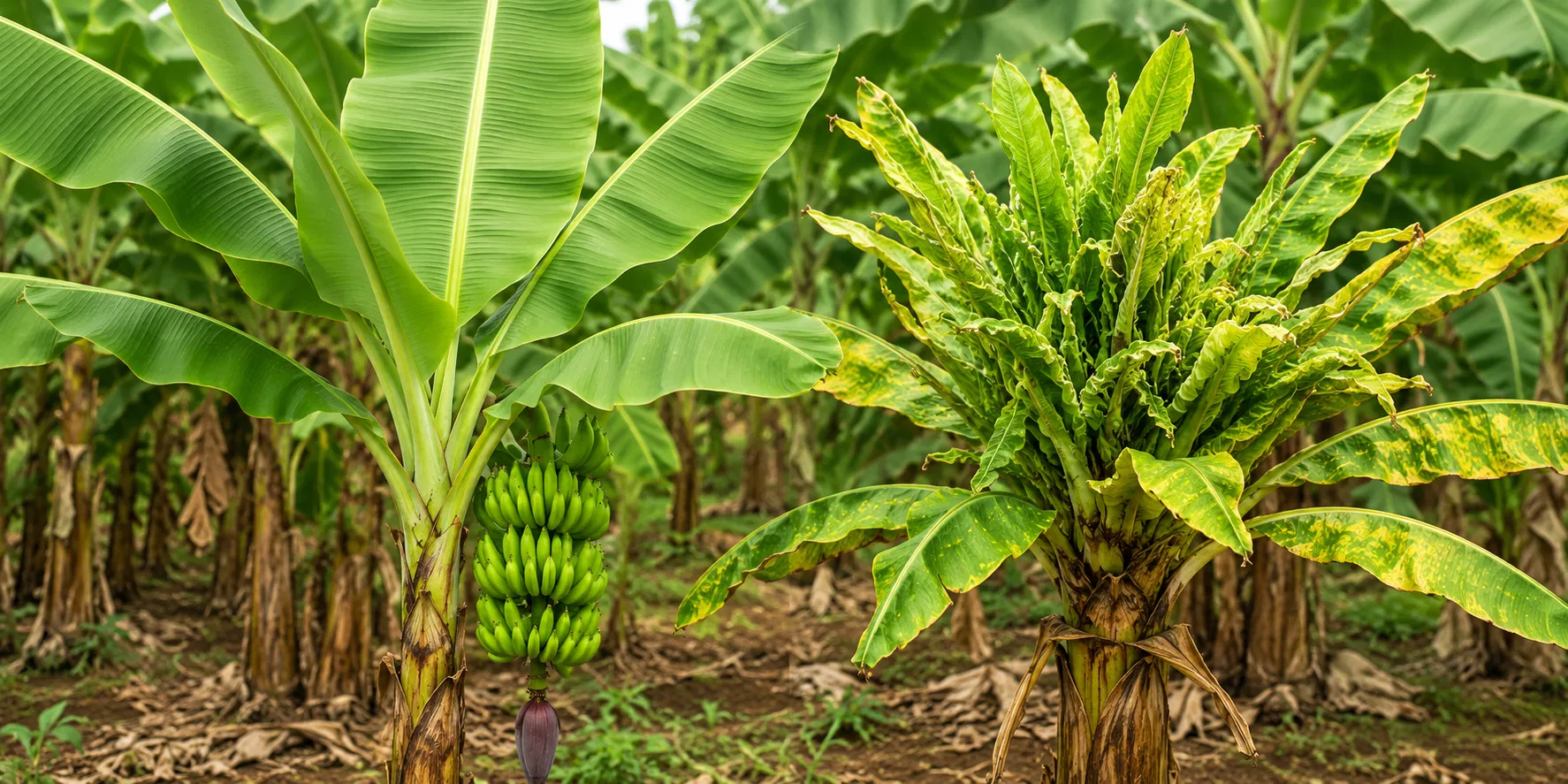
One of the earliest and most recognizable symptoms is a pattern of dark green streaks on the leaf veins, midrib, or leaf stalks. These markings may appear as short lines, dots, or dashes and are often called the “Morse code” symptom.
2. Narrow, upright leaves at the top of the plant
Healthy banana leaves spread outward in a broad, graceful shape. In infected plants, new leaves become narrow, brittle, and stand more upright, forming a compact cluster or “bunchy top” appearance at the top of the plant.
3. Stunted growth
Infected plants grow much more slowly than healthy ones. The pseudostem may remain thin, and the plant often looks smaller than other banana plants of the same age.
4. Reduced leaf size
New leaves may emerge smaller than normal, with shortened leaf blades and a generally weak, distorted appearance. This is a clear sign that the plant’s growth has been disrupted.
5. Leaf curling and twisting
Some infected banana leaves may curl upward, twist, or become distorted. The leaves may also become stiff and fragile, making the plant look unhealthy and stressed.
6. Poor or no fruit production
As BBTV advances, the plant may fail to produce a normal bunch of bananas. If fruit forms, it is often small, poorly filled, and unsuitable for harvest.
Important: Once a banana plant shows clear Banana Bunchy Top Virus symptoms, it should be treated as infected immediately to protect nearby plants.
How Banana Bunchy Top Virus Spreads
Understanding how BBTV spreads is critical for controlling it. The virus is mainly transmitted in two ways:
- Banana aphids: The banana aphid, Pentalonia nigronervosa, is the primary insect vector. It feeds on infected plants and then carries the virus to healthy ones.
- Infected planting material: Suckers, corms, or tissue culture plants taken from infected sources can introduce the virus into new areas.
The disease does not usually spread through the air or soil on its own, but infected planting material and aphid movement can rapidly infect an entire patch if left unchecked.
Why Early Detection Matters
Early detection is the difference between containing an outbreak and losing many plants. BBTV can spread quietly before growers realize there is a problem. By the time symptoms are obvious, nearby plants may already be at risk.
Regular inspection helps you catch:
- Subtle leaf streaks
- Unusual upright leaf growth
- Stunted plants that lag behind the rest
- Aphid activity on young banana shoots
The sooner infected plants are identified, the easier it is to protect the rest of your crop.
How to Prevent Banana Bunchy Top Virus
Prevention is the most effective defense against BBTV. Because there is no cure, growers should focus on sanitation, clean planting materials, and aphid control.
1. Use certified virus-free planting material
Always start with healthy, certified banana plants from reputable suppliers. Never plant suckers or offsets from unknown or infected sources, even if they look healthy.
2. Inspect plants regularly
Check banana plants often for early symptoms, especially during active growth. Pay close attention to young leaves, leaf veins, and the overall shape of the plant.
3. Remove infected plants immediately
If a plant shows strong BBTV symptoms, remove it as soon as possible. Destroy the infected material according to local agricultural guidelines to prevent aphids from spreading the virus further.
4. Control banana aphids
Since aphids are the main carriers of BBTV, reducing their numbers is a major part of prevention. Management strategies may include:
- Monitoring for aphid colonies on young shoots and leaf undersides
- Using appropriate insect control methods recommended for your area
- Encouraging good garden hygiene to reduce pest shelter
5. Keep the planting area clean
Weeds, old banana debris, and neglected suckers can create conditions that allow pests and disease to build up. Remove plant debris and keep the growing area tidy to reduce risk.
6. Avoid moving infected tools or plant material
Clean knives, machetes, pruning tools, and other equipment before moving between plants, especially if they have been in contact with suspect material. While BBTV is mainly spread by aphids and infected planting stock, good sanitation remains a smart precaution.
7. Quarantine new banana plants
If you introduce new plants into your garden or farm, monitor them before placing them near established banana stands. This helps reduce the chance of bringing BBTV into the growing area.
Best Practices for Banana Growers
For long-term success, combine prevention with careful farm management. Healthy banana production depends on consistent attention and quick action when problems arise.
- Plant only disease-free material
- Train workers to recognize BBTV symptoms
- Scout regularly for aphids and unusual leaf growth
- Remove suspicious plants early
- Maintain good field hygiene year-round
These habits can greatly reduce the chances of a BBTV outbreak and improve the health of your banana crop.
Conclusion
Banana Bunchy Top Virus is a serious threat, but it can be managed effectively with the right knowledge and prevention practices. Watch for the early symptoms of dark streaks, narrow upright leaves, and stunted growth, and act quickly if you suspect infection. By using certified planting material, controlling aphids, and removing infected plants promptly, you can protect your banana plants and reduce the risk of major losses.
Healthy banana plants start with prevention. Stay alert, inspect often, and make BBTV control part of your regular growing routine to keep your banana crop productive and thriving.